Welcome to my blog!

News from a wargamer with a special interest in the military history of the Balkans. It mainly covers my current reading and wargaming projects. For more detail you can visit the web sites I edit - Balkan Military History and Glasgow & District Wargaming Society. Or follow me on Twitter @Balkan_Dave
or on Mastodon @balkandave@mastodon.scot, or Threads @davewatson1683

Monday, 26 September 2011

Hellfire & Back

This is the latest Flames of War supplement covering the early war battles in North Africa. Usual FoW format with high quality production values, well laid out organisational charts and some fine eye candy.

Hellfire and Back!: Early War Battles in North Africa, 1940-1941I largely bought it for the stats for my Greek campaign, only to learn that a further supplement is due out next month that will specifically cover this and other 'fringe' campaigns around the Med. Look forward to that.

Then it occurred to me that while I don't have 15mm figures for the desert, I do have lots of 1/200 figures based for Spearhead. So Italian and British tank companies duly assembled and onto the table. It made a short and sharp battle with the Italians coming out on top. I will try some Afrika Corps next. Using 1/200 opens up some other campaigns as well.

FoW has somewhat rebuilt the reputation of Italian troops in WW2, at least from a British perspective. My recent reading has been on this subject including Iron Arm, the story of the mechanisation of Mussolini's army 1920 to 1940.  Creating a mechanised army in a non mechanised society was beyond the capability of Italian industry and the army. Non the less an armoured force was developed and at one stage arguably led the world. This book takes the reader through all the stages.

Iron Arm: The Mechanization of Mussolini's Army, 1920-1940

Wellesley in India

The Black Powder supplement Last Argument of Kings got its first run out on Sunday. We did a Wellesley in India scenario using the colonial India data from the supplement.

The opposing forces:
British
Unit Size Type Weapon H to Hand Shoot Morale Stamina Special
Wellesley (9)
Dragoons Small  Reg. Cav Sword 4 1 3+ 3 Ferocious Charge, Valiant, Marauders
Sepoy Btn Small  Infantry Smoothbore Musket 6 3 4+ 3 First Fire 
1st Foot Brigade (8)
Line Regt Standard 18 Infantry Smoothbore Musket 6 3 3+ 3 First Fire, Reliable, Steady
Sepoy Regt  Standard 18 Infantry Smoothbore Musket 6 3 4+ 3 First Fire 
Artillery Smoothbore 1 3-2-1 4+ 2
2nd Foot Brigade (8)
Line Regt Standard 18 Infantry Smoothbore Musket 6 3 3+ 3 First Fire, Reliable, Steady
Sepoy Regt  Standard 18 Infantry Smoothbore Musket 6 3 4+ 3 First Fire 
Artillery Smoothbore 1 3-2-1 4+ 2
Native Prince
Unit Size Type Weapon H to Hand Shoot Morale Stamina Special
Nawab (7)
Bodyguard Small Reg. Cavalry Sword 6 3 5+ 3 Lancers
Artillery Smoothbore 1 3-2-1 4+ 2
Rockets 1 2 4+ 2
Ist Brigade (7)
French' Battalion Standard 18 Infantry Smoothbore Musket 6 3 4+ 3 Reliable
Native Infantry Standard Irr. Infantry Smoothbore Musket 6 3 5+ ? Untested, warband
Native Infantry Standard Irr. Infantry Smoothbore Musket 6 3 5+ 3 Unreliable, warband
Native skirmishers Small Irr. Infantry Smoothbore Musket 6 2 5+ 2 Skirmish
2nd Brigade (7)
Sepoy Battalion Standard 18 Infantry Smoothbore Musket 6 3 4+ 3 Reliable
Native Infantry Standard Irr. Infantry Smoothbore Musket 6 3 5+ 3 Bloodthirsty, warband
Native skirmishers Small Irr. Infantry Smoothbore Musket 6 2 5+ 2 Skirmish
Right Wing Cavalry (6)
Native Horse Standard Cavalry Sword 6 1 5+ 3 Warband, 
Native Horse Standard Cavalry Sword 6 1 5+ 3 Warband, Wavering
Right Wing Cavalry (6)
Native Horse Standard Cavalry Sword 6 1 5+ 3 Warband, 
Native Horse Standard Cavalry Sword 6 1 5+ 3 Warband, Wavering

The native cavalry started the battle with a bold sweep on the left that was eventually fought off by the dragoons. The British infantry advanced and engaged the native infantry. Superior fire power won through but it took some time. The right flank cavalry battle was less decisive.

The rules played well and gave a pretty accurate feel for the period. Artillery isn't very effective at long range, and don't bother with rockets - they killed more friendly troops than the enemy! By beefing up the dragoons with special rules they were able to disperse the native cavalry, but it wasn't a foregone conclusion. The infantry battles were more closely fought affairs.


Sunday, 18 September 2011

VBCW - The People's Armies

Picked up a nice booklet on the Very British Civil War theme called The People's Armies. This is available from Solway Miniatures.

This booklet describes the various Worker's Defence Corps, largely based on trade unions, that sprung up around the country to resist Moseley's Blackshirts.  My own Clydeside Brigade fits in with this idea very well. Plus Anarchists and the Communist People's Assault Columns.

The text covers the type of unit together with their weapons and uniforms. Poorly equipped compared with government forces some French and Russian equipment started to arrive together with some foreign volunteers. Similar to the Spanish Civil War.

The booklet has some nice photies of available models and excellent 'Osprey' style colour plates by Peter Barfield. The naval figure is particularly good and an order has been dispatched to 1st Corps who do a suitable figure. These will make a new platoon to add to the Clydeside Brigade. All very Battleship Potemkin!

Tuesday, 13 September 2011

The Last Argument of Kings

Just finished working my way through the first Black Powder supplement The Last Argument of Kings.

Pete Brown has done a lovely job with this supplement covering the main conflicts of the 18th Century, in Europe and the colonies. After a general introduction each section gives an overview of the conflict, some detail on the armies together with army lists and special rules. Finally a battle scenario together with an ORBAT.

And of course no rule set would be complete today without eye candy. This supplement has it in buckets. I know some gamers criticise this trend, but I simply don't agree. Well painted and displayed wargame figures should inspire the reader. Several members at my club are looking to try new periods based on this.

I am planning to use two sections as soon as possible.  Storm on the Danube covers the Ottoman conflicts with the Austrians. I also plan to dust down my Mughals for Plassey and other battles in India.

Sunday, 11 September 2011

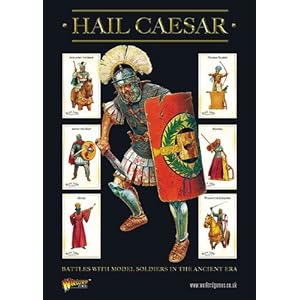
Hail Caesar

Played my first game of the new ancient rules, Hail Caesar today. We have been playing Black Powder for some time and the mechanisms are similar. So the learning curve was not too steep.

Hail Caesar (Wargaming)
I brought an Ottoman army with a foot division based on Janissaries and two flank divisions of cavalry. My opponent brought a Wallachian army. Although the rules don't have a cut off date, there aren't many troop types for the medieval period, so you need to improvise.

The game was very enjoyable and like Black Powder full of uncertainty in the movement phase. My left flank stubbornly refused to move for the whole game. Other divisions charged across the table and got into contact quickly. What we really like is the simple mechanisms and the absence of  micro measurement and other complexities that complicate other systems.

We really do have a glut of good rule systems at present. All have their strong features and I expect we will play most of them for now. 

Sunday, 4 September 2011

Sworn Sword

New historical fiction authors appear to be pouring off the shelves recently. As regular readers of this bog will know I am fascinated by the Normans, so spotting a novel based on the period is a guaranteed buy for me.
Sworn Sword
Sworn Sword is the first novel by James Aitcheson. Based on the period after 1066, it covers the northern rebellion against Norman rule. Durham is captured and York besieged, before William comes north with an army to relieve the siege.

In that historical context our hero, Tancred, not only gets involved in every battle, but also a sub plot involving the hidden body of King Harold. The battle scenes are excellent, covering the typical clash of mounted Norman knights against spear armed foot in shieldwall formation well. I enjoyed this and I hope to read more by this author.


Tuesday, 30 August 2011

Very British Civil War starts

Got the new units onto the tabletop for the first time today.

The scenario involved a Clydeside Brigade attack on a Scottish Government outpost garrisoned by a Territorial Company. The workers militia were tasked with this assault while the Communist Company advanced on the right flank to protect the attack from the expected relieving force of regulars.

The militia attack soon ground to a halt. Insufficient troops and firepower to get through the sandbag defences. The Territorial's rifle fire was pretty impressive, just wished I could roll as many 5 and 6's in competition games!  The regular company then arrived very quickly and dispatched a platoon of the Communists. However, the second platoon fought them off and the action ended in a stalemate.

I used Warhammer Great War rules and they worked very well. Once I remembered the key elements the game moved quickly. The one irritating aspect of these rules is that they are badly presented. Key rules are hidden away and the reference sheet is possibly the worst I have ever seen. Whole sections are simply missing. Must see if someone has done a decent one, if not, add to the must do list.


I don't think I have mentioned the trucks before. They come from Simon at Solway Miniatures. He does a great range of conversions.

Sunday, 28 August 2011

Rif Raf: 28mm Greeks

I have been working my way through some review packs of David Burns new range of figures for the Greek army of WW2 in 28mm. And very nice they are too. In fact too nice as the last thing I want is another scale for this conflict!

These are well proportioned figures, perhaps slightly smaller than some ranges, but will fit in. There were two types of helmet in general use, the British Mk1 pattern that was gradually being replaced by a model similar to the Italian helmet. This range has gone for the latter. The right decision in my view because the Greek army uniform was similar to the British, so other types can be represented by British ranges, at least in the smaller scales. 

Some examples from the range below. Painted examples are on the Rif Raf site done by David himself. They really do look the part. Highly recommended.

Clydeside Battalion

The next unit for my Very British Civil War project is the Clydeside Battalion.

These are better trained troops financed and organised by the Communist Party to stiffen the ranks of the workers militias. Not quite regulars, but very committed to the cause and more likely to stand up to any fascist or regular army units they may come up against. Red Clydeside rises again!

Thursday, 25 August 2011

Honour and the Sword


My latest historical fiction reading has been Honour and the Sword by A.L. Berridge.

This is the author's first novel and takes place in a French village during the Thirty Years War. Not the usual setting for historical fiction and that is probably what attracted me.

The essence of the story is the Spanish invasion and occupation of the village. The young son of the local noblemen becomes the focus of resistance to Spanish rule. There are a number of acts of resistance leading to the liberation of the village with some belated assistance from the French army.

Honour and the SwordThe characters are developed well on both the French and Spanish side. Operating a resistance force within the social structures of French society of the period is very well presented.Not exactly a full bloodied action adventure but there is plenty to keep the reader interested and the author has done her research on the tactics and equipment of the period.

The story is told as a series of interviews after the event. I am not sure about this format. For me it breaks up the narrative and can be repetitious. As a consequence I had to force myself through what is a long tale anyway. Not sure it quite lives up to the 'fast paced' hype on the cover, but something a bit different.

Monday, 22 August 2011

Blood on the Snow

Just finished reading Blood on the Snow: The Carpathian Winter War of 1915 by Graydon Tunstall.

I thought I knew a bit about most WW1 campaigns in SE Europe, but I was not aware of this one. It was fought mostly between Austro-Hungarian and Russian troops in the Carpathian Mountains during winter. I have walked part of these mountains in the summer, the idea of fighting through them in winter is just mind boggling.

But that is exactly what two, million man armies did during the winter of 1915. The campaign was predicated on the need to relieve the Austro-Hungarian garrison of Przemysl consisting of some 135,000 men. The A-H CinC, Conrad, inexplicably decided to launch three offensives through the mountains with troops that were not equipped or trained to fight in such terrain. Supplies of everything were totally inadequate. The Russian's, commanded by Ivanov, were only slightly better prepared. The casualties far exceeded the size of garrison they were attempting to relieve and the A-H army was fatally weakened for the rest of the war.
Blood on the Snow: The Carpathian Winter War of 1915
Words just do not do justice to the horrors of this campaign. Troops lasted on average 5-6 weeks before being killed, wounded, captured or committing suicide. Battles in snow two metres high along the Carpathian ridges and into the valleys.  

The author has extensively researched the campaign, mostly from the A-H perspective. Eye witness accounts add much to the archive material.

This is probably not a book for the general reader. The author assumes a degree of knowledge of the area and each offensive is dealt with in great detail. The maps could also have been better. One for the specialist, but a campaign that fully deserves to be told.


Sunday, 21 August 2011

Scotland's Festival of History

Popped down to Lanark today for Scotland's Festival of History. This is a two day living history event with a wide range of re-enactors and a supporting cast of stalls.

This is an excellent family day out with lots going on. Big thanks to the different societies who clearly put a huge effort into getting their uniforms and equipment just right.


Sunday, 14 August 2011

Workers Militia

Just completed the first unit for my Very British Civil War project. For those not familiar with the concept it is an alternative historical take on the events of 1936-38. Civil war grips Britain with a range of armies seeking control.

My units will mainly be Clydeside Workers Militias, formed to defend Glasgow and the West of Scotland against the Fascists.

A range of figures including Musketeer and Anglian.

Saturday, 6 August 2011

Claymore

It was the Claymore show in Edinburgh today. As well organised as ever by the Edinburgh club in a fine venue. Even the weather was cooler, a boon if your game is in the atrium.

We took a Peninsular War skirmish game, Carry on Bohlsup, using the Sharpe Practice rules. This is a fun set that you shouldn't take too seriously. Generally they play well although I think movement and action is a little too random. It plays better when you remove the Tiffin card. This means that the cards determine the order of action but still ensure that every 'Big Man' moves each turn.


There was a good range of traders and display games. Numbers seemed reasonable and the Bring & Buy looked particularly busy.

This was an interesting Polish renaissance game in I presume 40mm.


And this Scots ECW game also caught my eye.


Friday, 5 August 2011

The Vikings

A bit of film nostalgia. The Vikings is a film starring Kirk Douglas, Tony Curtis and Ernest Borgnine and based on the novel The Viking by Edison Marshall. It claimed to be based on legendary material from the sagas of Ragnar Lodbrok and his sons. The film used great locations in Norway although Aella's castle was the real Fort de la Latte in north-east Brittany.

This was one of those films that make the partners of military history buffs groan. You know the scenario. A night out at the cinema, your turn to choose, so of course it's an historical film. What do you do? Yes, you moan that the medieval armour isn't right, the tanks weren't even built in WW2 etc. I once loudly complained during Braveheart,  when my partner swooned at the seduction of the English Princess by Wallace, that given their historical ages he would have been arrested today as a paedophile. Not the most popular comment at at the first showing of the film in Scotland!

Well this film had all the faults you can imagine. Medieval castles, 12thC armour, horned Viking helmets and much more nonsense. Still a good tale and what do I know, because it was a great box office success.

This film came to mind when I was in France visiting the castle they used in the film. Fort de la Latte is on the Brittany coast west of St Malo. Incidentally another very well preserved set of fortifications. Whatever the historical failings of the film this is a well preserved 13th Century castle in a great setting. Well worth a visit, although hopefully not on a day as wet as the one we had. I can also recommend the fishing village of Erquy, a little further along the coast, if you like fish for dinner. The scallops were excellent.


Thursday, 4 August 2011

1877 Russians

Next unit off the bench for the 1877 Russo-Turkish War are the Russians. More figures from the 28mm range by Outpost Miniatures.

It's almost a year since i got teased into this project at last year's Claymore. This year's show is on Saturday so I suspect some more metal will be purchased. We will be displaying a 28mm Sharpe Practice skirmish game called Carry on Bohlsup. Some fine figures and scenery to go with a fun game.

Tuesday, 2 August 2011

The Fort

Second half of my holiday reading was Bernard Cornwell's The Fort. Cornwell is of course the benchmark for historical fiction and he doesn't disappoint with this book.

Set during the American Revolution it is based on the little known Penobscot Expedition of July 1779. A modest British force supported by three sloops lands on the Massachusetts coast and establish a fort. The idea was to provide a haven for loyalists and a naval base. The rebels launched a counter expedition largely made up of militia troops supported by a large naval force. The British position was strong and the American naval advantage was not able to be fully deployed. The land campaign was also badly executed. The British relief naval force ended the siege and the consequent naval action was the worst naval disaster in US history before Pearl Harbour.   

The FortThe campaign is interesting because of some famous participants. John Moore was a Lieutenant in 1779 and this was his first action. The founder of the famed Light Division certainly learned lessons in this campaign that must have influenced his later reforms. On the US side, Paul Revere of the Lexington ride fame was a Colonel of militia artillery. He was much later lionised by Longfellow, but in this campaign he was court martialled and his actions probably deserved greater retribution.

This is a one off book, not part of a series. Unusually for Cornwell there is not one heroic figure that the story is built around. Instead he takes in all the characters to tell the story, with of course the license that the writer of historical fiction has with facts and narrative. Great read.

Friday, 29 July 2011

Brittany - Fougeres

I spent my summer holiday in Brittany. Not an area I know well, but one with a rich history.

Brittany gets its name from the settlement of Britons from Wales and the west country who established themselves in the area during two migrations during the 9th Century. They fought off the Franks and established an independent state. Brittany during the Middle Ages is the story of fending off attempts to incorporate the Duchy into France. The French eventually triumphed in 1488.

We stayed in the Breton Marches, the borderland with France. It has several well preserved castles. The best is Fougeres. Established in the 11th Century it was developed over the next four centuries into an impressive fortification that is largely intact today. Well worth a visit.


Thursday, 28 July 2011

The Lion Awakes

First on my holiday reading list has been Robert Low's new book 'The Lion Awakes'. He is the author of the Oathsworn series of Viking novels. His new 'Kingdom' series covers Scotland at the end of the 13th Century, both the internal conflicts and external wars with England.

In the best tradition of the historical novel the main character is a fictitious minor noble who is close to the main events. This volume starts in 1297 with Edward ruling Scotland and Wallace leading the rebellion, together with the internal Bruce - Balliol civil war. The Battle of Stirling Bridge is central to the book that ends with the Battle of Falkirk in July 1298. 

Anyone covering this period is bound to be compared with Nigel Tranter and his treatment of both Wallace and Bruce. Tranter had a more romantic style that generally portrayed his heroes in a positive light. Low goes for a more gritty, warts and all presentation that has ruffled a few feathers. The reality is that our sources for the period are limited and therefore the historical novelist has plenty of interpretative scope. 

The Lion WakesI declare an interest in that the author is a member of our wargames society and I am a big fan of his style. He is a journalist by profession and that shines through. He loves to tell the story and one of his Viking novels lacked pace by getting distracted with too much saga story telling. But that isn't a problem here. You get a real feel for the period and what it was like to live and fight in those difficult times. The internal politics of Scotland in this period is fully brought out, so for those who view the period as a nationalist England v Scotland issue will be sorely disappointed. Braveheart this isn't. Highly recommended.


Wednesday, 13 July 2011

Outpost Turks in 28mm

In December I posted pictures of the Bulgarian Legion in 28mm from a new range by Outpost Miniatures. These are for the Russo-Turkish War of 1877.

As I said then I first saw them at the Claymore show last summer, when their stall was next to our display game. There is a mouthwatering vignette with their display. I resisted them most of the day because I have this army in 15mm. However, one my my pals, in the finest tradition of the drug dealer, sucked me in by buying me a couple of packs.

I also said I wasn't going to buy full size armies. So far so good as the project is limited to the Shipka Pass battle between the Advanced Guard and the Turks. The next stage is therefore some opponents for the Bulgars in the shape of these very nice Turkish figures. Russians next.....