Welcome to my blog!

News from a wargamer with a special interest in the military history of the Balkans. It mainly covers my current reading and wargaming projects. For more detail you can visit the web sites I edit - Balkan Military History and Glasgow & District Wargaming Society. Or follow me on Twitter @Balkan_Dave
or on Mastodon @balkandave@mastodon.scot, or Threads @davewatson1683

Sunday, 12 August 2012

A World Aflame


Played my first game of the new interwar rules 'A World Aflame' today at the club. These are written by Paul Eaglestone of Empress Miniatures and published by Osprey. Our trial run was a battalion size game of Very British Civil War between Red Clydesiders and Scottish Government forces in 28mm.

These rules have a retro feel to them. A bewildering array of dice including a return for an old favourite, the average dice. Some nice set up features including dicing for officer grades and ammo levels. These can be replenished during the battle from reserves by carrying or trucking them. Unlike most wargames it makes you think about not firing all the time, particularly at long range. Realistic too, as many SCW memoirs I have read mention critical ammo shortages.

Forces are very like the Great War rules we have been using for the period. Three 8-10 figure squads and support weapons for a company. Two or three companies to a battalion with attached artillery. There are a couple of starter army lists and a scenario to get you going.

Movement can be at different speeds and there is a variable element. Who goes first is by initiative rating plus dice, one unit at a time. Bit complex and untidy this part and the effect is that better trained troops go first. Firing is by individual figure although you can speed matters up through firing by squads. The effect is pretty bloody with no saving throws, but the game moves quickly. Similarly for melee. Artillery firing is particularly good as the mechanism makes firing at blocks of troops very bloody, but difficult to hit individual targets. I managed to land fire on my own troops in the first round! There are rules for everything you would want including aircraft, boats, tanks and Heath Robinson improvised vehicles.

We didn't use chance cards in the first game, but they are a small variable and shouldn't dominate the game. The production quality is what you would expect from Osprey and a very reasonable price wise at £9-12 depending on supplier.

There is a bit of paper recording of matters like ammo levels that might put some people off, but we are used to playing PoW, so that's nothing new. Overall we enjoyed the game and it felt right. We might make a few tweaks to the factors, but will certainly play again. Chinese warlords against an allied intervention force in a months time.

Thursday, 9 August 2012

Hitler's Gulf War

My latest reading has been Barrie James's book, 'Hitler's Gulf War'. This covers the fight for Iraq in 1941.

In 1941 Iraq was in the British sphere of influence, with an army largely trained by the British and a friendly government. This changed following a coup by Axis sympathisers, led by Rashid Ali and the Mufti of Jerusalem, together with politicians and army officers in what was known as the 'Golden Square'. The 1 April coup was to be followed by Italian and German intervention in support of the Iraq army.
Hitler's Gulf War: The Fight for Iraq 1941
The only British forces near enough to Baghdad where at RAF Habbaniya, 55 miles away. They consisted mainly of training aircraft and some poorly equipped soldiers. None the less this force fought off the larger and better equipped Iraqi army until a relief force arrived. This force was a hotchpotch of units and equipment (including Glubb's Arab Legion) that marched over 500 miles of barren desert to relieve the airfield and capture Baghdad. German and Italian intervention came through Vichy Syria in the form of air support (ME110 and HEIII's). However, not in sufficient strength to make a decisive difference. The Germans were otherwise occupied with the invasion of Crete.

The author tells this impressive story with a fast paced narrative. It reads more like fiction than fact. But fact it is. Some great characters as well.

All doable on the tabletop. The Flames of War supplement 'Burning Empires' is a good starting point for units and would be my choice of rules for this campaign. Might struggle with some of the aircraft types that I certainly hadn't even heard of.

Wednesday, 8 August 2012

Maurice

Maurice - Cover

Played my first game of Maurice. This is Sam Mustafa's latest game covering the 18th Century wars.

Dusted down my Adler Seven Years War collection and deployed the Prussians and the Austrians.

These rules are full of different concepts from other sets covering the period. I suspect you will love them or hate them.

The key feature is that the game is driven by action cards that are necessary for almost everything other than volley fire. It does give some interesting command dilemmas as you can only do one each move. Do I deal with a key combat or use my cards to bring up another force? This is fine as a game, but I am not sure it gives me the period feel. It is possibly just too random. Here I am displaying my prejudice against card driven games. I have similar criticisms of Two Fat Lardie games, particularly Sharpe Practice.

There are also no command structures. A 'force' can vary from move to move as the player wants, albeit constrained by having to be of the same type, formation and of course you need the requisite number of cards. I didn't play the optional 'notables' rules so that may help. It doesn't feel quite right to me without brigades etc, or even centre and two wings.

The combat and firing mechanisms are straightforward  and seem to work well. Army morale is based on points that reflect the deterioration of your army as units are destroyed. Although there are some random elements that seem unnecessary to me.

The production values are excellent and I like the campaign options including imaginary nations. The game is well supported on the web site with a good forum. Essential as some basics are not well explained in the rules. I fear a case of author and experienced play testers assuming knowledge.

Overall, you can say I have a number of reservations. However, I will persevere with some more games before coming to a final view. For those who want to try the basics there is a free lite version on the website.

Sunday, 5 August 2012

Claymore

Excellent day out yesterday at the Claymore show in Edinburgh. Telford College is a good venue, although more than a bit warm, if like us you are stuck in the Atrium.

Our display game Las Navas de Tolosa went well with the Alomohads doing at lot better than last weekend's trial game. It started badly for them with the left wing collapsing, thanks to some awful morale tests. However, the centre and right both held the all important first charge of the knights. After that numbers told. The Almohad counterattack fared no better against the Christian foot and that's when the game finished. More photies on the GDWS web site.


There were a number of very good games at the show and photies of those that took my eye below. Also good trade support. I bought some more trees from Last Valley and other bits and pieces. Caliver had pre-publication copies of Osprey's "The World Aflame" interwar rules that I have been eagerly awaiting for Very British Civil War purposes. Test game coming up at the club next Sunday. I also bought 'Maurice' as several pals have been raving about them and if the rain keeps me off the golf course today, I might dust down my SYW armies. The SAGA 'Northern Fury' supplement also found its way into the bag as an excuse to get my Scots out along with Hail Caesar medieval army lists and a few other books. No new figures grabbed me, just as well given the painting list!

Thanks to the Edinburgh club for putting on another good show.


Wednesday, 1 August 2012

Almohad Foot

There has been the usual last minute rush to get our display game ready for the Claymore show in Edinburgh this coming Saturday. We are doing the Battle of Las Navas de Tolosa 1212.

The trial run at the club on Sunday confirmed that more infantry were needed to blunt the first attack of the Spanish and crusader knights as happened in the historical clash. The solution came in the form of my paintbrush and credit card. 

The prompt delivery by the Beast of some Berber spearmen gave me the chance to put together this quick paint job. There is an option in the army list to make them 'stubborn',which together with an Imam and shooters all around gives them at least some chance of holding off the knights. The flags are from the 'Flag Dude' that I picked up at Salute.


Then the credit card and a summer sale at Hinds Figures produced this unit. A bit further East than most Almohads, but they give a flavour of the very varied recruiting grounds for this army.


The battlefield is fairly bare plain other than a small village and the Almohad camp. I already have suitable items for these with the addition of some banners, courtesy of my update to the latest version of Photoshop. A feature of the last stage of the battle was the Christian knights attacking the camp defended, according to Christian sources, by black troops chained together to stop them running away. This sounds to me like propaganda as there was no lack of motivation in the Almohad army and the Caliph was unlikely to be guarded by reluctant troops. More credible is a chain line as a cavalry obstacle and that's the interpretation I have gone for.

With lots of wire spear cut offs left over from the Berbers, some MDF and a sortie to EBay jewellers for some 'antique' chain, we have the raw materials. Construction was fairly straightforward and plenty of rust pain to finish the job. The Navarre legends have it that the chain was gold and such a chain appeared on their flag after 1212. I think that was also unlikely so I slapped at least some rust over the chain as well.


With excellent timing the film El Cid was on BBC 2 last week. I can almost recite the script word by word I have seen it so often! Plus Michael Portillo is doing a BBC radio series on Islamic Spain. Well worth a listen.

If you are going to Claymore on Saturday, pop over and say hello.

Monday, 30 July 2012

Eagle

The other half of my holiday fiction reading has been 'Eagle' by Jack Hight. This is the first of a trilogy about Saladin. Arguably one of greatest commanders the Middle East has seen.


This first volume starts from his childhood and covers his training and early life. His appointment as an Emir of a border garrison and his rise to fame in the service of Nur ad-Din, Sultan of Syria. This part of the story ends with Nur ad-Din's defeat by Baldwin of Jerusalem at Buthaia.

The author keeps fairly close to what little we know about Saladin's early life and the events of the period. The major variation is the insertion of a Saxon, John, who is captured at Damascus. He becomes Saladin's slave and then commander of his personal guard after saving his life.

Jack Hight is an excellent writer of historical fiction. I raved about his first book, Siege, based on the siege of Constantinople and this is just as good. Recommended.

Sunday, 29 July 2012

Lion at Bay


My summer holiday reading included Robert Low's 'The Lion at Bay'. This is the second in the Kingdom series covering the Scottish wars of independence.
This volume covers the demise of Wallace, the murder of Comyn and the crowning of Bruce. It ends rather strangely by only briefly covering the wilderness period, no spider and the rest here.

As the author has pointed out many times the historical sources are limited. So a writer of historical fiction is entitled to make his or her own judgements. Low gives Bruce the benefit of the doubt over the death of Comyn, but implicates him in the betrayal of Wallace. Right on both counts in my view, but wont be popular with some.

The narrative rattles along as Bob Low is a great story teller. There is a gritty style to these books with a great period feel. You get a real feel for the period, warts and all. Although he has toned down the Scots language, presumably in response to criticism of the first volume. There is a useful glossary of the more obscure terms.

An excellent read, highly recommended.

Saturday, 28 July 2012

Knights of Santiago

Another gap in our Spanish armies for the display game for Claymore is some military order knights. They formed part of the decisive final charge at the Battle of Las Navas de Tolosa, so we had to have a unit. Sadly, our extensive collection of knights didn't run to the Spanish orders. So back to the Beast for suitable figures and we selected the Knights of Santiago. There are some nice shield decals for this range and our resident flag man Iain from Flags of War is working on the banners. The brushwork is again from Andy McGeary.


The Knights of Santiago were formed sometime before 1164 when they were given the frontier town of Ucles. The Pope recognised the order in 1175. They were a more relaxed order in that knights were allowed to marry and hold personal possessions.

They quickly became the major military order in Spain with some 1000 lances in 83 commandaries. They also had lands in Palestine, France, Hungary and England. They fought in most of the actions that constituted the reconquest of Spain from the Moors. They still exist to this day, under the control of the crown, based in the monastery at Ucles.


Sunday, 22 July 2012

Las Navas de Tolosa

My focus is now shifting to the Claymore show on 4 August. The GDWS display game this year will be the Battle of Las Navas de Tolosa 1212.

Why you may well ask? Well, I like an anniversary theme for display games and El Cid is one of my favourite films of all time. Sophia Loren looking magnificent has nothing to do with it of course! This is somewhat later than the classic El Cid period, but not a lot had changed.

This is the 800th anniversary of the battle, known in Arab history as the Battle of Al-Uqab. It took place on 16 July 1212 and was a key turning point in the re-conquest of medieval Spain from the Moors. The Spanish forces were led by King Alfonso VIII of Castile joined by the armies of Sancho VII of Navarre, Pedro II of Aragon and crusaders from across western Europe. The Caliph al-Nasir led the Almohad army, made up of troops from the whole Almohad Empire and the Iberian Peninsula.

The army lists are nearly finished. A balance of the figures we own and, as usual in a medieval battle, limited sources. We should have around 6000pts a side for WAB, that's over 600 28mm figures. The handout is written and will be up on the GDWS website soon.

I have a few more figures to paint, it needs a lot of Berber spearmen! However, Andy McGeary's paint brush came to the rescue with additional units that give a real period feel for the game. I just finished basing them this morning.

First we have some Spanish infantry. These are well equipped and organised so they will probably stand as a guard unit in the army lists. They are from the Crusader El Cid range.


Then Spanish light horse or Jinetes. Again from the Crusader range.


And finally a unit of Spanish knights that I picked up on EBay.


The building and cross are Grand Manner.

Coming next, when the bases dry, will be the Knights of Santiago.........

Friday, 20 July 2012

Seelowe Nord refought

In January I posted a review of Andy Johnson's first book 'Seelowe Nord'. This is a fictional account of the German invasion of Britain in 1940. The difference is that the author treats the landings in Kent as a diversion for the main effort on the Yorkshire coast.
I thought this was a brilliant book in itself, but it also makes a different early WW2 scenario.

I had most of the British with the addition of the Home Guard, and as my recent postings show, I have been busy with the Germans. The first tabletop outing was completed today, the Battle of Rushton Parva.

The battlefield has the village in the centre with a bunker defending the road. Hills on the left and a stream and woods on the right. A decent, but not overly strong defensive position as the British forces only have time for a hasty defence.


The British commander places the Home Guard platoon in the woods on his right, a regular platoon in the village and another on the reverse slope on his left. ATG in the bunker and carrier platoon in the woods on the far left. His tank platoon in reserve and a 25pdr troop to call up for fire support.

The German plan was to pin the centre with tanks supported by infantry. Then envelop both flanks with infantry platoons supported by SPGs and armoured cars. 

The attack in the centre started well with a well aimed shot destroying the bunker. But after that HMG and rifle fire cut up the supporting infantry and the Panzer II's are no match for the Matilda.


The attack on the right destroyed the carriers and captured the wood, but an assault was pushed back.


The infantry on the left succeeded in pushing the Home Guard out of the big wood. However, by this time the Brits were able to reinforce the stream defence line and there was no chance of a breakthrough into the village.


The game was played using Flames of War rules and the Blitzkrieg supplement. 1500pts a side. Enjoyable game, with plenty of other scenarios suggested by the book that I highly recommend.

Tuesday, 17 July 2012

Gebirgsjager in the Balkans

Just completed the July 2012 update of Balkan Military History.

The main feature article is Gebirgsjager in the Balkans. A short history of the Gebirgsjager and their involvement in the Balkans campaign of 1941.

On a related theme I received some review samples of the latest releases in the Rif Raf Miniatures range of 28mm WW2 Greek figures. I am particularly excited about the mountain gun that looks excellent. They have also released a 15mm range, just in time to do battle with the Gebirgsjager on the Metaxas Line. I suspect they will get some brush treatment first. 

Sunday, 15 July 2012

Gebirgsjager


More Gebirgsjager off the production line. Just about there with this project, certainly enough to field a 1500pt Flames of War company.

First we have the remaining infantry platoons numbers 2 and 3.


Then we some light mortars, integral to the platoons.


Then the infantry guns. 75mm

and finally the pioner platoon


I have a few odds and sods left to base. Plus I need some AA and mountain artillery to finalise.

These are all Battlefront products. As I have said before assembly can be a bit fiddly, although that wasn't an issue here. The detail and animation are very good. One small point I don't like is the thickness of the bases.

Wednesday, 11 July 2012

More Gebirgsjager

More Gebirgsjager churning off the summer production line.

This time we have the pioneer platoon.


 Followed by 37mm anti-tank guns.


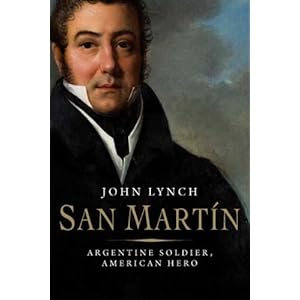
San Martin

I have just finished reading John Lynch's biography of the Argentine General Jose de San Martin.
San Martin: Argentinian Soldier, American Hero
San Martin is best known as the commander of the Army of the Andes that crossed that mountain range, defeated the Spanish Royalist armies and liberated Chile. He then went on to liberate at least part of the Royalist stronghold of Peru before he met up with the northern Liberator Simon Bolivar, the subject of Lynch's previous book. He effectively retired from the liberation struggle and retired to France. His house in Bolougne is a museum to him today.

San Martin was a complex individual. He learned his military trade in the Peninsular War in Spain before returning to Argentina, the place of his birth. While he was a key player in the liberation of the Spanish colonies in South America, he was a conservative and a royalist politically.

This is a biography of the man rather than a military history. But a well written study that puts the campaigns into context. His military achievements reflect his considerable leadership skills.

I took an interest in San Martin a few years ago when we took his Andes campaign as a theme for a series of demonstration games in 2007. I built his Army of the Andes and his Royalist opponents in 28mm scale, mostly by simple conversions from other ranges. Details and pictures are on my web site and details of the demo games on the GDWS site. I dusted them down a year or so ago to play using Black Powder rules and they worked very well.

There is now a range of figures in 15mm by Grenadier Productions run by a real enthusiast for the period, John Fletcher, who has also written an excellent guide to the campaign. There is a good Liberators Yahoo group as well. 

A few photies from my collection.


Sunday, 1 July 2012

Gebirgsjager

The first Gebirgsjager infantry platoon off the bench.


Followed by a Mortar platoon for close support


Working on the Pioneer platoons next with some ATGs.

Sunday, 24 June 2012

Campaign in Greece

My latest Balkan reading is a reprint of the Air Ministry, Air Historical Branch study, Campaign in Greece 1940-41.

This is a history and analysis of the British air campaign in support of the Greeks in 1940-41. The resources were limited as the campaign was viewed as a distraction from the western desert campaign, at a time when the Germans, under Rommel, were arriving to bail out the Italians. However, as this study shows, even if more aircraft were available it would have been difficult to deploy them given the lack of all weather airfields. Like the land campaign, organisation was patched together and there was poor communication between the allied commanders, including poor AA cover and observer support.

Most of the campaign was fought by Blenheim and Wellington bombers protected by Gladiator fighters. Obsolete, but still did a really good job. Some Hurricanes arrived in the spring of 1941. The RAF claimed 231 enemy aircraft confirmed and 94 unconfirmed, for a total aircraft lost of 209. Of these 72 were lost in combat and 83 destroyed or abandoned on evacuation. The rest in low flying attacks on poorly protected airfields.

This is a reprint of a typewriter study so the production quality is very poor. None the less it has lots of useful data and a fairly frank assessment of the campaign successes and failures.

More German armour

Latest additions from the painting tray for my early war German project. We have some light armoured cars, Pkw 1 command tanks and some trucks. All from the Forged in Battle range.

Foot next with the Gebirgsjager being based up.

Sunday, 17 June 2012

The Parthian

My latest historical fiction read has been Peter Darman's book 'The Parthian'. First time I have read his work and very mixed reviews for a book that is very good value on the Kindle.
The Parthian
First the story. Our hero is Prince Pacorus, a Parthian prince who gets captured by the Romans and ends up a slave in Italy. He is liberated by Spartacus and he creates a Parthian style light horse unit in the slave army. So the book is really about the slave revolt, a popular fiction theme at present. His unit helps give Spartacus the edge over his Roman opponents in a series of battles the length of Italy, until eventual defeat when Pacorus slips back to Parthia.

Other reviewers seem to either love or hate this book. It is certainly hard work in places and could have benefited from some aggressive editing. Typos are particularly irritating and unnecessary in a professional publication. The story line is less than plausible in places, but then the story of Spartacus is pretty amazing. On the plus side the battle scenes are well described and the historical context well researched. I certainly had no problem putting it down, but I equally never felt the urge to give up. I won't rush to get the next title, but could be tempted. 

Wednesday, 13 June 2012

Greek WW2 figures in 28mm

I reviewed the new Rif Raf range back in August when David Burns kindly sent me some samples.

I have eventually got round to getting them ready for the tabletop. Not quite up to David's standard but they still make very presentable figures. Not sure what I am going to do with them as I am not going to start this conflict in another scale. famous last words!

Might make an appearance as an overseas legion in VBCW. Communist exiles from the Metaxas regime perhaps?

Naval mutiny!

The navy has mutinied in Glasgow and joined the Clydeside Brigade. useful reinforcements as these are trained troops in the best Battleship Potemkin tradition.


These are First Corps figures supplemented by some villainous looking Blue Moon characters. Oh and one of Simon's converted steam lorries that I picked up at Falkirk.