Welcome to my blog!

News from a wargamer with a special interest in the military history of the Balkans. It mainly covers my current reading and wargaming projects. For more detail you can visit the web sites I edit - Balkan Military History and Glasgow & District Wargaming Society. Or follow me on Twitter @Balkan_Dave
or on Mastodon @balkandave@mastodon.scot, or Threads @davewatson1683

Saturday, 24 February 2024

Maverick Spy

 My library pick this month was a spy story with a difference. It is Hamish MacGibbon's take on his father James' spying activities in WW2. He was a British intelligence officer who confessed on his deathbed that he leaked details of Allied intelligence to the Soviets.


James MacGibbon was born in Glasgow, the youngest son of Rev James MacGibbon, minister of Glasgow Cathedral. He was educated at Fettes College, a traditional English public school, even if based in Edinburgh. He doesn't appear to have been politically active in his youth, and his middle-class background was not typical of Glasgow communists of the period. However, like many of his era, he was horrified by the Spanish Civil War and his contact with Nazi Germany working in the publishing industry.

He joined the Communist Party with his wife, Jean, in 1937. At the outbreak of war, he was commissioned as a second lieutenant and was posted to the Intelligence Corps due to his fluency in German. In the spring of 1941, he was posted to the War Office in MO3 (Military Operations, Section 3). In June 1944, he was posted to the Combined Chiefs of Staff in Washington. In these roles, he had access to many Allied plans and intelligence of German plans. The Allies did not always share the details of their knowledge with the Soviets, partly because liaison officers were politically hostile to the Soviets and partly because they wanted to protect the existence of ULTRA. 

James was particularly outraged at not sharing the German order of battle, which would be of critical value to the Soviets when they were incurring massive losses. He, therefore, made contact with the Soviet Embassy and began sharing this intelligence. His codename was 'Dolly' and later 'Milord', and he was run by the GRU, while another British spy, John Caincross (Cambridge Five), was handled by the NVKD. It is clear from Soviet intelligence archives that his reports were seen by Stalin and his close circle and were highly valued. His leaking of the Overlord plans had the positive effect of convincing Stalin that the Allies were serious at the Tehran conference. Bizarrely, the closest these plans came to being leaked to the Germans was due to the lax security in the British embassy in Ankara (Cicero). 

James MacGibbon rejoined the Communist Party after the war when he returned to publishing. His house was bugged, and he was interrogated by MI5. However, he didn't spy for the Soviets despite approaches and wouldn't have had anything worthwhile to send anyway. He kept the secret until his deathbed.

While technically treasonous, James believed his espionage was the act of a British patriot. A view his son shares. I may have done the same (perhaps not Overlord plans but probably the ORBATS), but others will disagree. The book has a lot about his personal life and the whole back story, which pads the story from what could be told in an article. However, you can skip through that to get to the meat of the story.

Thursday, 22 February 2024

Zeebrugge 1918: The Greatest Raid of All

 I came across the Zeebrugge raid in my research for the Ambuscade book and the role of the Dover Patrol in WW1. While HMS Ambuscade didn't participate, I made a mental note to look further. At the York show, I picked up this book by Christopher Sandford on the subject from Dave Lanchester.

When we think of raids on occupied Europe, we gravitate to WW2 and the commandos. However, the Zeebrugge raid of April 1918 had many elements we would see in the later conflict and some of the same personalities.

The raid was a British-led naval operation aimed at blocking the German-held port of Bruges-Zeebrugge in Belgium. The port was a significant base for German U-boats that were wreaking havoc on Allied shipping, sinking two Allied ships a day on average. The raid involved a daring attempt to sink old ships at the harbour's entrance, blocking access to German submarines. The plan involved three old cruisers, HMS Thetis, HMS Intrepid, and HMS Iphigenia, packed with explosives and scuttled into the harbour entrance. Simultaneously, a diversionary attack was launched on the nearby port of Ostend to draw German forces away from Zeebrugge.

Sandford starts with the strategic background in the last year of the war. Zeebrugge was home to a force of 36 U-boats, which were causing heavy casualties to allied merchant shipping, despite the best efforts of the Dover Patrol to contain them, sinking six U-boats a month in the early months of 1918. Bombing the port wasn't an option because aircraft couldn't carry a heavy enough payload, and attempts to advance on land up the coast had failed. 

The defences of Zeebrugge were considerable. 232 guns protected the harbour, plus 128 machine gun nests, searchlights, and a garrison of around 700 men. Sea access was heavily mined, and heavy silt created natural defences. Sandford takes us through the options that the commander, Roger Keyes, considered and eventually got approval for. Back in the government, Churchill was also an enthusiastic supporter of the raid. He would recall Keyes to be the first Director of Combined Operations in June 1940.

Most of the book focuses on the raid itself in graphic detail, with many descriptions of outstanding bravery. Six VCs were awarded, some by unit ballot. This wasn't a clean commando raid, silent and violent. The cruiser, HMS Vindictive, carried most of the landing force of seamen and marines onto the mole. They suffered staggering casualties, yet amazingly, the ship managed to sail away. The mole itself probably saved the ship from a critical lower hit, but the superstructure was wrecked. 

Despite heavy casualties and the partial failure of some elements of the operation, the raid was ultimately considered a strategic success by the Royal Navy. While the harbour wasn't permanently sealed, it was sufficiently obstructed to disrupt U-boat operations temporarily and force the Germans to deploy additional resources to clear the blockage. Others regarded the achievements as modest for such casualties. Admiral Fisher was one critic, quoted as saying, 'No such folly was ever devised by fools as that at Zeebrugge.' If it was a failure, it was a classic British 'honourable' failure, which certainly raised morale at an important period in the war.

Although I am not beyond a bit of harbour building on the wargame table, Zeebrugge is beyond me. However, I have started a modest WW1 naval force and plan to refight some Dover Patrol actions. 

Next week, I am off to London for naval archival research at Greenwich and Kew. That may provide some further inspiration!

Monday, 12 February 2024

Czechoslovak Armies 1939–45

I am a sucker for an obscure WW2 army, and this Osprey MAA by Nigel Thomas certainly meets that criteria. 


The author starts with the pre-war Czechoslovak Army, fatally undermined by the 1938 Munich agreement, stripping them of the Sudeten fortifications. They benefited from an advanced armaments industry, equipping the army with modern artillery, armoured cars and tanks. It was never tested other than a limited resistance to Hungary's invasion of Ruthenia. However, the Germans made extensive use of their equipment throughout the war. All the uniform details are here if you want to give this army a go for what-if scenarios.

After the fall of Czechoslovakia in 1938-39, elements of the armed forces fought in Poland, and others emigrated to France. In France, they joined the Foreign Legion or the French Army. There was an 11,405-strong 1st Czechoslovak Inf Division, commanded by Brig-Gen Jan Kratochvíl. After the fall of France, some 3,500 troops evacuated to Britain. 

These forces and others served with the British Army in the Middle East, the Far East and NW Europe, mainly in British kit with a Czech flag on the helmet and shoulder flashes. There are the usual excellent colour plates. Aircrew served in the RAF, forming three fighter squadrons, a bomber, and a night fighter squadron.

Troops interned in the Soviet Union formed a battalion in the Red Army, growing to a corps of 16,000 men by 1944. They attempted to support the Slovak uprising in August 1944 but suffered heavy casualties at the Dukla Pass.

On the home front, various internal security units were created, although the Germans didn't trust them and were limited to guard duties. Resistance units started almost immediately and were supported by SOE. This included the famous Heydrich assassination and the destruction of the villages of Lidice and Ležák. The Russians and Americans converged on Prague, which was liberated by the Soviets in May 1945, supported by an uprising.

It wouldn't take much to add Czech units to your Allied or Soviet armies. I suspect the internal security and other exotic units might be a project too far for most.


Tuesday, 6 February 2024

Dudley Clarke - Seven Assignments

 Brigadier Dudley Clarke was one of the lesser-known but fascinating characters of WW2. I wrote about him in my book Chasing the Soft Underbelly because he was the head of 'A Force' in Cairo and was responsible for a wide range of deception operations and intelligence work in Turkey. He is less well-known mainly because he wasn't authorised to write about his work after WW2. The War Office believed that his operations were so successful that they might need to use them against the Soviets.

His work is touched on in other histories, and I read quite a bit in the National Archives. However, no memoir exists. Or so I thought. I was rummaging around in an old-school second-hand bookshop in Glasgow and came across a 1947 book by Clarke, Seven Assignments. I missed it in my research because it covers the early war period just before he arrived in Cairo on Wavell's staff. Coincidentally, catching up on We Have Ways podcasts coming back from York, James Holland discussed Clarke in an interview, and his guest mentioned this book.

The dust cover of my copy is a bit battered, but I got it at a very reasonable price when you look at what they are going for on Abe Books. A pristine copy is on sale for £650!


In his introduction to the book, Wavell hints at his later work when he says, 'I have always believed in doing everything possible in war to mystify and mislead one's opponent, and that I was right in judging that this was work for which Dudley Clarke's originality, ingenuity and somewhat impish sense of humour qualified him admirably.'

His first assignment was a traditional staff officer job in the Middle East, scouting an overland route from Mombasa to Cairo in case the Mediterranean route was blocked. This was a travelogue, so we will skip to his first trip to Norway. I have read about the ill-fated Norwegian campaign but haven't encountered Clarke's not-insignificant role. Somewhat typically, he stretched his liaison role to actually going to Norway with the initial landing force. He got involved with the retreat and worked with the Norwegian Army, meeting General Ruge. His descriptions of journeying around Norway in various vehicles are hair-raising. He was sent back later to help with the evacuation and was one of the last to get away.

The next stop was the France 1940 campaign, with a detour into an unnamed neutral country to meet sympathetic local officials. This was still obviously sensitive in 1947, and I assume it was Ireland. As troops were being evacuated from Dunkirk, he came up with an idea of how to strike back with small-scale raids. He floated the idea with Sir John Dill, who gave him carte blanche to organise them. It was Clarke who came up with the name Commandos. He was born in South Africa and was well acquainted with the Boer War. The name was not well received in the War Office, but Churchill loved it. He went on the very first raid and was nearly killed, only being saved because the bullet deflected off his silver tobacco box. 

When Keyes took over special operations, he favoured large-scale raids like Zebrugge in WW1. Clarke disagreed and so was probably pleased when Wavell asked for him. This service led him to be responsible for naming the SAS as well. 

This is a fascinating tale about an interesting character. The Wiki page has more about his life and times, and if you can get a copy of this book from the library, I highly recommend it.


Sunday, 4 February 2024

Vapnartak 2024

 The first major wargames show of the year in the UK is Vapnartak. It is held in the York racecourse stand, a surprisingly good venue. Spacious, plenty of natural light, decent catering and ample car parking, if a bit muddy in the rain. I made a weekend of it as my team played at Burnley on Saturday. 

The event is primarily a trade show with a limited array of games. I picked up some 28mm Napoleonic French line infantry (you can never have too many!), British Dragoon Guards, Wild West buildings, and books from the Bring and Buy. A few more books from Dave Lanchester's stall and a couple of packs of Black Scorpion Miniatures cowboys, which look fantastic. Along with paints, bases and other bits and bobs. 

As for games, there was one outstanding offer, Garibaldi and The Battle of Mentana 1867. For those following the Yarkshire Gamer's painting project on Twitter, this was the culmination of his efforts. 


There was a nice-looking Napoleonic naval game using the Lardie's Kiss Me Hardy rules.

I'm not into Pulp games, but these Venetian buildings from Sally 4th were excellent.


And that was about it. The rest were average or seen before.

A giant board game with some interesting what-if scenarios.

The clouds make Wings of War a bit more challenging.

This Star Wars game was at Partisan. That is an impressive bit of modelling.

Old School Warhammer, I think.

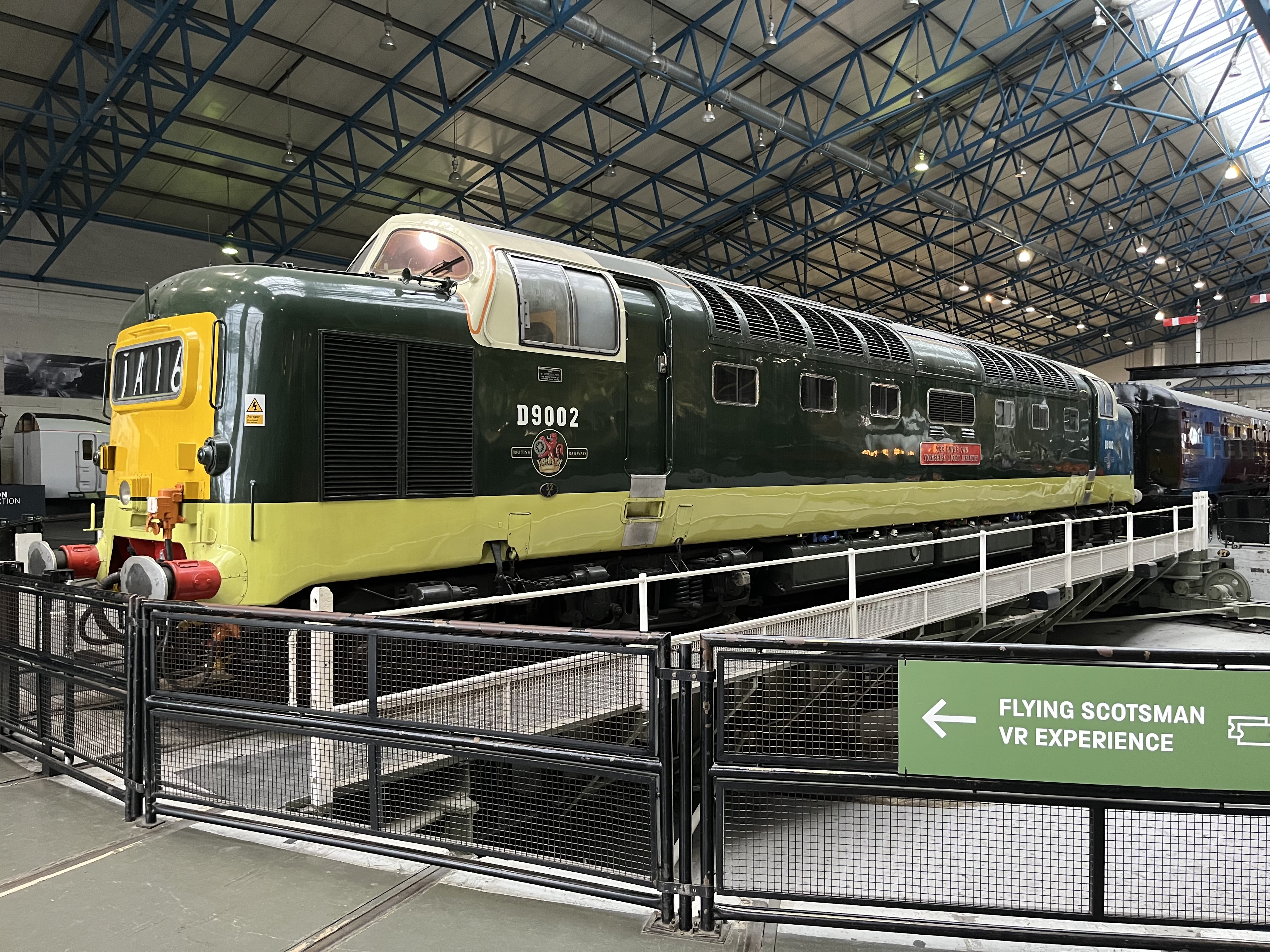
So, it was a good day out for buying stuff, but the games were mostly average. I like York though, and I always take advantage of every opportunity to visit the National Railway Museum before heading home.


Wednesday, 31 January 2024

Sailors, Ships and Sea Fights

 This book, edited by Nicholas James Kaizer, contains the proceedings from Helion's 2022 Naval History Conference. There are 14 papers organised into three sections. Naval operations in Europe and North America and naval administration.


There is a lot of specialised content in this book, and inevitably, some I found more valuable than others. The first chapter on Venetian vessels in the Second Morean War describes how the Venetians moved from a galley to a sailing fleet. We tend to think of galleys when considering the Venetian fleet, but the Republic was the first Italian power to develop shipbuilding focused on large warships. By the time of the Second Morean War, the Ottomans were doing likewise, and this chapter discusses how both sides developed their tactics. 

French and Spanish support for the 1745 Jacobite uprising covered the various efforts to get troops and supplies past the Royal Navy and into Scotland. I covered one of these, Kyle of Tongue, in a recent post about a game. I thought the French were not particularly successful, but the author's statistics show a 48% delivery rate. It was not great, but it was better than I thought.

The section on North America is not an interest of mine. However, the War of 1812 is, and the Editor's own chapter analyses ship-to-ship combats, addressing the perceived wisdom that US victories were almost always unequal fights. He examines three actions involving the Royal Navy sloops: Peacock, Boxer and Epervier. These actions highlight that some of the Royal Navy commanders during this conflict were the worst put to sea for the Royal Navy.

I didn't think I would find much interest in the final section on naval administration. However, the chapter on the reforms introduced by Anson (1751-1762) is fascinating. I will incorporate some of the analysis in my current writing project about HMS Ambuscade, as the first ship of that name was captured from the French and the design used to develop Royal Navy frigate design. Few Admirals successfully carried off political and naval careers, but Anson did. He deserves greater attention. 

Other chapters in this section deal with myths about conditions aboard ships and recruitment to the Royal Navy. Despite the desperate need for sailors at the outbreak of war, forced impressment was not as significant as many think. Jim Tildesley has examined how one British Consul recruited for the Royal Navy during the Napoleonic Wars. Again, this will all add colour to my chapter on the period.

I suspect this book will be most interesting to those with a specialist interest in naval history. However, the two sections on operations still provide plenty of sea fights to keep others interested. I am writing a chapter for the next book in this series on amphibious warfare in the Adriatic. That should be published at this time next year.

I must try and play more Black Seas!


Sunday, 28 January 2024

Port Arthur 1904-5

 This is the latest in the Osprey Campaign series by Robert Forczyk, covering the Japanese siege of Port Arthur during the Russo-Japanese War. I have a soft spot for this conflict after watching the TV series Reilly Ace of Spies and reading Dennis Warner's study of the campaign, A Tide at Sunrise. A more recent study and probably easier to source is Rising Sun and Tumbling Bear by Richard Connaughton. There is also a valuable Osprey essential histories on the conflict.

This book follows the standard format for this series, with chapters on the background of the campaign, the opposing forces and their commanders, and then the campaign itself. All are profusely illustrated with excellent maps and colour plates. As an avid battlefield visitor, I also like the chapter on the battlefield today in this series, even if, in this case, I am not likely to make the trip. Port Arthur is now known as Lüshunkou District in the People’s Republic of China. In the century since the Russo-Japanese War, the city’s population has expanded more than twelve-fold and urban sprawl has covered up much of the battlefields of 1904.

As a port siege, the Japanese Navy under Admiral Togo played a vital role in the operations. However, Togo is remembered for what he did right at the Battle of Tsushima, not for what he did wrong at Port Arthur. The main Japanese army commander was General Nogi Maresuke. Nogi was unimaginative and possessed only rudimentary military skills. He was a firm believer in frontal attacks and, therefore, profligate in expending the lives of his troops and unable to grasp modern warfare. The Russian fortress commander was General-leytenant Anatoli M. Stoessel, commander of the III Siberian Army Corps. Stoessel was a nobleman of ethnic German lineage. He had a reasonably distinguished record as an infantry officer but no real experience with independent command, nor had he led any formation larger than a regiment. The bottom line was that commanders on both sides were ill-equipped for what the author describes as the first modern siege.

The campaign began with a Japanese naval attack on the Russian fleet which inflicted significant damage,  but failed to achieve the predicted knock-out blow, and Togo was now forced to shift to a distant blockade. The siege began in ernest in May1904, when Japanese forces launched an assault on Port Arthur. Attacks were often poorly coordinated with the navy and the Russian defenders put up a staunch resistance with both sides suffering heavy casualties. The Japanese employed various strategies, including tunneling and mine warfare, to breach the fortifications. After months of bitter fighting, and the Russian defeat at Liaoyang meant no relief operation by land could be expected until the spring, Port Arthur fell to the Japanese on January 2, 1905. The eight-month-long campaign cost Nogi’s Third Army approximately 59,400 casualties (including 15,400 dead), equivalent to almost 40 per cent of the troops allocated to the operation. The Russians suffered roughly 30,000 casualties including about 16,000 dead.

The capture of Port Arthur was a significant victory for Japan and had a profound impact on the course of the Russo-Japanese War. The war ultimately led to the signing of the Treaty of Portsmouth in September 1905, mediated by the United States, which recognized Japan's influence in Korea and its control over southern Manchuria. The war also contributed to the political collapse of Imperial Russia 12 years later.

Imperial Japanese Navy General Staff map of the siege

I have Russian and Japanese armies in 15mm for this war, and my favoured rules are Bloody Big Battles. Sieges are challenging to replicate on the tabletop, but there are preliminary moves and the defence of the outer lines that could be refought easily. There are naval clashes with manageable numbers of ships and sailors also fought on land as naval infantry and gunners.


Saturday, 27 January 2024

Napoleon's Spy

 Ben Kane is better known for writing ancient historical fiction, mainly about the Romans. In this book, he has sortied into the Napoleonic Wars and the 1812 Russian campaign.


The main character is something of an anti-hero. His parents are British and French, living in England. He is a gambling addict, and his father eventually stops paying his debts. This leads him to try his luck at the lucrative, if risky, business of helping French PoWs escape back to France. It doesn't go too well, and he ends up penniless again with a relative in Paris. As you might expect, he again falls into debt after gambling and is blackmailed by the British to spy for them in the Russian campaign. The book's title is misleading as he certainly isn't spying for Napoleon. 

The bulk of the book is focused on the Russian campaign, which he participates in as an Imperial messenger. His spying contribution is minimal, but he is at most of the significant events of that ill-fated campaign. The author has used the many memoirs of the terrible retreat to help him tell the story. This really is a case of history being more horrific than fiction. 

The description of the retreat is relentless and probably not the best choice for my bedtime reading! However, Kane is an excellent writer, and the story is well told. It is a Sunday Times bestseller for good reason.


Some of my 15mm French fighting off Russian Cossacks


Tuesday, 23 January 2024

Crown, Covenant and Cromwell

 My library pick this month was Stuart Reid's study of the civil wars in Scotland 1639-51. It fits perfectly into my new wargames project, building the Scottish armies for these conflicts in 15mm. Mainly for the To the Strongest derivative, For King and Parliament, but I will also play Pikeman's Lament and Pike and Shotte. I am looking forward to the TtS! supplement on Montrose, due out later this month.


This is unabashed military history; as Stuart says, 'Historians sometimes seem to regard battles a rather too exciting to be a respectable field of study.' It also covers all of the wars of the period. I have several books on Montrose's campaigns and a few on the others, but this book covers the lot and gives the reader a sense of how the armies developed and adapted to war in England and Scotland. The only omission is the war in Ireland, which included Scottish troops, and that also has a TtS! supplement coming out soon.

Stuart starts with an introduction to Scotland of the period and how Scots armies were raised and armed. The basic structure of an infantry unit was similar to other Civil War units, although they looked different with the distinctive blue bonnet. One detail I had yet to appreciate was the large number of flags a regiment would have, one per company. Wargamers need no encouragement to follow this! The cavalry included lancers, which had gone out of fashion elsewhere, and Highlanders.

Then we get into the little known Bishops' Wars. This involved Charles I attempting to enforce his religious reforms on the Scots. Spoiler alert: it didn't go well. This also covered the development of the Covenant and the Covenanters as a political and religious force. I live in the homeland of the Covenanters in Ayrshire.

The Civil War in England saw a Scottish army move south to support the Parliamentary cause. Most famously at Marston Moor, and he also covers the less well-known Northumberland campaign. Stuart downgrades the size of this army from traditional estimates, something which becomes a theme in the book - closer to 14,000 than 22,000. While the main Scots army was in England, Montrose raised the King's Standard in Scotland and fought his famous campaign. His army fluctuated considerably, with units leaving him at crucial moments, including the very effective Irish under Alasdair MacColla. Montrose was an excellent battlefield commander, but his diplomatic skills needed improvement. Stuart also wrote the Osprey Campaign book on this campaign, focusing on the Battle of Auldearn in 1645. 

The Scots recognised Charles II after the regicide, resulting in a falling out with Parliament. The early stages of the campaign went well until the army moved south. The promised Royalist uprising didn't fully materialise, and that led to the defeat at Preston. Cromwell's invasion of Scotland initially struggled. The Scots held strong positions and cut his supply lines. It all went wrong at Dunbar, but there are other interesting battles. Inverkeithing in particular. It ended badly again with another sortie down south and the Battle of Worcester.

This is an excellent and very readable account of the period. You can pick it up cheaply on Kindle; the maps and illustrations are small enough to work in that format. 

I have finished the first Covenanter cavalry units. These are Essex miniatures. Infantry next.


Sunday, 21 January 2024

Frontier Sea Scenario: The Supply Convoy

For today's game we tested a wargaming scenario to go with my book, The Frontier Sea: The Napoleonic Wars in the Adriatic. It is designed to refight a typical small-scale action of the period.

The French Illyrian Provinces ran down the Dalmatian coast in modern-day Croatia and Montenegro. The towns were linked by a coast road, which runs pretty much along the same route as modern tourists travel down every summer. Where practicable, it hugs the coast, constrained by the mountains behind.

Transport between the towns was traditionally undertaken by small boats called Trabaccolos, as the roads were poor and prey to bandits. The French governor, Marshall Marmont, introduced a road building programme to improve them, primarily so supply convoys could move between his coastal forts. The French also moved supplies by sea, although the Royal Navy frequently intercepted these convoys and captured the supplies. 

In response to the French using the land route, the Royal Navy frequently landed raiding parties on the coast using ships boats. They would either land directly when they spotted a convoy or land beforehand and ambush the convoy. The French were forced to strengthen the convoy escort. The Royal Navy became so skilled at this operation that many supply convoys had to be diverted inland, a longer and more expensive process, which was also more susceptible to bandit attacks.

In this scenario, a strong French convoy is making its way down the coast with the intention of stopping for lunch at the next village. It is spotted by the Royal Navy frigate, which dispatches boats with sailors, marines and infantry from the 35th Foot. The British objective is simple: capture the convoy. The French have to fight them off. We used the Osprey rules, Rebels & Patriots, which are ideal for this type of skirmish game. Sharp Practice would work equally well. We used 28mm figures from various ranges. Here is the force list:

We played twice with the British winning the first time and the French the second. The French have the numbers, but the British have better quality troops.


Friday, 19 January 2024

The War of 1812

 This is the latest in the Osprey Essential Histories series covering the war between Britain and the USA in 1812. Having been lucky enough to have visited the Niagara battlefields a few years ago, I am always attracted to books on the subject. This isn't a new book as such. It is an updated and enlarged version of the 2002 Osprey book to reflect more recent research. Osprey do a couple of other books on this war, including Niagara 1814, which was very useful for my trip.


The War of 1812, fought between the United States and Great Britain from 1812 to 1815, stemmed from various grievances, including British impressment of American sailors, trade restrictions, and support for Native American resistance. Early military campaigns saw mixed success for the U.S., with failed invasions of Canada offset by naval victories. The conflict escalated with the burning of Washington, D.C., in 1814 (famously blamed by Trump on Canada!). Despite signing the Treaty of Ghent in December 1814, news of the peace reached the combatants after the Battle of New Orleans in January 1815. The war had a lasting impact on American nationalism, weakening Native American resistance and contributing to westward expansion. The Treaty of Ghent restored pre-war borders but did not address critical issues. The war is often overshadowed by other conflicts but played a vital role in shaping American identity and diplomatic relations.

In this introduction to the conflict, we get an explanation of the causes of the war and the forces available to both sides. The key battleground was Canada, which the U.S. forces invaded in several places. Visitors to Niagara Falls often miss the forts and battlefields that are well preserved. The war was fought on land and sea as the Great Lakes dotted the border. The armies were primarily made up of militia stiffened with units of regulars. The added interest is the inclusion of Native Americans, or the First Nation as they are referred to in Canada, who primarily fought with the British.

The meat of the book is a description of the campaigns. As the British were busy fighting Napoleon, the USA thought the invasion of Canada would be straightforward. There were good reasons for American confidence. British North America’s population was 500,000, compared to 7.7 million in the United States. It didn't turn out that way for various reasons explained in the book. 

As expected, the book is profusely illustrated with period pictures and clear maps. This is an excellent campaign for the wargamer as the armies were not large, and the fleet actions can be replayed with rules like Black Seas. The naval actions on the lakes involve smaller ships. I have replayed the land actions using Blucher, Lasalle2 and Rebels & Patriots, after building modest armies in 15mm.

This is an excellent introduction to an often forgotten conflict that has attracted new interest in recent years.


Wednesday, 10 January 2024

Price of a Princess

 This is the latest in my Nigel Tranter project. It's a slim volume, and frankly a slim story, during the period when James III (1460-88) was a child king. The story is told through his sister, the Princess Mary.

James II died when a cannon exploded during a siege, leaving a child king, which is never a good thing in a medieval state, and certainly not in Scotland. The story begins after the death of the Queen Regent when Lord Boyd of Kilmarnock grabbed the King and held him at Edinburgh Castle. He and his supporters had their coup confirmed by Parliament with the young King (he was 14) present. Lord Boyd was declared governor and ruled Scotland.

The Boyds were not one of the ancient families, elevated to the nobility from a merchant family. Their main fortress was Dean Castle in Kilmarnock, just up the road from me and recently renovated.


This was one factor in their rule being resented, although the evidence would suggest they were as competent as any other. Marrying his son off to Princess Mary was also resented by the Earls. Princesses of the period were typically used to cement alliances abroad. Tranter portrays this as a love match, which may be a bit of poetic licence!

The highlight of the period was securing a marriage for James III to Princess Margaret of Denmark. The book devotes several chapters to the embassy that achieved this. The critical factor was that because King Christian couldn't find the dowry, Scotland got Shetland and Orkney instead. 

Despite this, another coup was in the making. Tranter takes a slightly different take on how it all worked out, but I won't spoil the ending.

This is not one of Tranter's most gripping novels. With the Wars of the Roses going on, the English were distracted, so there was less military action.

Saturday, 6 January 2024

Hot Skies of the Cold War

This a study by Alexander Mladenov and Evgeni Andonov of the Bulgarian Air Force in the 1950s, in the Helion Books Europe@War series. 


Primarily because it didn't join the invasion of the Soviet Union, the Bulgarian Air Force didn't get a lot of German aircraft during WW2  That changed somewhat when the Allies started flying over Bulgaria to bomb the Romanian oilfields, but they were still the poor relations  Post-war in the Soviet sphere of influence, Bulgaria was on the Cold War frontline, facing NATO, including Greece and Turkey.

The first Bulgarian jet fighter was the Yak-23, a plane I have to admit never having heard of. 120 were delivered, along with 16 twin-seat trainers  I have visited the Bulgarian Air Museum at Plovdiv, but I don't recall seeing the Bulgarian version of this aircraft there. Bulgarian pilots liked this aircraft finding it efficient and safe.


In 1951 the first Mig-15s arrived. More difficult to master but a much higher combat potential. 160 of these fighters joined the Bulgarian Air For e and was the backbone of the force in the 1950s. It was followed by the Mig-17 which equipped about half the fighter squadrons between 1955 and 1960. 

The operations described in the book are a little thin. The Greek border was particularly sensitive even after the Greek Civil War. For example, in 1949 there were 107 incursions by Greek aircraft. This was followed by CIA intrusions carrying out projects aimed at destablising the Bulgarian and Romanian regimes. Although the Turkish government eventually refused to allow bases on their territory. Later in the period the CIA sent spy balloons which at least provided a target for pilots to shoot down!

Perhaps better known was the downing of El Al flight L-149 in 1955 by a Bulgarian plane with 58 people aboard. The airliner had crossed into Bulgarian airspace, although the length of the incursion was contested. The authors had access to classified papers and attempt to reconstruct the sequence of events. Even today several serious questions remain unanswered. Why did experienced Israeli pilots in predictable weather conditions deviate so far from their route? The young and inexperienced Bulgarian pilots had little understanding of commercial airlines, but the markings on the plane were easily identified.

Writing about military history is challenging when there was little actual fighting, and the operations were limited.  However, I am a growing fan of early jet fighters, drawn in by my book on the Cyprus conflict and the Korean War. This book is primarily aimed at plane enthusiasts, but I can also see some interesting what-ifs gracing my wargames table.

This Blood Red Skies Korean War box could be converted with different decals.


Tuesday, 2 January 2024

The Amur River

My library pick last month and Xmas reading was Colin Thubron's travelogue, The Amur River. This is the border between Russia and China, and it has a fascinating history. However, I don't think the Amur River Tourist Board, if there is such a thing, will be ordering many copies. He doesn't exactly sell it as a tourist destination.


The Amur River (called Heilongjiang (Black Dragon) River in China) is one of the longest rivers in the world, flowing through Northeast Asia. It serves as a natural border between Russia and China. The river begins in Mongolia (although this is contested) and flows eastward, forming the boundary between Russia's Far East and northeastern China before emptying into the Sea of Okhotsk in the Pacific Ocean. 


Colin starts on horseback in Mongolia near the Mongolian royalty burial grounds. Most tourists would have called it a day as he falls off his pony, breaking his ankle and ribs. However, our intrepid travel writer continues using more modern transport for the rest of the journey. As he enters Russia, this is Siberia, a territory of many conflicts with China. So much so that almost no bridges cross the river boundary. The Russians colonised this region in the 17th century, sending cossacks and other freebooters to the river, massacring the native tribes as they went. The Manchu dynasty eventually lost patience and attacked the cossack forts before both countries signed a peace treaty in 1689.


On the way, Colin visits the remains of old fortresses and the local museums. The curators were understandably surprised to see a foreign visitor. The 19th century saw renewed Russian efforts to develop the region, taking advantage of Chinese weakness. This was the period of one of Britain's most disgraceful colonial conflicts, the Opium War, so the Russians were not alone. Count Muraviev-Amursky, the Russian governor, persuaded the Tsar that the river had strategic value. He assembled a force of cossacks and a mile-long flotilla of armed barges to control the river. The subsequent 1858 Treaty gave Russia control of the lands north of the river, but the cossack settlements seldom flourished. The Soviets also had a go at it, but with no more success. 


Khabarovsk is the largest city, and trade with China is primarily illicit. The Chinese find ways around trade restrictions and ownership rules, primarily by adopting a token Russian partner. There are significant memorials along the river to the dead of the wars—some to the early cossacks, but also to the conflict with Japan in 1945. The Nomonhan Incident in 1939 was on the Khalkha River, which is in the Amur Basin. I collected the armies for this a few years back. The region was also home to several Soviet-era Gulags, and the author visits the mass grave of 12,000 people killed during the years of Stalin's anarchy. Japanese prisoners of war died in much larger numbers after 1945. probably as many as 62,000 in the work camps.


The Sino-Soviet Border War of 1969 nearly sparked a nuclear exchange, fought over islands in the river that have no economic or strategic value. There is a detailed study of the conflict in the Helion Asia@War series. It is still home to significant armament factories, including where the SU-27 is built. There is a museum at the Amur Shipbuilding Plant, although the Soviet Pacific Fleet had long moved to Vladivostok.


This book is not a cheery read. Apart from the history, the lives of people in this sparsely populated region are tough by any standard. The scenery is unspectacular, if not dreary. However, it is an intrepid travel story, well told. 

One of my Nomonhan games in 15mm


Monday, 1 January 2024

Happy New Year!

 Here is wishing everyone a Happy New Year! A serious celebration here in Scotland, so serious that we get two public holidays to recover. Having made a serious dent in a bottle of 'Old Pulteney' whisky last night (a present for doing an after-dinner speech for a pal), my morning bike ride along the seafront has cleared my head for planning the coming year. 

2023 was productive. I had four books published, although this somewhat exaggerates my productivity as two were written mainly in the preceding years. The Frontier Sea appears to have been a popular Xmas present, not just for my family! It even sold a dozen copies in Japan. 

I am contracted to write or co-write four more books in 2024. There will be two more volumes on the Cyprus conflict and a chapter in a book on amphibious warfare during the Napoleonic Wars. My current focus is on my history of HMS Ambuscade, and I wrote the WW1 chapter over the holiday period. We hope to bring the last ship of that name, a Falklands War veteran Type 21 frigate, back to the Clyde this year. I also kept up this blog with an average of two posts per week. And a few journal and wargame magazine articles.


On the wargame front, I managed to finish the projects I had planned and a few I hadn't. The Almughavars and The Catalan Company in 28mm, more planes for Blood Red Skies, Cyprus in 20mm, Korean War (Turkish Brigade) in 10mm, What a Cowboy in 28mm, 2mm ancients for Strength & Honour and Napoleonic Adriatic in 28mm (mostly Austrians). I ran three participation games at the Carronade, Claymore and Targe shows. Two of these used the Adriatic harbour baseboards I built, featured in Wargames Illustrated and an architect's journal. 

For the coming year, I have been rebasing my 15mm Napoleonic irregulars from the old PoW bases. When I finish the Ottomans, I plan to return to Lasalle2. I have some WW1 ships on the painting table and later Ambuscade models to accompany the book. The Cyprus books will drive more figures for the conflict, including three aircraft kits I got for Xmas. 


There are a few more units planned for Strength & Honour. I plan to stretch my Adriatic project to the Russo-Turkish War with 28mm cossacks and Potemkin Russians. My Tranter re-reading project will spark some Scottish projects with Montrose on the radar, Covenanters in 15mm, and more Border Wars. The Indo-Pakistan conflict was one project I could have made more progress on last year. Recent reading has revived my interest in this. I would also like to start an imaginations campaign, with a book on Ruritania staring at me from the desk. I'm sure my reading and new rules will spark other projects, but that looks like plenty to be going on with.

No overseas trips are planned yet, but they will happen. I must get to the National Archives and Greenwich early in the New Year. I will undoubtedly be at the York show, which ties in nicely with a Fulham away game, and probably Salute. I enjoyed my visits to the Newark shows this year and will make a return to at least one of them.

My reading pile looks ominous, particularly those requiring time-consuming translations like these, which arrived last week. I managed over 50 book reviews last year, with an increasing number in electronic format, which helps with domestic harmony!


My day job is pretty busy early in the New Year. I took over a new role as Director of a Scottish Think Tank last year, and although part-time, it is still likely to eat into hobby time. Such is life. I hope everyone had a good New Year, and I wish you all a happy and prosperous 2024.


Sunday, 31 December 2023

Black Douglas

 This is the latest in my Nigel Tranter rereads. We have reached the mid-15th century when the Scots were squabbling amongst themselves as usual, while the English were even more so during the Wars of the Roses. The monarch was James II (1437-60), the latest in the less-than-effective medieval Stewart kings, at least in Tranter's version. If there is a theme, Tranter was not a big fan of the Stewarts. The evidence is that James II, at least towards the end of his reign, was a competent ruler.

The focus of this story is the House of Douglas, the most powerful house in lowland Scotland of the period, at least in terms of fighting men, an all-important consideration. The new Eighth Earl was Will Douglas, forced centre stage into the nation's political life. James II was still a child, and the Crighton and Livingstone families ruled the country. These are the archetypal baddies in the story. 

Initially, James and the young Douglas got along well, but in Tranter's telling, the wicked advisors turned the King against him. Tranter invents a dysfunctional marriage and rejects the evidence that he took part in a plot with the Lord of the Isles and others. Either way, it doesn't end well for Douglas, although he may have had the last laugh as James II was later killed by an exploding cannon. One bit of history for those who object to this provision in some wargames' rules.

This isn't the most action-packed tale. Not least because conflict with England was lower than usual, not least because they were a bit occupied with their own troubles. The one major incursion led to a less well-known Scottish victory at the Battle of Sark on 23 October 1448. This was fought near modern Gretna, familiar to those entering Scotland today on the M6. There is an interesting excursion to Rome, which, although a little before the Borgia period, is depicted as just as debauched.

It is not one of Tranter's best, but covers an interesting, less well-known period of Scottish history.

Wednesday, 27 December 2023

Shot, Steel and Stone

 Henry Hyde has published his Shot, Steel and Stone rules as a stand-alone set, an outline was previously published in The Wargaming Compendium. You can download a summary, more than a QRS, and a play-through at his website. It's a reasonably short, almost old-school rules booklet that keeps the price down compared to modern sets.

The rules are designed for the Horse and Musket period, roughly 1685-1850. They are an interesting mix of old-school systems and more modern friction rules. Basing and scale are flexible, so there is no need for rebasing. Typically, a close-order base is six figures in two ranks, which is standard, and measurement is by base width. While you can play small battle games, as I did for the playtest, it is aimed at bigger games with larger units than you might typically see in modern rules. 

The introduction could do with a more precise explanation of the turn sequence. For example, it is unclear if both sides shoot each turn or just the side with the initiative. Movement depends on leadership with a Black Powder style leadership roll. However, the impact is softened by small failures that still allow for some movement. This is a definite improvement on the Black Powder approach, which can leave units stranded for several moves. The rules are old-school when it comes to modifiers, with more than you might see in other rules today. In part, this reflects the broad time period, but the length of some tables can result in players missing one or more factors, as we did!

Shooting and combat uses multiple dice to hit and saving throws. This is popular and works well, with a few good tweaks to the system. We didn't use artillery, but that is a little more complex and old-school than you might typically find today. In our playtest, the approach and outcomes were historical, which is always a good test of rules. Check the inevitable list of typos on the website before playing; we spent ages trying to work out the full impact of a retreat outcome because it got missed out.

The reaction test and modifiers are again a bit more complex that you might find today, although I liked the table format, which made it easier to follow. However, adding a relatively lengthy list of disruptions is unnecessary. 

A chapter on additional rules for colonial conflicts includes elephants and exotic add-ons like naphtha and flaming pigs. Plus, there are some special rules for native troops that look interesting.

Overall, there was a strong element of nostalgia for me playing these rules. My younger opponent found them hard work, but I enjoyed the old-school feel. I say feel because this isn't the Bruce Quarrie level of detail, and Henry has adopted several modern approaches to rule writing. I doubt these will replace my favoured rules for this period, but these will get dusted down when I get around to my planned imaginations campaign.  

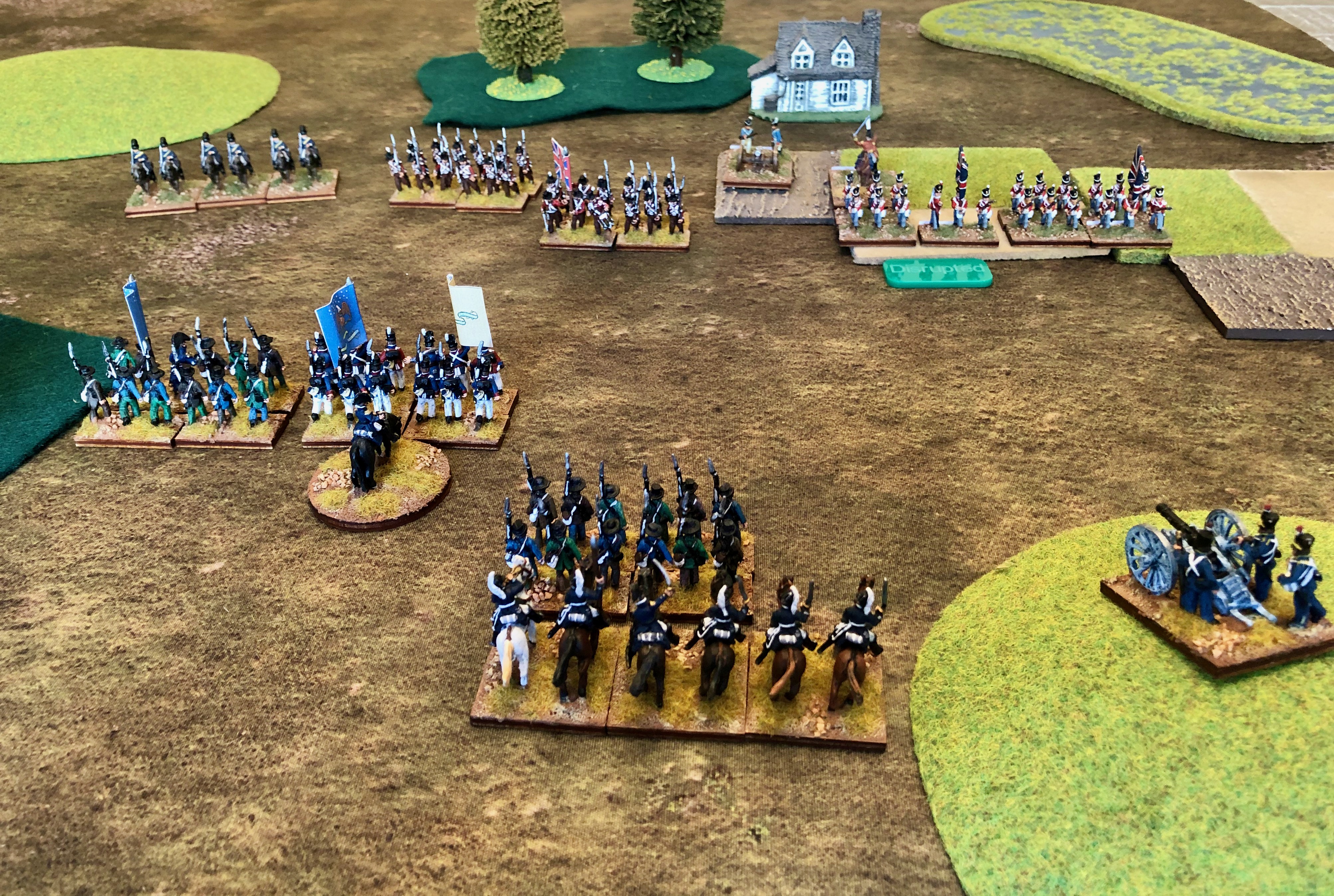
Our playtest was a 1745 Jacobite rebellion game in 28mm. The Jacobites are landing supplies on my lovely new beach mat Xmas present. Two units of Highlanders and a cavalry unit cover the landing when three units of redcoat infantry make an unwelcome appearance.


The government troops advanced in line and started to volley fire. The Highlanders responded with the inevitable charge. They broke through in the centre but were beaten back on both flanks. Time to skip away and try to land somewhere else!