Welcome to my blog!

News from a wargamer with a special interest in the military history of the Balkans. It mainly covers my current reading and wargaming projects. For more detail you can visit the web sites I edit - Balkan Military History and Glasgow & District Wargaming Society. Or follow me on Twitter @Balkan_Dave
or on Mastodon @balkandave@mastodon.scot, or Threads @davewatson1683

Thursday, 17 April 2025

National Military Museum Bucharest

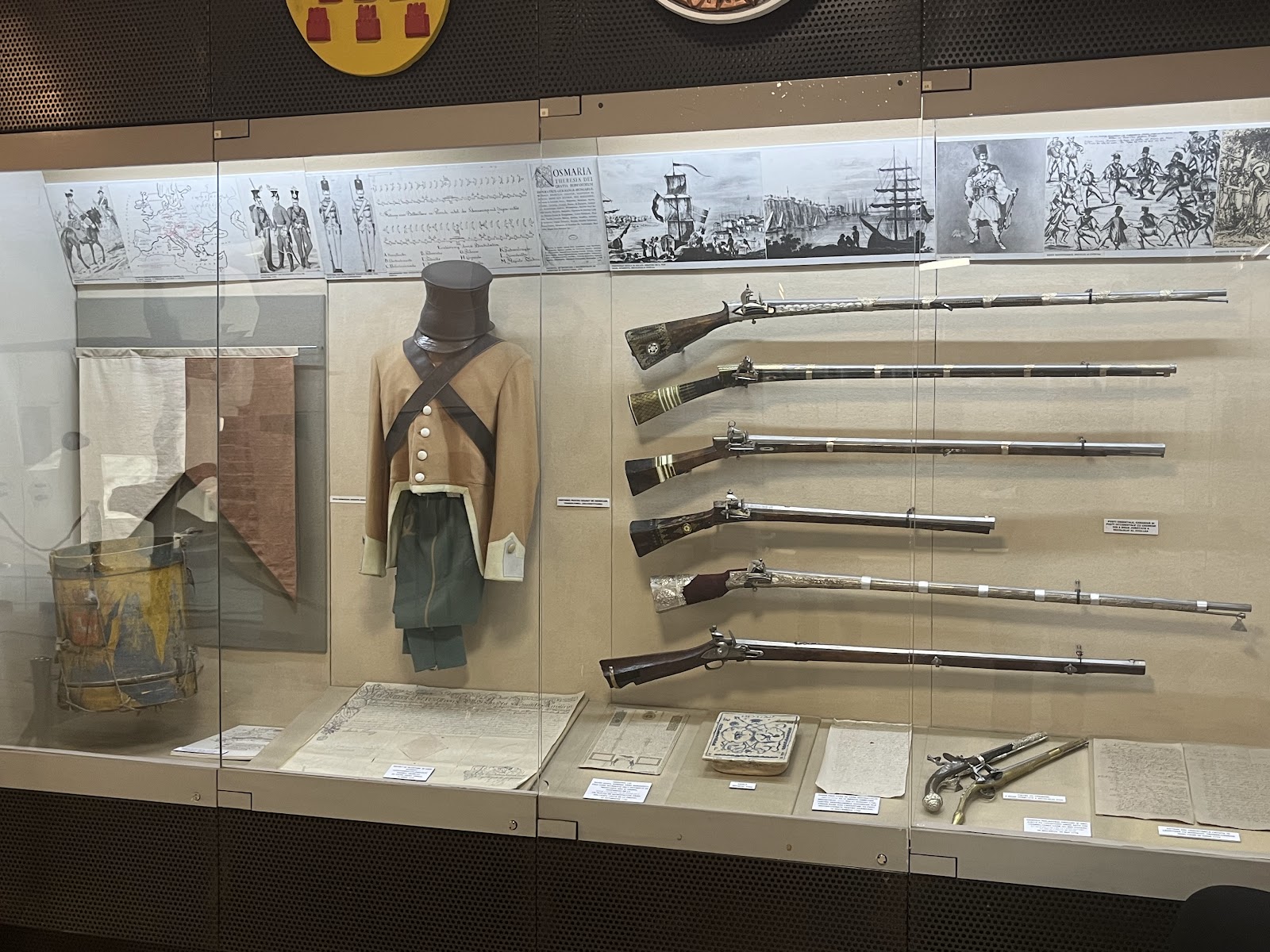
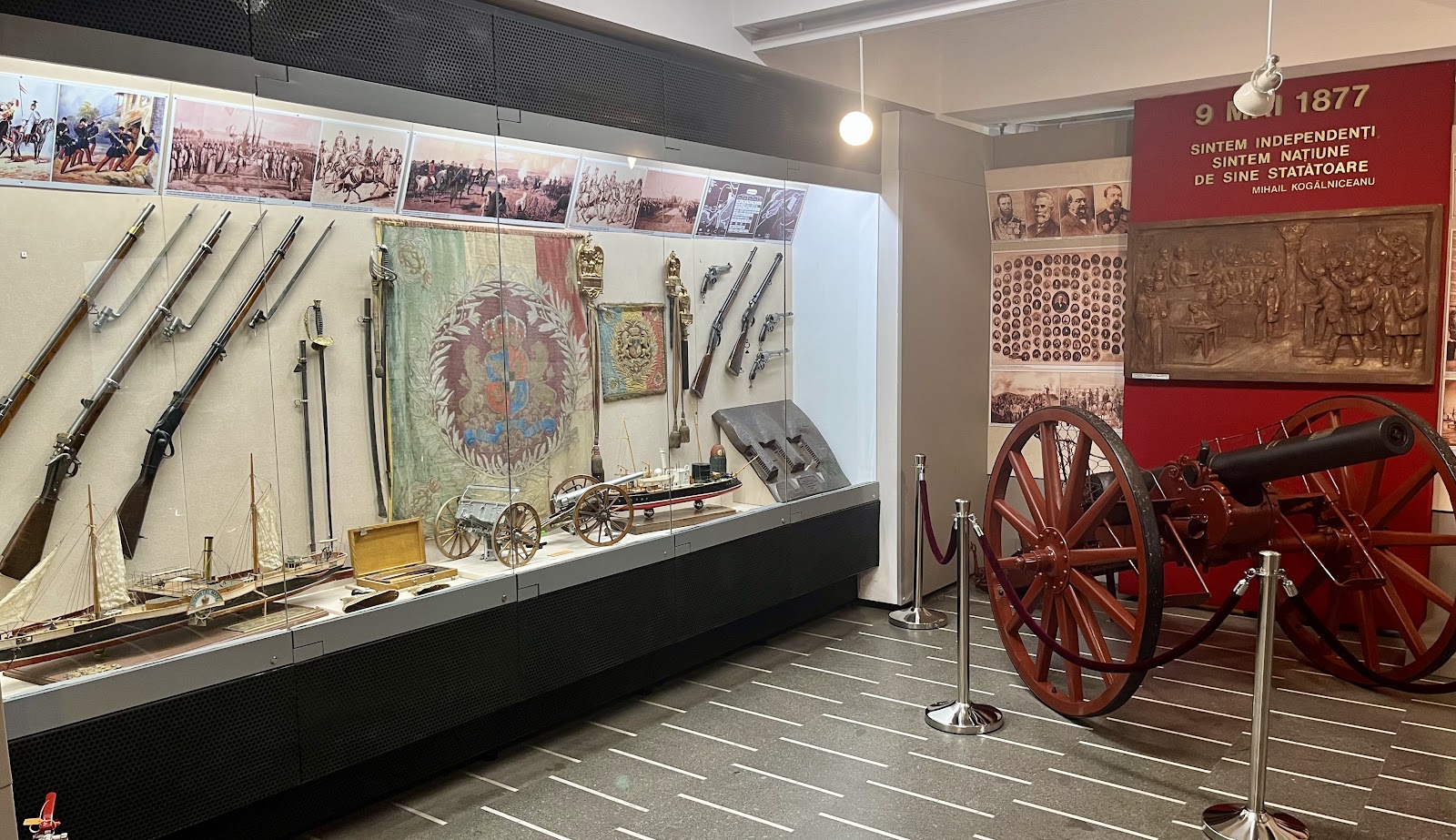
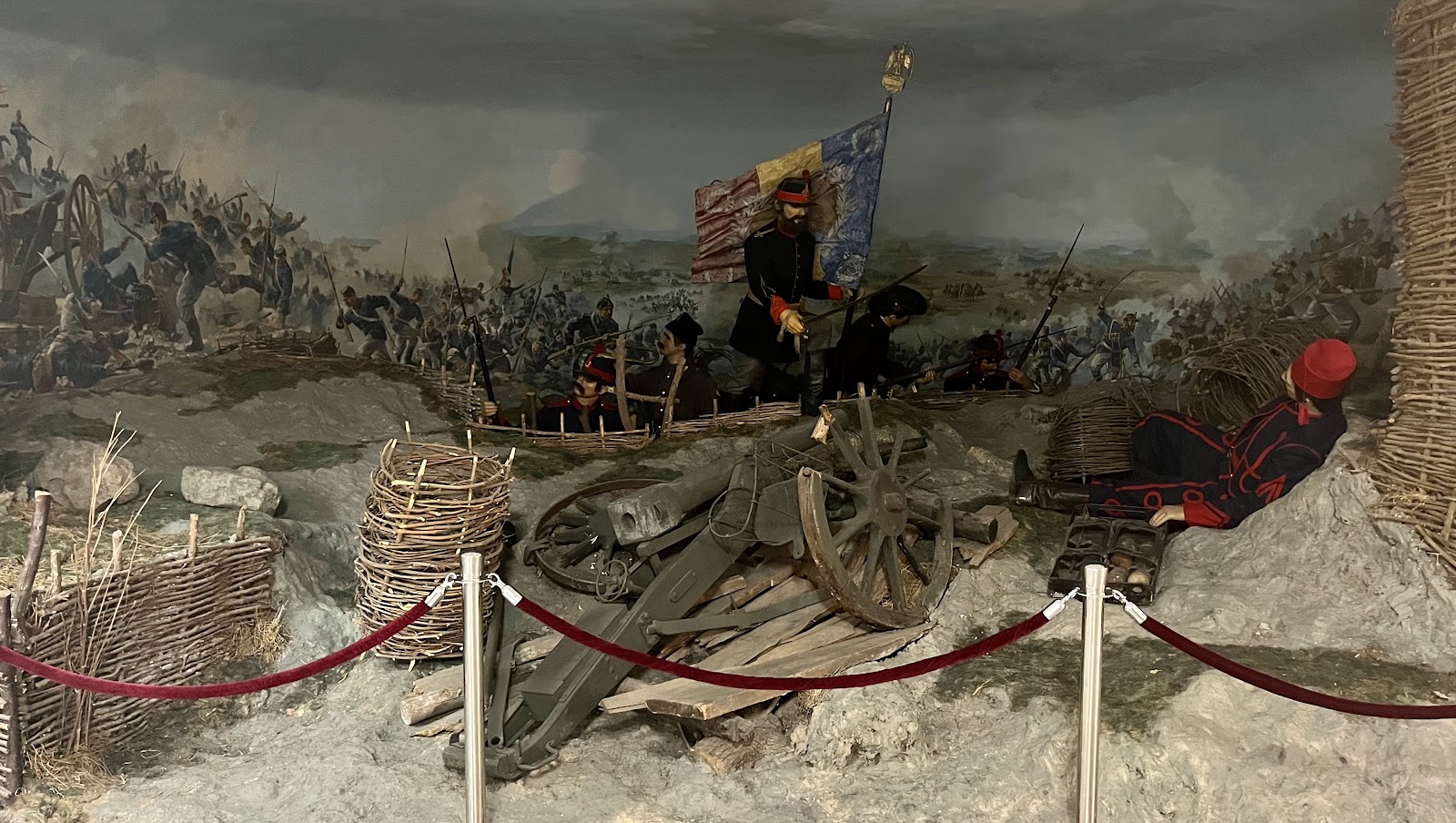
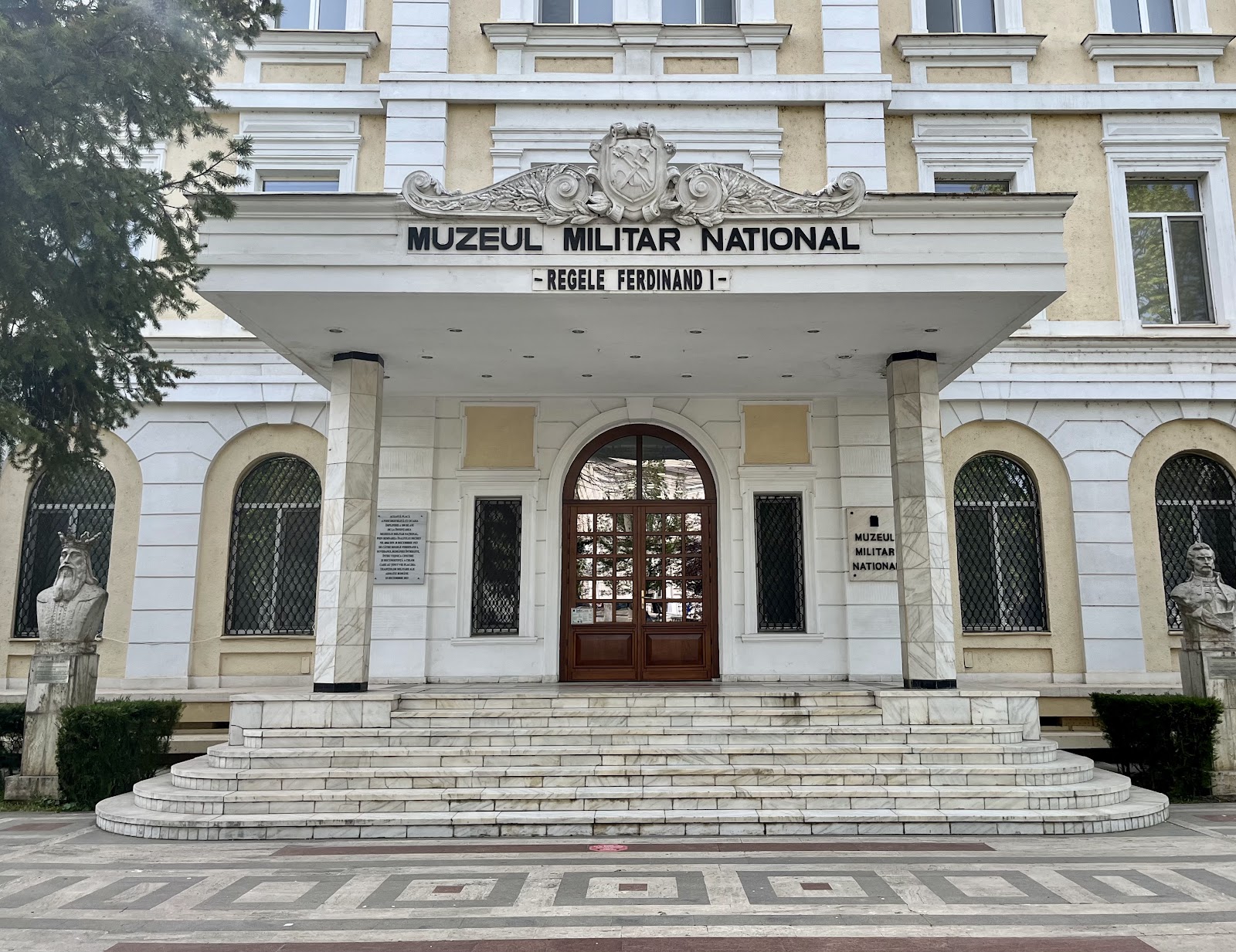
 My last full day in Romania was spent in Bucharest, mostly doing the museums. The first call was the National Military Museum, which had been refurbished since my last visit. They have done a great job. I recall more vehicles, but they are apparently still being prepared. This was the furthest out museum, so I got a taxi and walked the rest of the day. The driver told me he drove a T-72 in the army; his driving showed it!


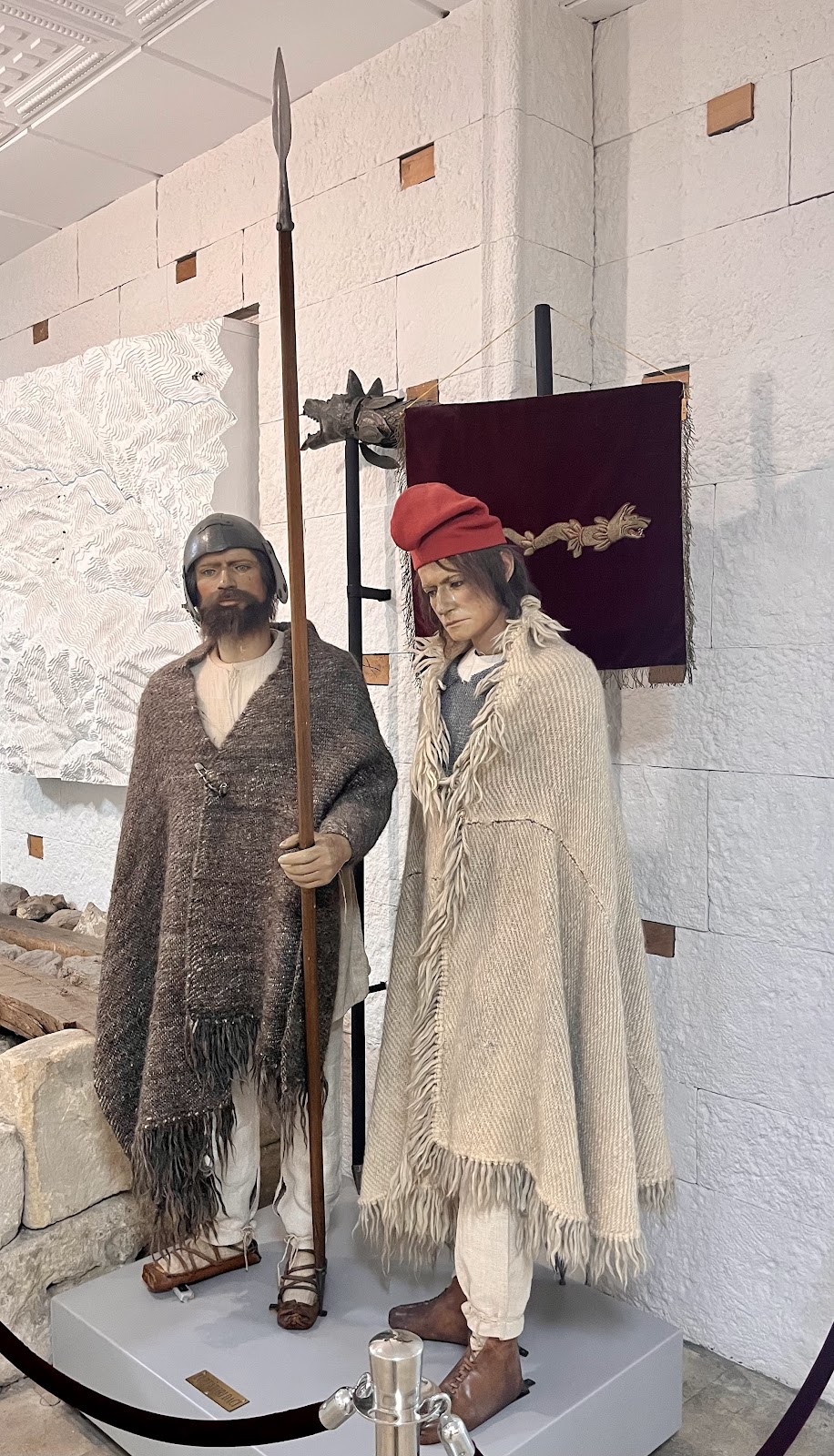
Before we get to the Dacians, there is a good collection of early (BCE) weapons and equipment. There are dioramas, life-size figures and plenty of equipment. 


The medieval section covers the Ottoman invasion, Vlad Tepes and Stephan the Great. I have painted a few of those distinctive shields.


We move on to the early modern period with Michael the Brave and more Ottoman kit. Romania doesn't have much coastline, but the Danube is navigable. 


The 18th and early 19th century is my main reason for being here. There were uniforms I had not seen before, including Austrian border units.


The Russo-Turkish War gets a large section, rightly recognising the Romanian Army's role, particularly at Pleven. 
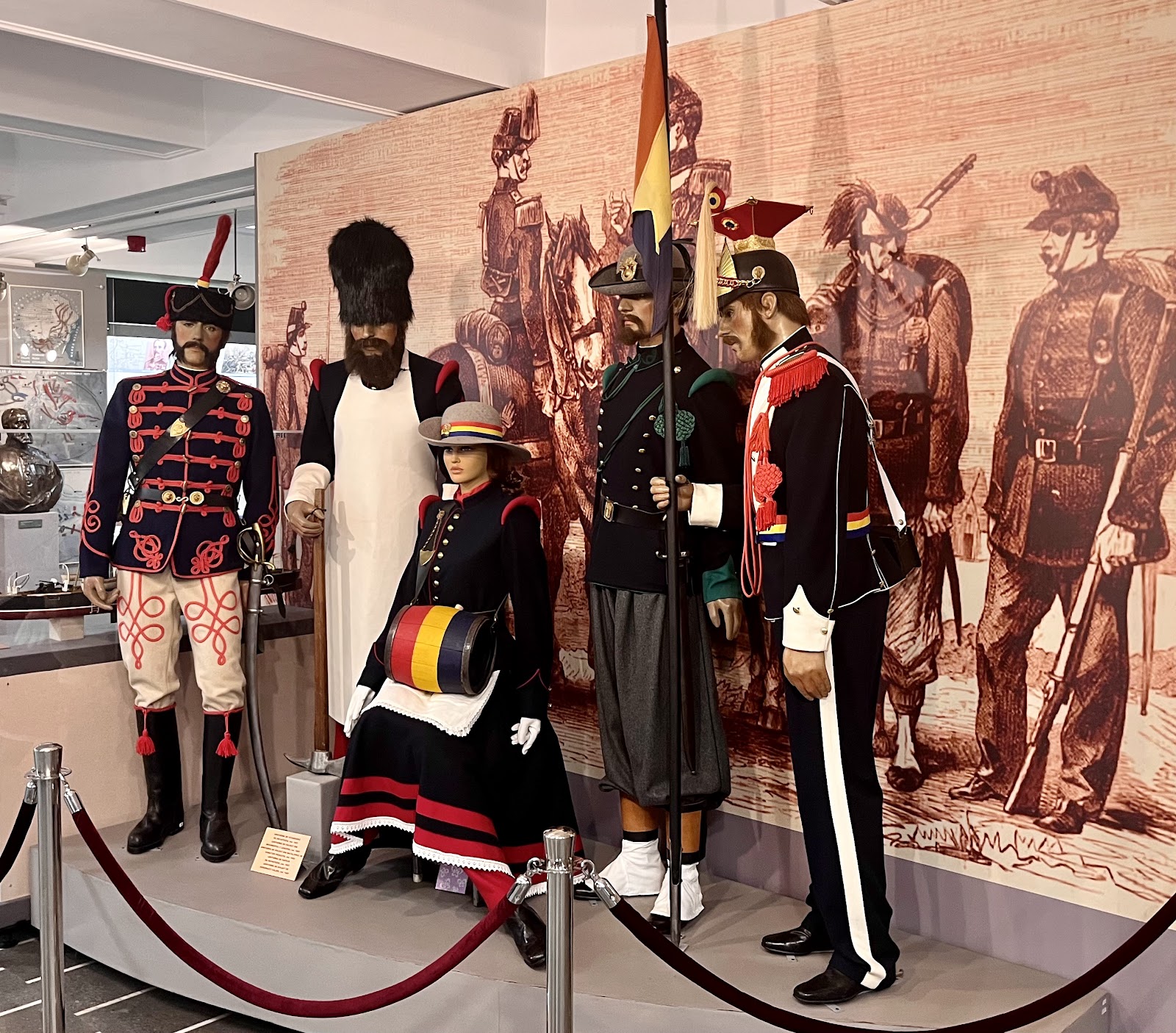


Then onto the Balkan Wars and WW1.


Finally, WW2 through the Cold War until Romania joined NATO. I was pleased to see the naval exhibits, as I missed the Naval Museum in Constanta—yes, it was closed!


Overall, this museum is excellent. Not to be missed if you are in Bucharest.

My next stop was the National Museum of History. This has also been refurbished, although it is still pretty limited. An excellent special exhibition on the 1943 Ploesti raid matched bomber artwork with recovered parts of aircraft shot down. There are also plaster casts of Trajan's column covering the Dacian Wars, which are much easier to see than in Rome. 


What I call the bling room has a fine collection of Dacian arm rings and other treasures.


The next stop was the National Art Gallery, largely for the portraits of Wallachian rulers, which should come in handy someday. My favourite painting was Vlad Tepes receiving the Ottoman envoys. That didn't end well, and there wouldn't have been many volunteers for that duty!


Finally, the Bucharest Municipal Museum is fascinating. It shows how the city developed and has a scarily realistic reconstruction of Michael the Brave, some uniforms, and weapons.


A busy day, but lots of material for future projects.


Wednesday, 16 April 2025

The Danube Delta

 Day three of the Romania tour took me into the Danube Delta region. This was a crucial staging post for the Ottomans in the wars against Russia in the late 18th century. Shielded by their fortresses on the Danube, they could cross and march into Moldavia or further afield and link up with the Tatars. 

I stayed overnight in Braila, one of those fortified towns. However, nothing much remains of the Ottoman presence in this typical 19th-century old town except some tunnels. They haven't forgotten Trajan, though, whom I bumped into after dinner.


There is a modern bridge over the Danube at Braila, something the Ottomans needed later in the campaign when they were shot to bits crossing in boats. This took me to the Battle of Măcin, which took place during the Russo-Turkish War (1787–1792). It was fought on 9 July 1791 between a Russian army of 30,000 commanded by Prince Nicholas Repnin and 80,000 Ottomans led by Koca Yusuf Pasha. I found the site of the fort and passed a mosque on the way, which gave me a great view. 


The Russians marched around the town, and Kutusov made his name with a flank attack.

I then cut across to Isaccea, the Ottomans' favourite crossing point, probably because of the island. It is still a border crossing into Ukraine. Again, another mosque.


Then, down to another Ottoman fortress at Tulcea. It's a modern industrial town today, but a fine monument gives excellent views over the town and the Delta. 


In the distance, you can see the major Ottoman fortress of Izmail in modern Ukraine, which was the subject of an infamous storming by Suvorov in 1790. Smoke was rising from the city, which the locals told me was probably another Russian drone strike. I had hoped to view it from the Romanian side, but it is now a protected border area. 


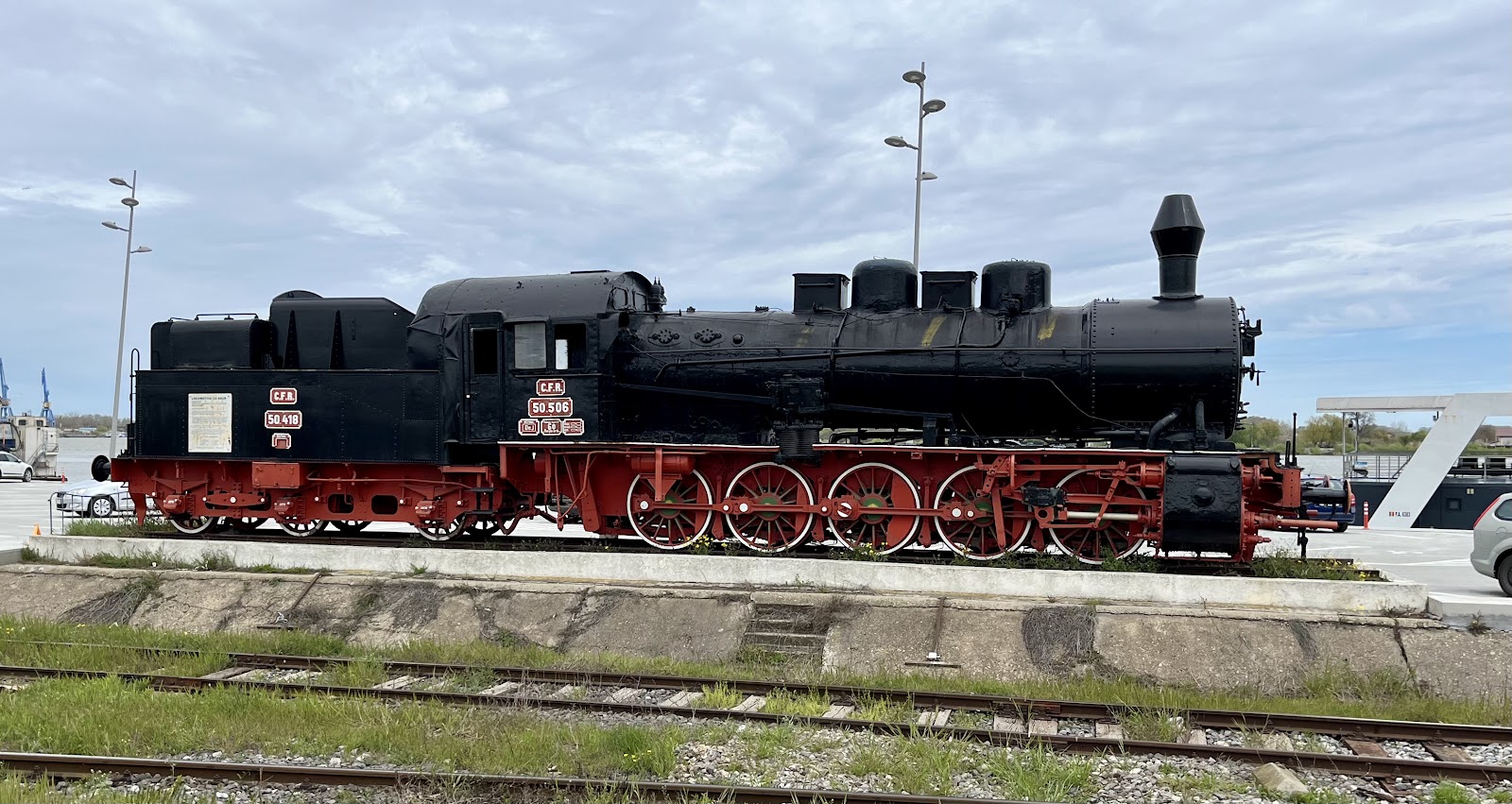
On a happier note, they do have a steam engine!


Moving away from the Danube, I went to the Ottoman army HQ in the small village of Babadag. It is hard to believe that 60,000-plus men would have been camped here in 1790. It is close to the only authentic medieval castle I have seen on this trip, Enisala, which was probably built by the Genoese but with Tatar and Ottoman influences.


After that, it was a long drive back to Bucharest, ready for the city museums the following day.


Tuesday, 15 April 2025

Down the River Prut

Day two of my Romanian tour started with a breakfast stroll around the fine city of Iasi (Jassy). Some fine 19th century architecture, although as it was a Monday, the museum was closed. The curse of museums.


Then off to Vaslui, fought on 10 January 1475 between Stephen III of Moldavia and the Ottoman governor of Rumelia, Hadım Suleiman Pasha. I have always wanted to visit this site, as it was one of the first display games I organised for GDWS at Claymore in 2005. We used copious amounts of cotton wool for the mist, which, 20 years later, I am still extracting!

The Romanian government has made this site proud with a magnificent new monument to Stephan the Great. There is also a small park with models of Moldavian castles. There is no explanation of the battle, although there was a shuttered building, so that may yet happen.


My next stop was at Stanilesti, the site of another GDWS show game we called Peter on the Prut. It was here in 1711 that the Ottomans trapped Peter the Great against the Prut River. He had to concede an unfavourable treaty, but it could have been worse. The whole history of Russia could have been changed if the Ottomans had finished him off. 

The Moldavians were on Peter's side, so I wasn't expecting a grand monument. However, a nodding mention of this historic event is justified, but there isn't even a paved road. Nationalism and history!


My final stop was just over the border from Cahul in modern-day Moldova. The Battle of Kagul was fought here on 1 August 1770  during the Russo-Turkish War of 1768–1774. The Russian Field Marshal Pyotr Rumyantsev won a decisive victory in one of the largest battles of the 18th century. I would have liked to cross over to see the battlefield close up, but this is the EU border and the queues can be horrendous. A Moldovan trip for another day and include Larga, a bit further down the river.


Braila for the overnight stay and then onto the Danube Delta.

Monday, 14 April 2025

Moldavia

 I am in Romania this week for my annual Balkan-related tour. I hadn't been for 20 years when I focused on Transylvania. So, to tie in with research for my current book project, I decided to go east into Moldavia. 

I flew from London and hired a car at the airport. The first stop was the Battle of Rymnik, fought on 22 September 1789, during the Russo-Ottoman War of 1787-92. The Russian general Alexander Suvorov and the Habsburg general Prince Josias of Coburg attacked the main Ottoman army under Grand Vizier Cenaze Hasan Pasha. I'll be writing more about this battle soon, but let's just say it is complicated for now. 

Finding the key actions on the ground is challenging when working off an 18th-century map with no orientation and a limited idea of scale. Then the terrain changed enormously, with the marshes drained, the woods gone, and the rivers almost waterless. However, it has one redeeming feature, a magnificent statue of Suvorov gazing down on the battlefield. The statue was initially close to his river crossing, but that is a bit out of the way, as I discovered, so they moved it. The plinth is still on the high ground above the Rymna River; although guarded by a pack of dogs. I showed less than Suvorov-type courage. 


The next stop was the Battle of Foscani, fought on 1 August 1789. Different Grand Vizier, they came and went at speed in this period! but Suvorov again. My map was somewhat better, but all the same challenges, plus urban sprawl all over the Ottoman trenches. It is also dead flat farmland terrain, so there is nothing to see. 

The area is known as the Foscani Gap, defending Romania from the Carpathians to the Danube. It was fortified in the late 19th century when they expected Russia to invade. However, it had to be reversed in WW1. There were battles with the Germans and Austrians, but with Russian help, Romania held on. This is all remembered in a fine mausoleum and museum at Mărășești. The museum is small but has some rare exhibits


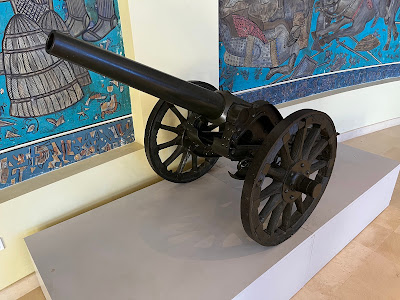
53mm Gruson Cannon


Russian Maxim

Russian, Nevsky trench mortar

My final stop was the Battle of Târgu Frumos. In 1944, the Germans and Romanians fought the Soviets in several battles. In particular, Hasso von Manteuffel's Großdeutschland Panzergrenadier division fought a model mobile defence still taught in military academies today. Unsurprisingly, there is nothing to mark the battle.


I stayed overnight in Iasi to have dinner with a production company that wanted historical advice on a potential TV series about Western Europeans who have influenced the Balkans. These things often don't get far, but we will see. Later, I was pitching again for Auguste Marmont in the Napoleonic Wars podcast's Battle of the Marshals. He would certainly get on the Balkan shortlist.