Welcome to my blog!

News from a wargamer with a special interest in the military history of the Balkans. It mainly covers my current reading and wargaming projects. For more detail you can visit the web sites I edit - Balkan Military History and Glasgow & District Wargaming Society. Or follow me on Twitter @Balkan_Dave
or on Mastodon @balkandave@mastodon.scot, or Threads @davewatson1683

Saturday, 28 June 2014

100th anniversary of the Sarajevo assassination

Today is the 100th anniversary of the assassination of the Archduke Franz Ferdinand and his wife Sophie in Sarajevo on 28 June 1914.  They were shot at 10:45 am, by the nineteen year old Gavrilo Princip, a member of the group Young Bosnia and one of a group of assassins organised by the Serbian Black Hand. This particular Balkan assassination led to a chain of events that eventually triggered World War I.

The events of that day and the subsequent drift to war have been well documented. What the anniversary has done is to put some focus on the personalities, who have otherwise been largely forgotten.

This week’s New Statesman has good piece on Franz Ferdinand by Simon Winder. This reminds us that he was one of the most important figures in Central Europe at the time. He was of the same generation as the Tsar and Kaiser, however, his father Franz Joseph survived much longer than anyone expected. Franz Ferdinand, unlike his father, insisted that war would be a disaster for Austria-Hungary and bitterly argued his case against the incompetent Austrian Chief of Staff, Conrad von Hotzendorf. The other irony is that he was something of a reformer and opposed Austria’s occupation of Bosnia – the eventual cause behind his death at the hands of Princip.

The assassin, Gavrilo Princip has received even less attention over the years. He was a Bosnian Serb, brought up in a poor village, who became radicalised after a secondary education in Sarajevo. Tim Butcher has written a book ‘The Trigger: Hunting the Assassin Who Brought the World to War’, that for the first time looks at Princip and what motivated him. He puts an emphasis on his Bosnian roots rather than his Serbian links. While this may be true, he wouldn’t have been in any position to carry out the attack without the support of Serbia, through the Black Hand.

As Butcher says, the Archduke was shot “through a series of strokes of serendipity and fortune. It was the rest of the world’s bad luck that his actions triggered the first global conflict.”

The site of the shooting has changed little since 1914 and there is a small museum nearby that is worth a visit.


Sunday, 22 June 2014

Malaya Loose Ends

My loose end painting schedule continues with some Malaya 1942 campaign project items.


First up is three Marmon-Herrington armoured cars in 15mm. The South African constructed Marmon-Herringtons saw extensive combat in North Africa and some 2000 were exported, including to the Dutch East Indies. It had a reputation as a dependable, if somewhat light and under gunned vehicle. British and Commonwealth forces in Malaya had no tanks and relied on a number of armoured cars including the Marmon-Herrington.

This is the QRF model. The casting is a bit rough in places and needed a fair amount of cleaning up. I would recommend making some notches for the wheels before glueing as the whole model rests on them. Overall not a bad model.


Then we have a 2pdr ATG in 28mm to give the British something to hold back the Japanese tanks storming through Malaya. 

This is the Warlord model that I bought before the Perry version came out. The usual absence of instructions is a nuisance, although via the forum there are now several pictures that make the job a lot easier. My main complaint is the absence of location lugs, particularly for the gun shield and the gun barrel. The model was obviously designed by someone who didn't give any thought to putting it together. both parts balance precariously with little support and simply isn't good enough for a wargame model that will inevitably face some rough handling on the tabletop.


Saturday, 21 June 2014

The British and Vis

Vis is an island in the Adriatic, part of modern day Croatia, that has a number of interesting connections with Britain. The first of these is covered in Malcolm Scott Hardy's book, 'The British and Vis: War in the Adriatic 1805-15'.

The British occupied and then fortified Vis (then known as Lissa) as a strategic base for their modest naval presence in the Adriatic. The aim was to interdict the French presence in Dalmatia; disrupt their trade; maintain communications with allies and prevent the French from acquiring shipbuilding capacity. Vis was well placed for this and had the added advantage of being relatively easy to fortify due to limited landing places, sheltered harbours and fresh water.

Despite these advantages there was considerable opposition to the expense of fortifying and garrisoning the island. This book covers the progress of that debate and arguably the island wasn't properly fortified until after any French threat to the island had receded. The locals were quite happy to be occupied and even formed their own militia unit. The advantages were mainly economic, with Vis being used as a base for smuggling and piracy.

The Garrison under the command of Colonel Robertson arrived in April 1812. The core was formed from the 35th Foot, with elements of the Royal Corsican Rangers and Swiss troops from De Roll's Regiment. Gun boats provided close naval support and a frigate squadron also protected the island.

Hardy provides a detailed account of the development of British involvement and life on the island for the garrison. Perhaps surprisingly, he provides only a passing reference to the British naval victory off the island in March 1811.

The British presence is easily recognisable today with the fortifications and the cricket pitch! I am spending my summer holidays on the island next month, so more on that later.

The British returned to the island in the Second World War. It was a commando, naval and air base in support  of the partisans. This is well covered in Michael McConville's book, 'A Small War in the Balkans'.

Saturday, 14 June 2014

More Balkan WW2 loose ends

Better weather means I am more attracted to the golf course than the painting table, but still time to tidy up some loose ends.

First up is the latest offering from Burns Miniatures in their 15mm Greek WW2 range. These are the HMG crews. I did groan when I saw the two part guns, but the lugs fit very well and its worth it for the amazing detail on the gun barrels.


Then some Bolt Action 28mm Italian armour from the Warlord range. An M13/40 tank and the Autoblinda AB41 armoured car. The parts fit together well and the absence of instructions, a Warlord problem, isn't a difficulty with these very nice models. My only complaint, not for the first time, is the lugs for the gun barrels. A tiny wee hole is totally inadequate for holding a gun barrel, even fairly small ones. The obvious solution is to mould the mantlet and barrel together, with a a deep lug to slot it in. 


Tuesday, 3 June 2014

Italian WW2 heavy weapons

More tidying up projects post-Bannockburn, although on that point BBC2 tonight has the first of a two part documentary on a new archeological study. Looks good and it appears, according to today's Herald, that they are confirming the Carse of Balquhiderock as the battle site.

My WW2 Italians were a little short on heavy weapons - so here we have medium and light mortars, ATG, HMG and a command group. I have a couple of armoured vehicles I bought from Warlord at Carronade and that will finish the project off.


Sort of related reading has been the new Osprey on the Spanish Civil War. The first volume is on the Nationalists and their fascist allies. Usual format with a focus on organisation and weapons rather than campaigns. I have the original Osprey MAA74 on the SCW, now looking a bit dated, so this is very welcome.

Monday, 2 June 2014

Napoleonic Black Powder

I have had a bit of reawakening interest in Napoleonics recently.

It started when I picked up the latest Charles.S. Grant, Peninsular War book, 'Wellington Invades France 1813-14' at Carronade. The usual format of these books is a concise history, clear order of battle and excellent colour plates. These are usually in campaign dress, or scruffy Peninsular that few of us actually paint our table troops in. In this volume there is a useful couple of chapters debating what the units actually looked like.


I had the pleasure some years ago of touring these battlefields with the historian Ian Fletcher and the photos brought back some memories. This is a very interesting campaign that we rarely see on the tabletop. Shame, as this is the 200th anniversary of the Battle of Toulouse.

The second reason is that our summer holiday in July will be a visit to the island of Vis (Lissa) in the Adriatic. This was a British base in the latter part of Napoleonic wars and the site of a naval action in March 1811. More on this as I start my research, including Malcolm Scott Hardy's book 'The British and Vis'. I also picked up some Warlord commandos at Carronade in anticipation of some WW2 raiding, as it was a British and Partisan base in that conflict as well. No surprise that there is still a cricket club on the island!

This all transferred onto the tabletop yesterday at the club. I dusted down my British and French in Egypt armies for a two a side Black Powder game. Again, largely inspired by Charles Grant's two volume study of these campaigns. The British line held firm on the right, but crumbled a bit on the left when a better coordinated cavalry, artillery and infantry attack did the job. Black Powder gives a fun game yet retains the feel of a Napoleonic battle and rewards historical tactics.


Monday, 26 May 2014

Donnybrook

I picked up a set of the League of Augsburg's latest rules, 'Donnybrook' at Carronade. These are skirmish rules for the period 1660-1760.


I am not a big fan of their rules so far - I just couldn't get into Lily Banners and so they have gathered dust. I don't think the same will happen with these.

The rules system is very simple with shades of Saga and can certainly deliver a fast paced game in an hour or so. The layout of the rules is straightforward and the QRF was good enough to play straight from it after just one read through the main rulebook. The rulebook is a very nice piece of work, plenty of eye candy, army lists and scenarios.

The three main unit types have ability levels of 6, 8 or 10 and they fire and engage in close combat based on D6, D8 or D10 - needing a six or higher to hit. Modifiers are kept to the minimum with as many special rules for weapons as you want. Each force is led by a character, supplemented by junior officer characters. There are some cracking special features for these in the army lists.

It's a card driven activation system, with a card for each unit and character, plus a reload and reshuffle card. I tend to find these a bit too random (as in Sharp Practice) and I am obviously not alone as the rules leave these as optional.

My test game was Hauptmann Eugen's Austrian regulars on a raid against an Ottoman block house defended by Bosnian militia led by Ahmed Aga. Some skirmishing in the woods on either side followed by a somewhat reckless charge from our hero Eugen and the dragoons. They were sent packing and that was game over for the Austrian's.

Good game and these rules are certainly worth a go if you like this period.


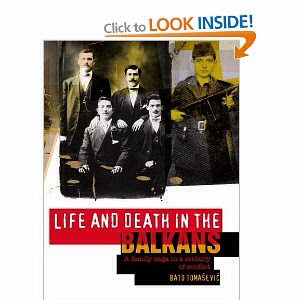
Life and Death in the Balkans

'Life and Death in the Balkans' is the family story of Bato Tomasevic. He was born in Montenegro and he tells the story of the region through the eyes of his family.

It starts from the wars of liberation against the Turks and the occupation of Montenegro by the Austrians in World War One. Between the wars his father was a police officer and spent some time in Kossova before returning to Cetinje.

He takes up his own story during the Second World War when Cetinje was occupied by the Italians and then the Germans. His sister Stana was a communist and he joined the Partisans at age 13. He fought the Chetniks and nearly died during the vicious fighting.

After the war he studied law at Belgrade, became a diplomat and married his English wife. He survived the Munich air crash that took the lives of several Manchester United players. Later he looked after foreign visitors including Denis Healy and Hugh Gaitskell. He ran a short lived TV station before it was consumed by the conflagration of the Balkan wars of the 1990's.

This is not just a remarkable story of the author's own life. It gives a real insight into how the turbulent events of Balkans in the last century impacted on his family. Highly recommended.


Wednesday, 21 May 2014

Romans, Brits and odds and ends

With the Bannockburn project and Carronade out of the way I have been focusing on finishing some other projects.

First up are some command bases for my Imperial Romans to take on the Dacians.


Then some heavy weapons for the Brits in Malaya. Mortar, HMG and a command base plus medic.


And finally the 15mm houses I picked up at Carronade produced by Games of War Terrain. Very like the battlefront range with removable roofs and room for two Flames of War bases. They come ready painted, so I just gave them an ink wash, rubbing off the excess to give that more lived in look.


Saturday, 10 May 2014

Carronade 2014

The poor weather helped bring out the crowds at today's Carronade show at Falkirk.

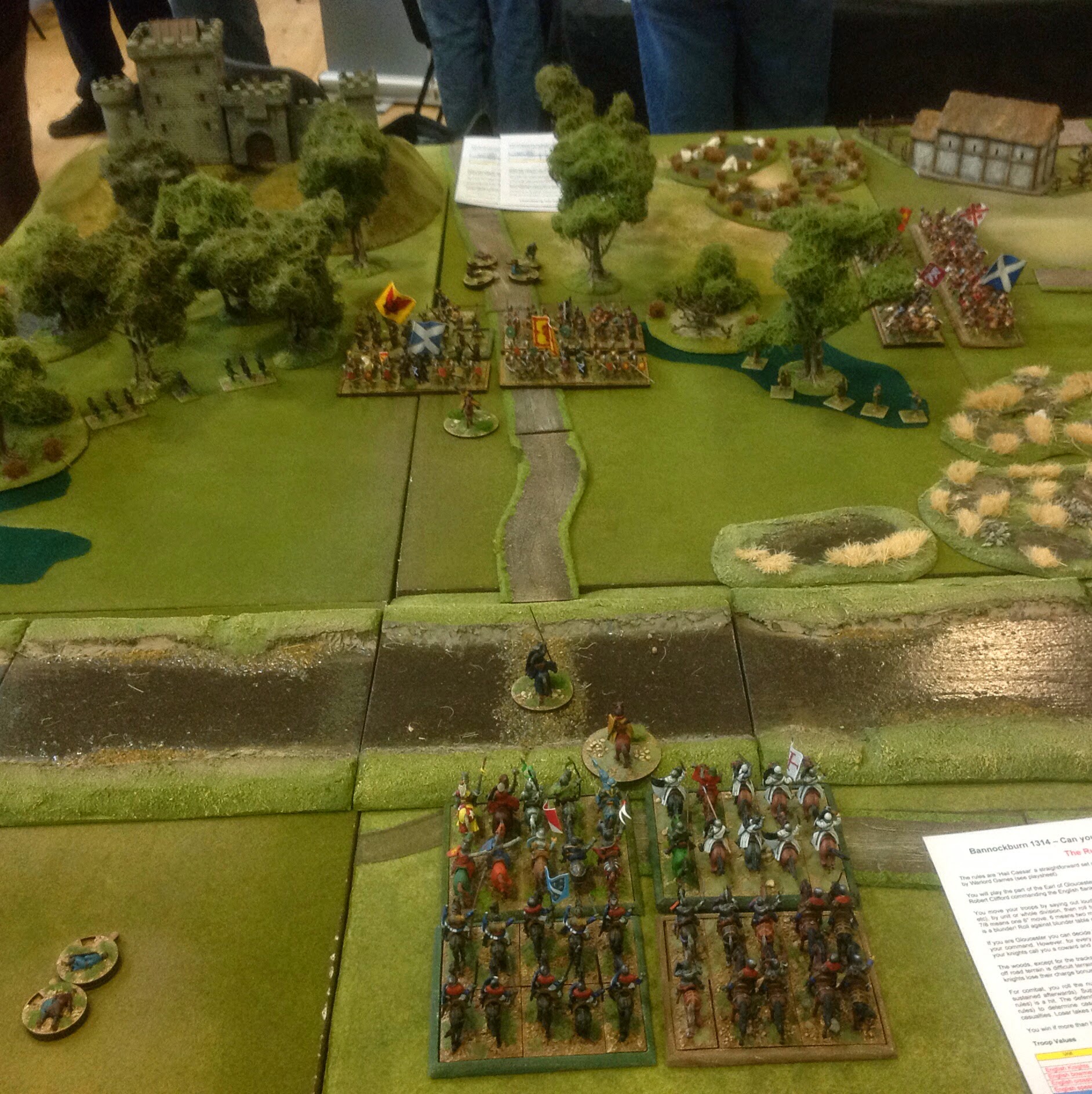
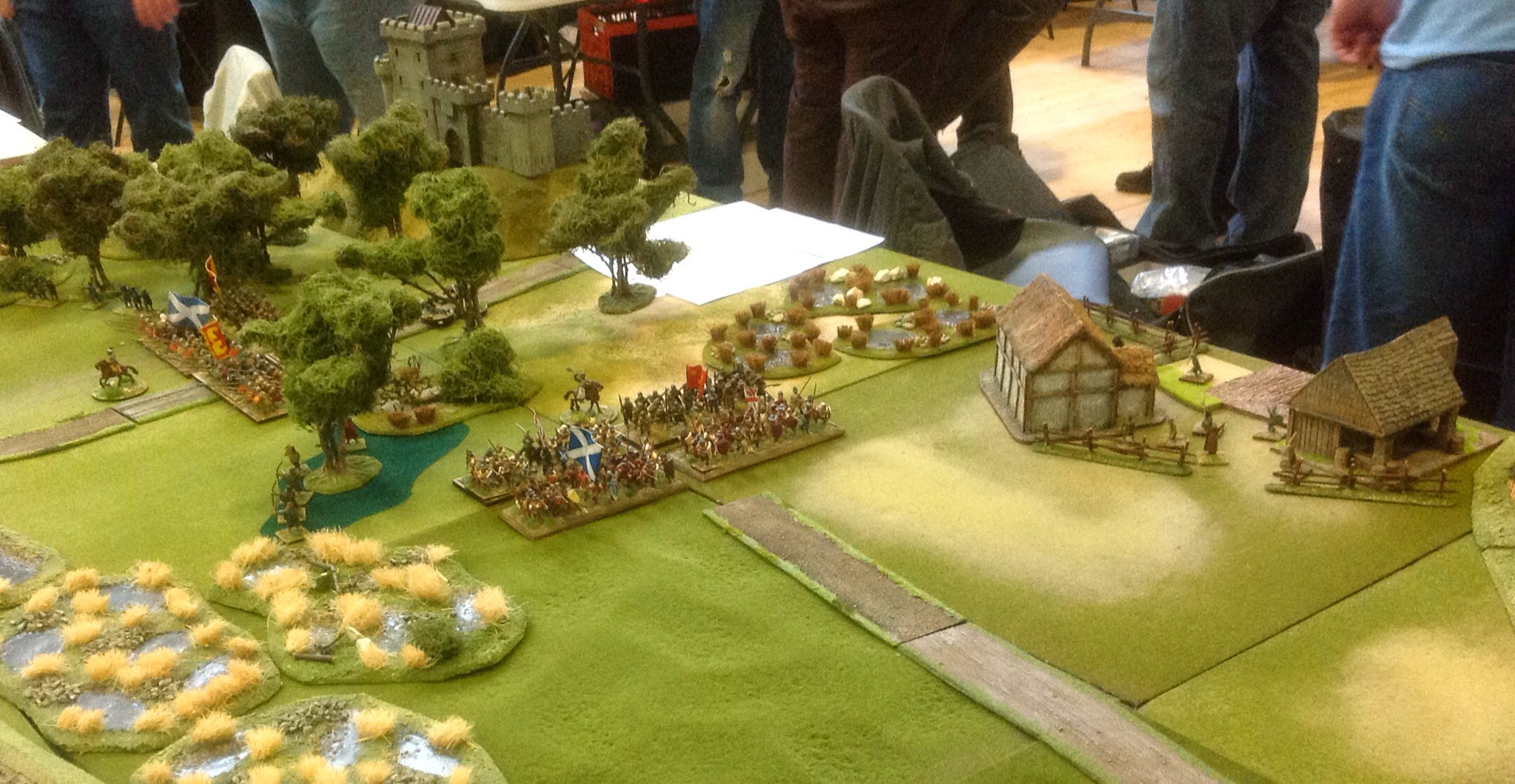
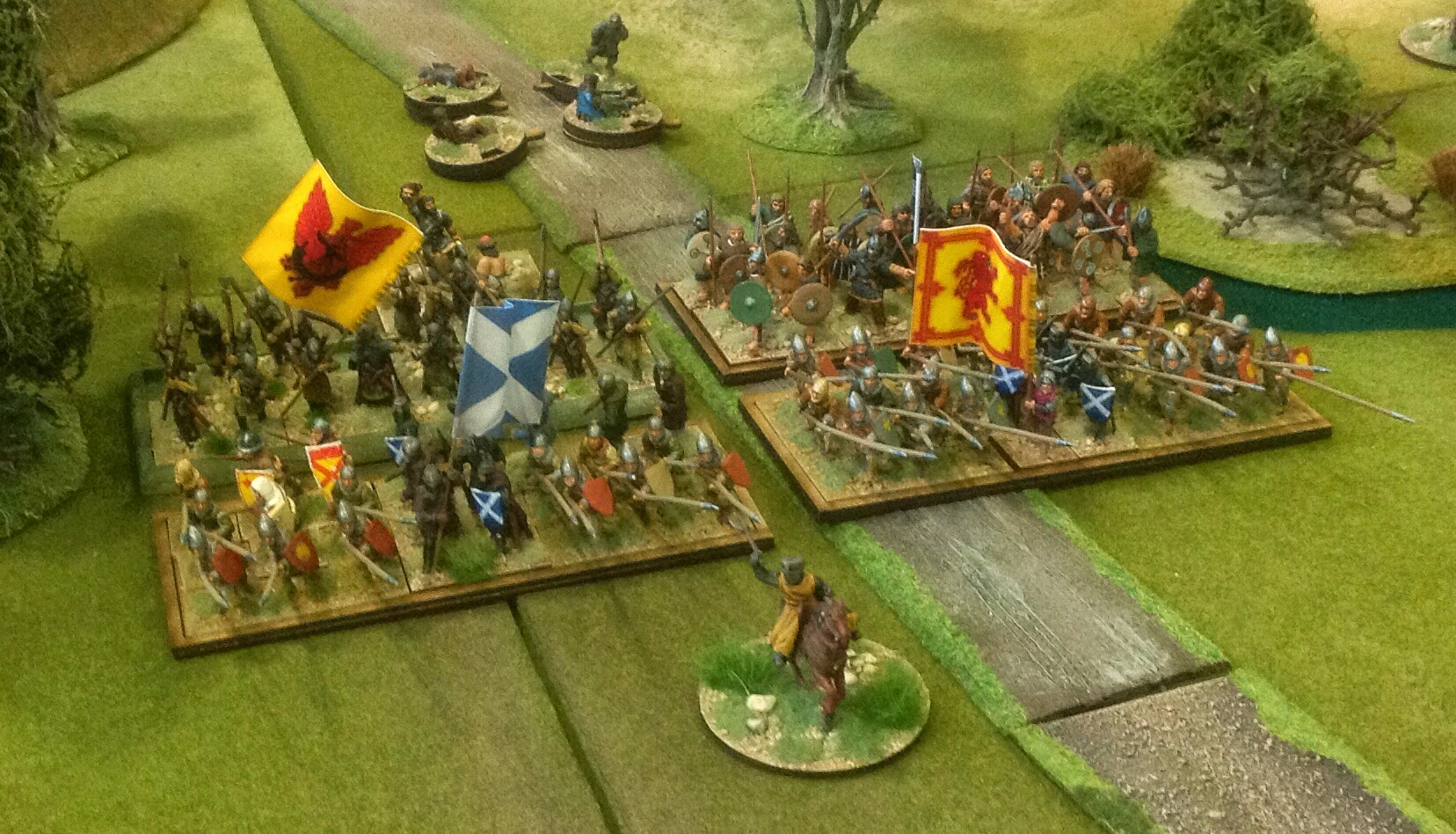
Our participation game was Bannockburn 1314, based on the less well known first day of the battle. The challenge was to break the Scottish schiltrons. Of the various attempts, it turned out pretty even and Robert the Bruce survived all bar one attempt by de Bohun to kill him in single combat. A number of players who had not tried the Hail Caesar rules liked them.

Here are a few pictures of the game.

Below is Gloucester's advanced guard crossing the Bannockburn to be faced by Robert Bruce's division.

Earl of Moray's division guard the flank approach to Stirling

Clifford's flank attack comes through the woods

Moray's division close up

Bruce's division close up


Bannockburn 1314 was not the only GDWS game on show today. The Battletech lads got into the anniversary spirit, well sort of, with their Battle of Bannockburn Bog.

I expected lots of Bannockburn games this year at the Scottish shows, but this was the only other display at Falkirk at least. In 10mm.

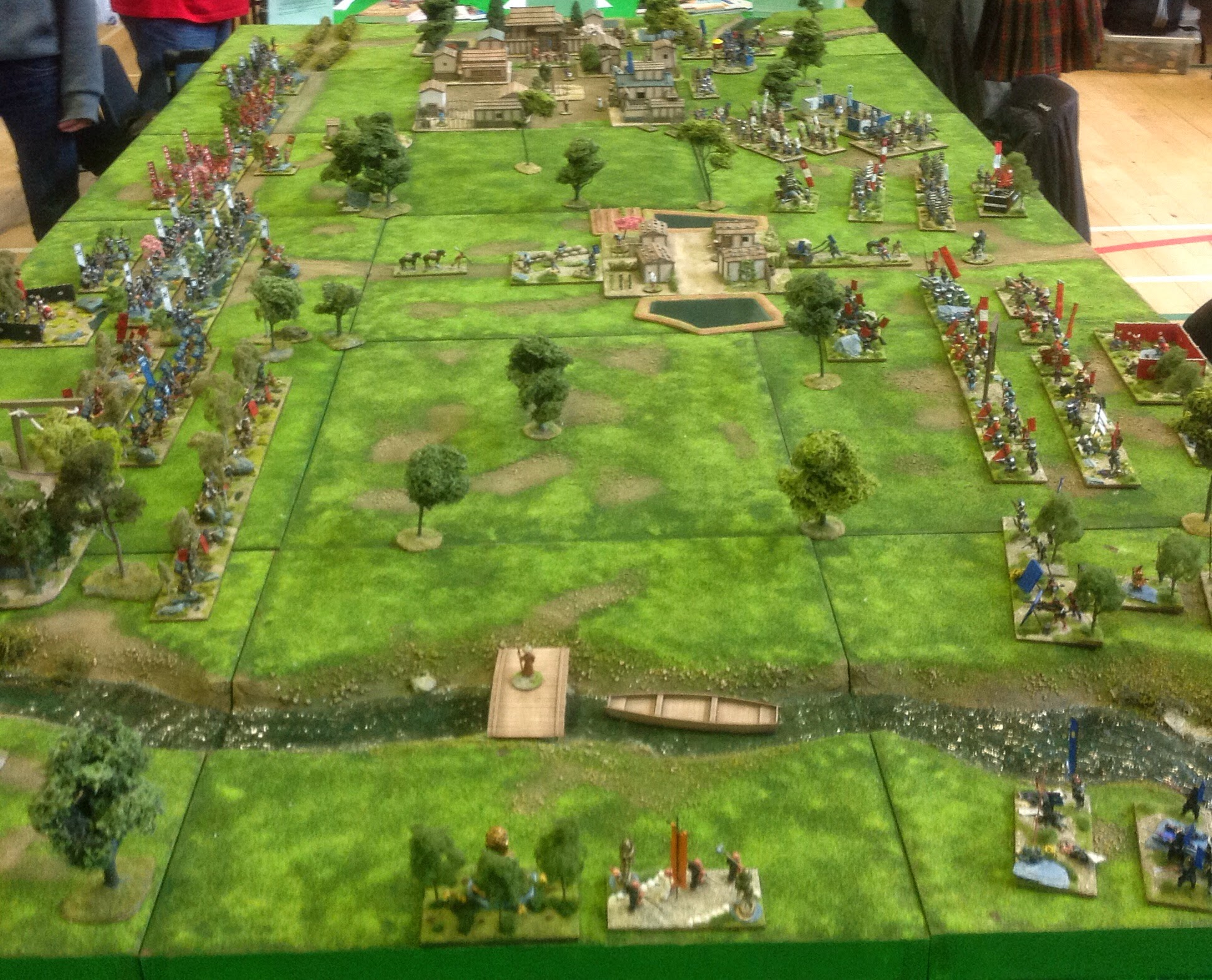
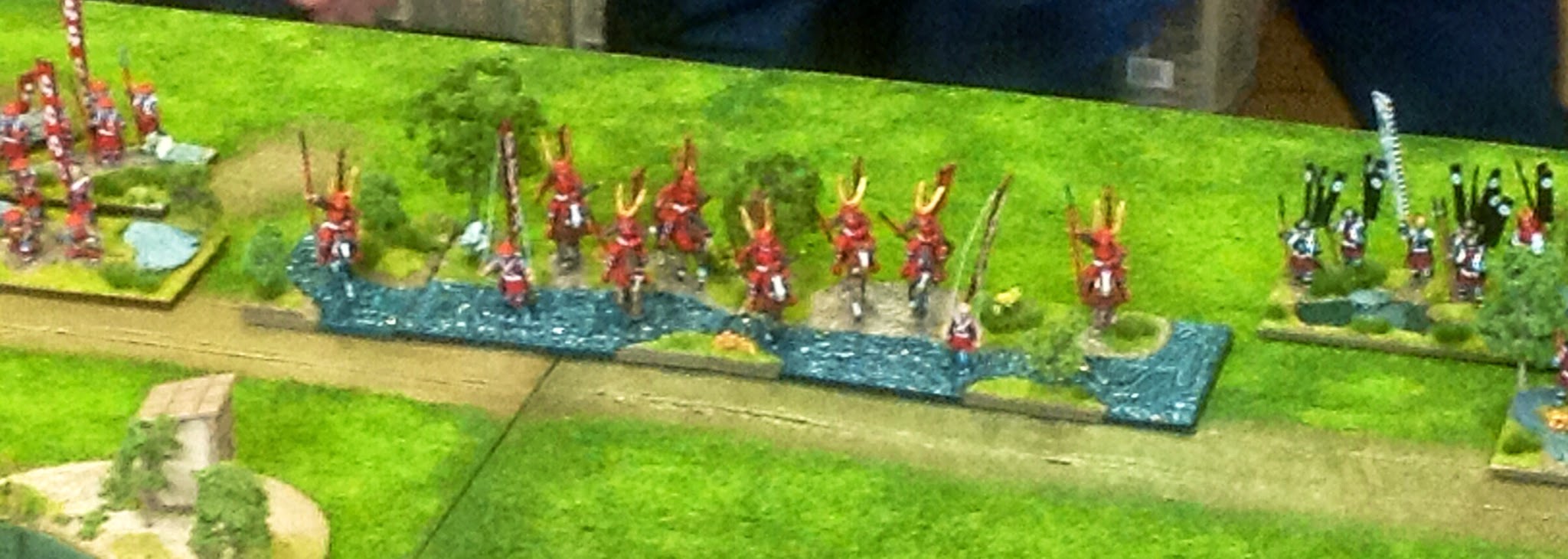
For me, the stand out game was Gleaming Katanas, Japanese warfare in 28mm. The culmination of two years work in Brian Phillip's painting cabin. The use of Black Powder style group bases means a lot of effort can be put into the bases, that are all individual vignettes.

There were more games than ever at this year's show. Here are a few more that caught my eye.

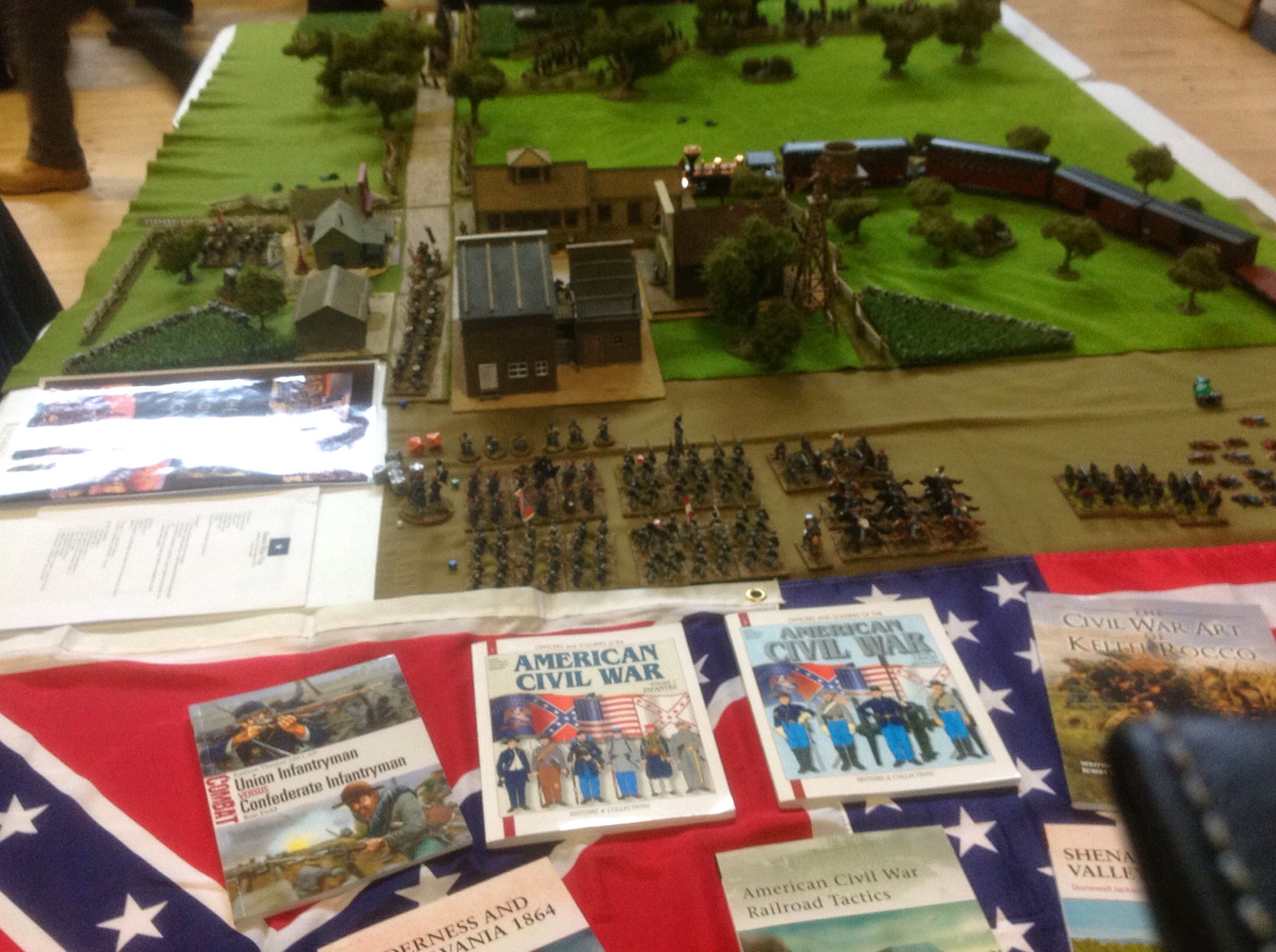
I do like trains in an ACW game.

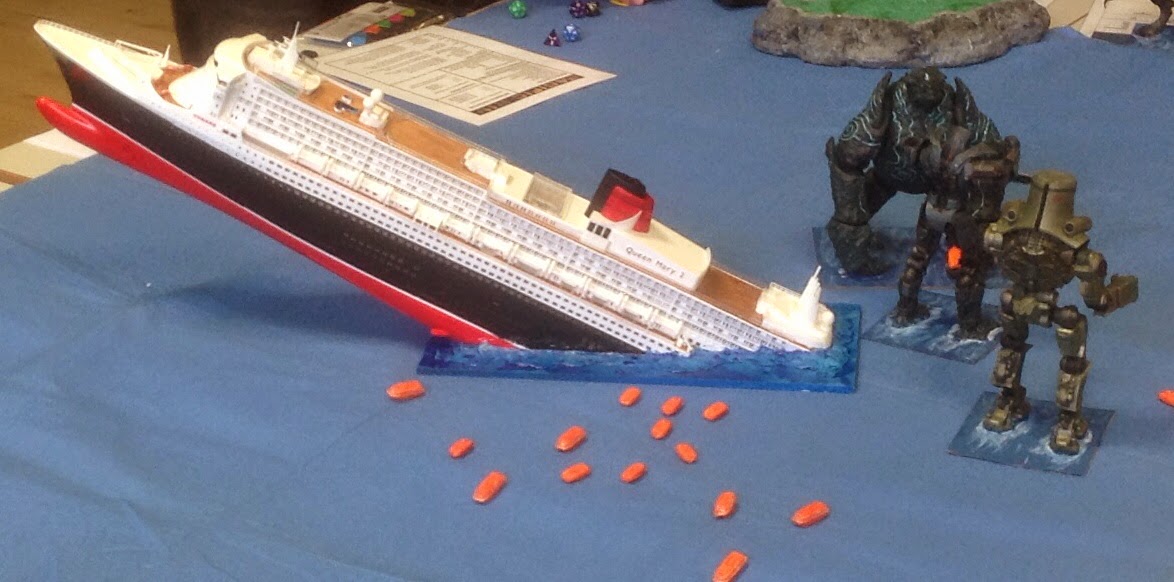
No idea what this was about, but eye catching!

English Civil War, lots of figures, like that

Kirriemuir club's Thracians and Macedonians. Nice figures and quality effort with the terrain

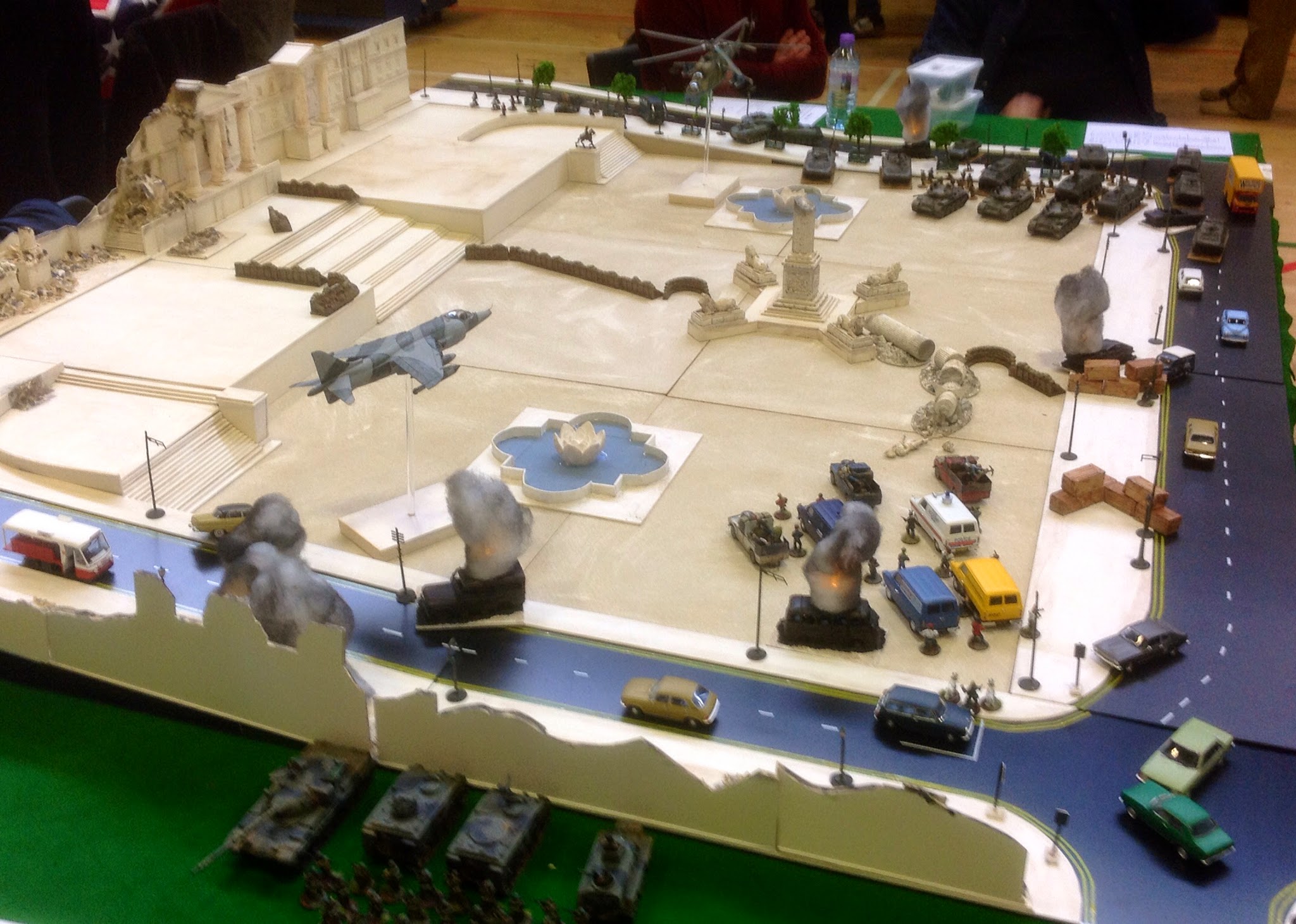
The battle of Trafalgar Square - Thatcher v Scargill

54mm Napoleonics, always eye catching

The traders certainly did well out of me. Some more fine buildings from Caliver's new range as well as a few books. Well more than a few actually. Reviews when I get around to reading them. A whole village of very good value plastic 15mm houses, ready painted, for around £12 a building. Lost their card and they aren't listed on the show website, but no doubt someone will remind me. And finally, Warlord tempted me with Chindits, Commandos and sundry Italian armour.

Overall, a very good day and as always full credit to the hard work of the Falkirk club.


Monday, 5 May 2014

The Thief's Tale

The Thief's Tale is the first in the Ottoman Cycle series by S.J.A Turney. The author is probably better known for the Marius series on the Roman army. 

This is as much a crime thriller as historical fiction. The action takes place in Istanbul in 1481 when two Greek brothers, Skiouros and Lykaion, are conscripted into the Janissaries and taken to the city. Skiouros escapes into the Greek quarter and vanishes among its streets to survive as a thief, while Lykaion remains with the elite corps and becomes an Islamic convert. The brothers loosely keep in touch, but their fates become linked when Skiouros picks a pocket that leads him to a plot to kill the Sultan.

I found the the first Marius book a little hard going, but this is a great read. The story is fast paced with several twists. The description of Istanbul in the period is also very good. I have already downloaded the next in the series and might even give the Marius series another go.


Saturday, 26 April 2014

Bannockburn - the game

I am pleasantly surprised to be ahead of schedule for a show with no last minute painting. Well another unit of knights but that really is it.

These are a few odds and ends. Some Crusader longbowmen that have been gathering dust and you can never have too many of them in an English army. Although they are not likely to see much action at the Bannockburn game with all those eager knights getting the way!

In front of them are some casualty markers with a clever number mechanism courtesy of Warbases. Excellent firm this, always prepared to produce what you want at a very reasonable price.


I have also drafted the handout for our participation game at Carronade. An historical explanation of the first day of Bannockburn and the rules we intend to use. Just a draft these as we will be testing them at the club next Sunday. Looks like a fun game and so, if you are going to Carronade, stop by and see if you can achieve what Edward II couldn't - can you break the schiltrons?

Wednesday, 23 April 2014

Hereward: The Devil's Army

This is the second in the series written by James Wilde about Hereward who led an English revolt against the Norman conquest from the Fen country in East Anglia.

This isn't a revolt, or for that matter a region of England, I know a lot about. So I can't vouch for how far the author deviates from the history. However, it's a good story well told with all the essential elements of a good historical novel.

Our hero battles with Normans from a relatively safe base in the Fens, somewhat more treacherous than they are today. There is treachery, romance and even a temporary alliance with a Danish army. We also get to see the other side of the hill through the eyes of an English collaborator in the Norman camp.

I enjoyed the first in this series, but for some reason found the second a little harder going. Not sure why as it has good reviews and it may be that I read it sporadically without really devouring the characters. It would make a good skirmish game using Saga rules.


Saturday, 19 April 2014

More Scots

Two more Schiltrons of Scot's spearmen for the Bannockburn project. One more left to base and that will be enough for our Carronade participation game. Still some bits and pieces to do, including more longbowmen and knights. However,  for once I feel actually ahead of schedule and might actually get some gaming in over the Easter break.

I'll be giving them a run out at the club tomorrow against the Teutonic Knights.


A bit of a mix of figures. Certainly Claymore Castings, plus Black Tree, Curteys and Front Rank from memory. The big flags are from Flags of War and the Earl of Lennox is from CitadelSix. A new firm to me. The foil banners work well, but I am not convinced by transfers for flags. The shield artwork is first rate, slightly spoilt by poor quality transfers that chip very easily. But they plug a gap in this period.

Sunday, 13 April 2014

Salute 2014

My annual trek down to London yesterday for Salute and some footie in the afternoon. A vital three points for Fulham made my day!

The queue on arrival was mega but as I had an advance ticket it progressed quickly. Nice freebie figure this year that I might for once actually paint.

The trader fest was impressive with more alternative universes than I could imagine. I assume there is a market for all this, or I hope so as the effort, artwork and models are impressive, even if it isn't my thing.

I suppose my abiding memory of this year's Salute is the smell of MDF. It was everywhere with buildings and bases to models. I am not a big fan of MDF buildings, not enough depth for me, although I accept the upper end of the genre are pretty good.

A very good range of games and here are those that caught my eye.


Carlist Wars - Lots of very nice Perry's figures.
Punic wars in I think 54mm
Victorian steampunk
Quartarmain quest
WW2 Keren
This was an impressive MDF village
Painting competition
Demo for the new SAGA supplement. Problem with the printer meant not on sale. I picked up the dice though.
WW1
And again this time in Belgium.
Dien Bien Phu