Welcome to my blog!

News from a wargamer with a special interest in the military history of the Balkans. It mainly covers my current reading and wargaming projects. For more detail you can visit the web sites I edit - Balkan Military History and Glasgow & District Wargaming Society. Or follow me on Twitter @Balkan_Dave
or on Mastodon @balkandave@mastodon.scot, or Threads @davewatson1683

Wednesday, 8 May 2019

Minoans and more

Yesterday's trip across Crete took us to the Palace of Knossos, the centre of the Minoan civilisation.

This is the number one attraction in Crete for good reason. The site is remarkable, although the reconstructions by the British archeologist Sir Arthur Evans are controversial. My own view is that they add to our understanding of the site, even if they are in places speculative.


Next stop was the Archeological Museum, which has many artefacts from Knossos and other Minoan palaces. Some, like this Bull are truly amazing.


Here a few of the weapon collections.


A short way across town is the Historical Museum, which starts after antiquity. Quite a lot on the Byzantine period, for which we don't have a lot of written sources. The WW2 section has plenty of information, well presented, but not many exhibits. The best section is the Venetian period and the siege of Candia, the Venetian name for Heraklion and the island as a whole. I hadn't appreciated how big the old city was until I saw this relief map in the museum.


There is a good room on the various revolts against Ottoman rule.


The one post WW2 exhibit I did like was this bell, converted from a bomb. The island wasn't short of metal after WW2!


Finally, the Venetian Sea Fortress down at old harbour. This has been extensively renovated, with a museum inside.


These are what is left of the galley sheds.


They have a few cannonballs left over from the siege!


For more on the epic siege of Candia, I would recommend Bruno Mugnai's book 'The Cretan War, 1615-7', published by Helion.

Monday, 6 May 2019

Sfakia

Sfakia is the most remote and mountainous region of Crete. Until recent times there was no proper road into the region, which allowed the locals to effectively resist all occupiers of the island - Venetians, Ottomans and even the Germans.

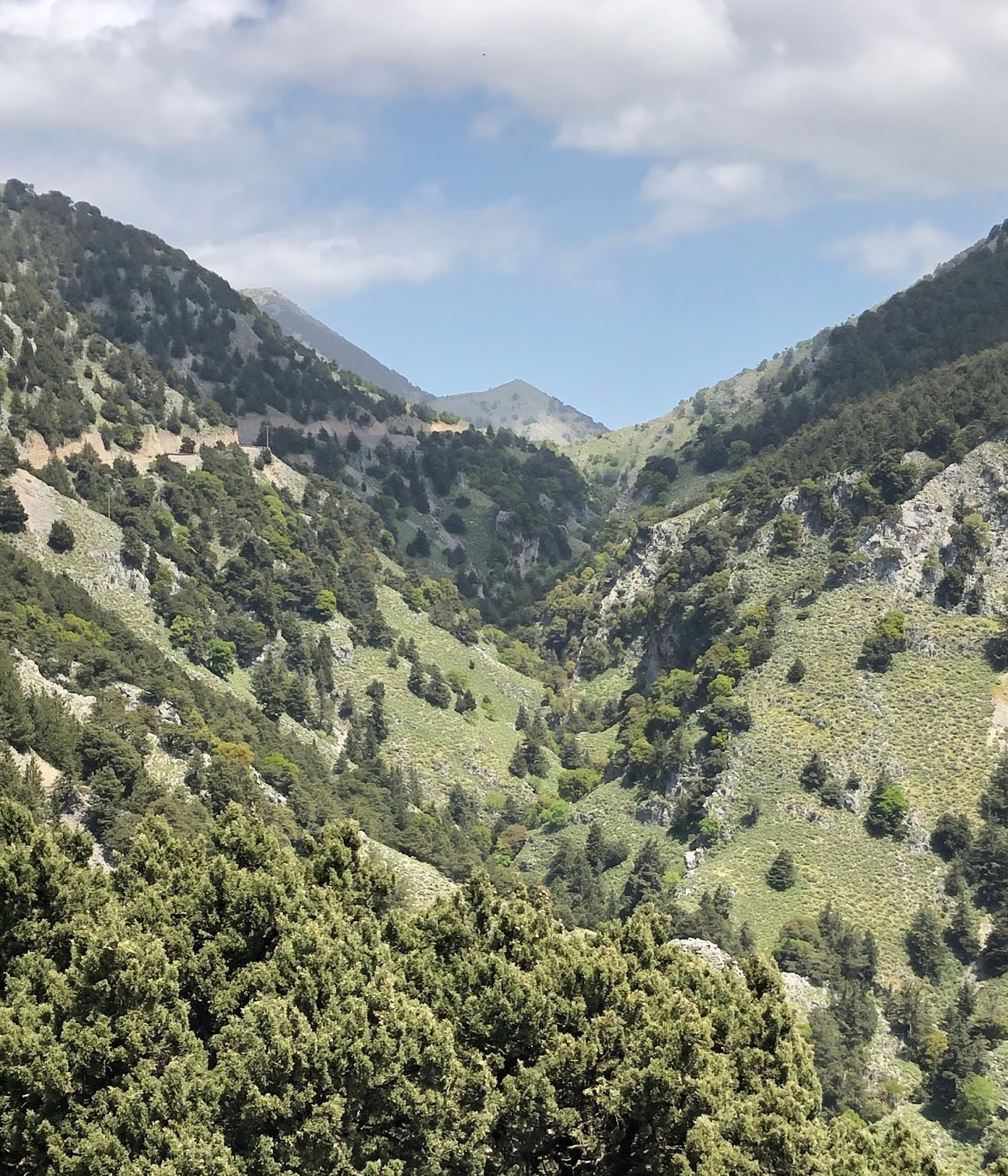
Today, you can drive across the White Mountains on a very good mountain road as we did today, armed with George Dalidakis's excellent book on the region's history. In fact, it is a very good history of Crete overall, with a focus on Sfakia.


First stop was the village of Askifou, situated on a plateau in the White Mountains. A must see is the small war museum run by George Hatzidakis. He has collected the most remarkable array of weapons and memorabilia found in the local area. Ranging from the 19th century to WW2. The British and Commonwealth units poured through the village on their way to the evacuation point, so there are rifles, Bren guns, helmets, medical kits and even a Norton motor cycle. He has every type of German and Italian small arms, the propeller from a Stuka and even a German X-ray machine.


And the village has a Turkish castle for good measure.


Next stop is the Imbros Gorge where the road ended in 1941 and British and Commonwealth troops had to hike it down to the sea. Modern day hikers use the same path, with modern kit and a taxi to drive you back to the top!


The evacuation point in 1941 was Sfakion, then little more than a beach. Today it is is a very pretty little port. The events of 1941 are remembered with this memorial.


A drive along the coast brings you to the castle of Frangokastello. Built by the Venetians in 1371-4 to subdue the locals, it was later improved by the Ottomans. It features in two of the very many revolts against Ottoman rule in 1770 and 1828.


The Sfakians were in almost continuous revolt and very often provided leadership for the rest of Crete. They were only defeated when the Turks managed to get overwhelming numbers of troops into the region. Even then the peace only lasted a short period as they fled to the mountains. Even today, the road signs are full of bullet holes!

Sunday, 5 May 2019

Crete 1941

Today I retraced the key actions of the Battle for Crete in 1941, from Maleme Airfield to Souda Bay.

I started at the Tavronitis River which runs just at the end of the Maleme Airfield. This is where the battle began at 08:00hrs on 20 May when parachute and glider landings by the Luftlande Sturmregiment began. This bridge runs parallel to the modern bridge so may be the one seized by the Germans. The river bed provided a good base for the Germans to consolidate their positions.


This is the taxiway that runs parallel to the river. This is when a counterattack should have been organised.


This is the main runway. The Greeks are very fussy about photos near defence establishments, even when the aircraft are obsolete shells. So apologies for the long lens taken from Hill 107.


Next stop was the German Cemetery on what was Hill 107. On the morning of 21 May two German companies found the hill abandoned and they consolidated on this crucial position. The cemetery was inaugurated in 1974 and contains the graves of 4,465 soldiers. There is also a small display about the battle. The saddest and most unavoidable fact when you walk about is the age of the dead. Very few are over 23.


The RAF has a memorial near the river. Ground crew were left behind when the aircraft were relocated and they made up part of the airfield defences.


As the Commonwealth troops abandoned Maleme, the Germans started to land significant reinforcements from the 5th Gebirgs Division. The new Commonwealth line was hinged on the village of Galatos. There is a small memorial/museum in the village square with items of equipment from the battle. A very helpful cafe owner retrieved the key for me.


I spent an hour or so looking around the Venetian port of Chania (Hania) with its impressive walls. Brigadier Weston's HQ during the battle. Although it surrendered to the Turks in 54 days in 1645.


There is a Maritime Museum, although it was closed. After all, who would want to visit a museum on a Sunday!


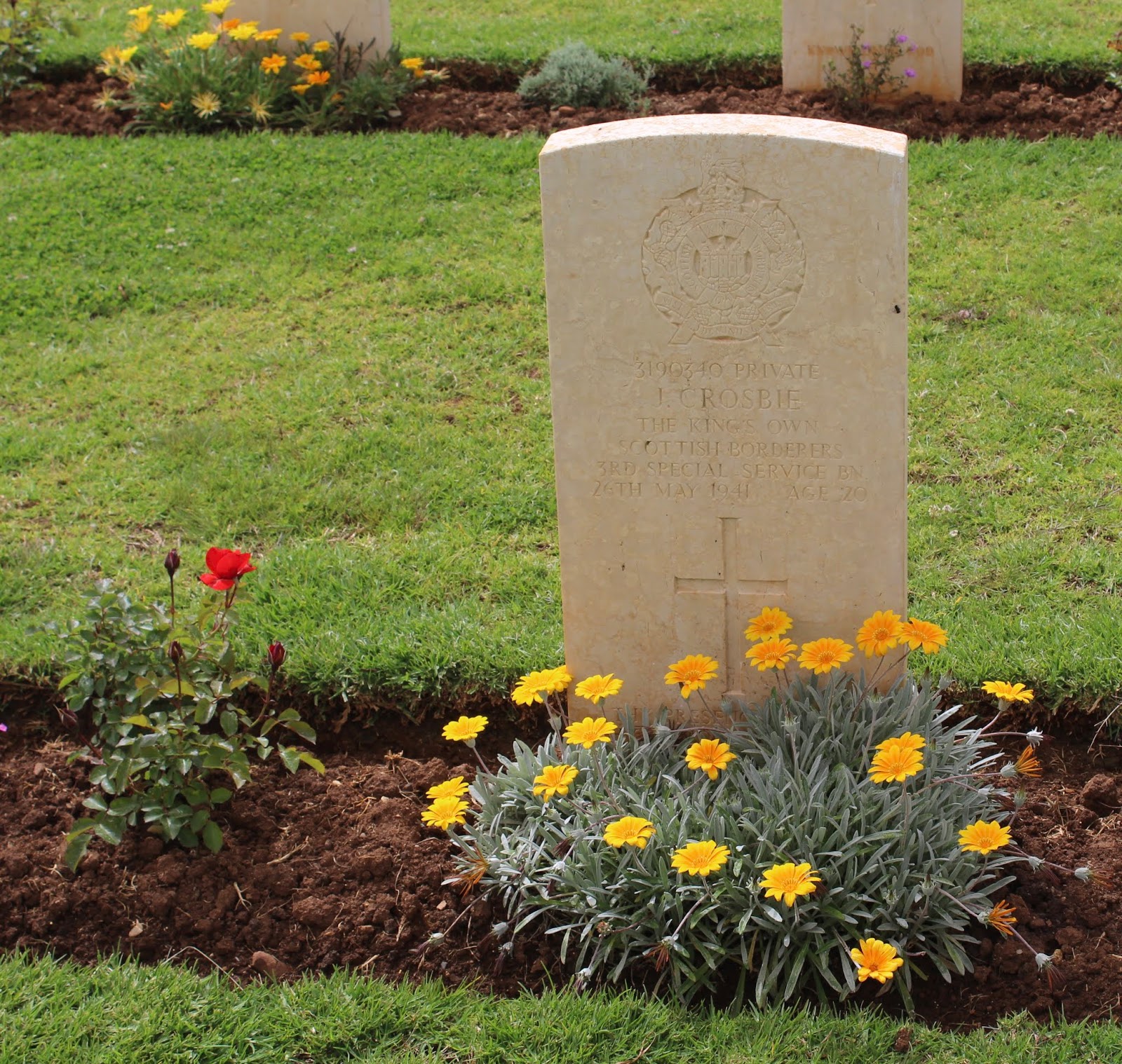
Finally, across to Souda Bay and the British Cemetery. All maintained to the usual high standards of the CWGC.


Friday, 3 May 2019

Rethymno

I am holidaying in Crete for a week, based in the attractive port of Rethymno on the north coast of the Greek island. Probably as far south as you can stretch the Balkans!

The port is dominated by a magnificent Venetian fortress. After the Ottoman pirate Ulic Ali burned the town in 1571, it was decided to build a fort. It was started in 1573 and completed in the 1580’s. The style is similar to the many Venetian coastal forts around the Balkans with its five star bastions and other gun positions.


Prior to the Cretan War in 1645, the fortress had a regular Venetian garrison of 500 men – Italians, French, Dutch and Corsican infantry. This could be supplemented by militia.  The fort fell to the Ottomans in 1646 after a siege of only 24 days. They strengthened the defences, particularly around the gate area. They also added a mosque, which unusually remains today.

It was also used by the Germans in WW2 as their garrison for the area. In 1941, there was a small airfield to the east of Rethymno, and two battalions of the 2ndFallschirmjager were tasked with capturing the airfield and the town. The area was defended by 19thAustralian Infantry Brigade (plus two Greek regiments) who responded quicker than elsewhere and the Germans were pushed back to the olive oil factory at Stavromenos. Events elsewhere meant the town and airfield had to be abandoned and the retreat to the southern coast started. Gebirgsjager relived the paras and captured the town.


The fortress is well worth a visit, not least for the great views.

Wednesday, 1 May 2019

Wild Europe

Wild Europe by Bozidar Jezernik is a study of the Balkans in the gaze of western travellers from the fifteenth to the early twentieth centuries.


To the modern reader, the views of many of these travellers appear bizarre. They mostly cover the period when the Balkans were occupied by the Ottomans. In the early period travellers reflected the power of the Ottoman Empire, but that soon changed to less admiration as the empire declined.

In some cases there was outright racism, in others, it reflected a disdain for Islam. More often just shock at a different way of life that to western eyes of the period appeared backward. This results in an inability to credit the Ottomans for anything positive. This is well illustrated by the Mostar Bridge in Bosnia. Western 'experts' claimed it was a Roman construction despite the clearest evidence that it was built by the Ottomans. One author even corrected his wife's notes to this effect.

Most of these western observers also failed to recognise their own hypocrisy. They were shocked at the taking of heads in battle, but not the mass slaughter in trenches, the lynching of black men in the USA et al. Not to mention the similarity between the Ottoman divide and rule policy with similar approaches in the British empire.

One chapter describes the 'evidence' collected by several writers that Albanian men had tails. A clear example of how groups perceive others, sometimes for political reasons. Illustrated by the views of the Serbian Prime Minister, Vladan Dordevic (1897-1900) who was also a distinguished author and academic. He described Albanians as 'bloodthirsty, stunted, animal-like individuals, so invincibly ignorant that they could not tell sugar from snow'. Conveniently this meant they could not possibly rule themselves!

The original passages are interesting in themselves, but the author goes further in analysing how these western observers constructed their images of the Balkans. A really interesting book that has been extensively researched with many period illustrations.

Saturday, 27 April 2019

Italians completed

The Italians for my Yugoslavia invasion project are now completed. Most unlike me, two weeks before the Carronade show - no hair dryer required!

First up, some seriously heavy artillery. This is the Ansaldo 149/40 from Heer46 Models with Perry's crew. I appreciate that it's a bit OTT for Bolt Action, but I couldn't resist. Some 590 were ordered, but only 51 were in service by the outbreak of war. It was a good design and the Germans took over production after the Armistice in 1943.


Like most wargamers, I usually paint the elite troops first, so I surprise myself with the late appearance of the Bersaglieri. Traditional light infantry units, by WW2 they were mostly attached to armoured, cavalry or motorised divisions. There was a battalion in Zara, which justifies their inclusion in this force. The models are from the Warlord range. The farmhouse buildings in the background are from the Tablescape range. A new firm to me, these are very light models and very nice indeed.


Lastly, we have the Blackshirts, or MVSN to give them their proper acronym. Originally they were Mussolini's street thugs and grew to 340,000 combat troops. A battalion was attached to most divisions and there was one in the Zara garrison. They were equipped like normal infantry units with the exception of black shirts and different insignia. These are standard Warlord Italian infantry models.


It's always nice to finish a project. If you come to the Carronade show on 11 May in Falkirk, you can command these units against the Royal Yugoslav Army in the GDWS 'Breakout from Zara' participation game.