Welcome to my blog!

News from a wargamer with a special interest in the military history of the Balkans. It mainly covers my current reading and wargaming projects. For more detail you can visit the web sites I edit - Balkan Military History and Glasgow & District Wargaming Society. Or follow me on Twitter @Balkan_Dave
or on Mastodon @balkandave@mastodon.scot, or Threads @davewatson1683

Monday, 10 August 2015

Battle of Caporetto 1917

The beautiful Soca Valley in Slovenia is a tourist playground today, with mountain walking, paragliding and watersports. However, in 1917 it was the site of the Battle of Caporetto, one of the war’s most savage battles.

The Battle of Caporetto (also known as the Twelfth Battle of the Isonzo) saw combined Austro-Hungarian and German forces decisively break through the Italian line along the northern Isonzo, catching the Italian defenders entirely by surprise. Nine Austrian divisions were supplemented by six German divisions giving them local numerical superiority at the point selected by the German army for the offensive.

Supported by a heavy artillery barrage of high explosives, gas and smoke, and the use of infiltration tactics, the combined force broke through the Italian lines and progressed a remarkable 25 km by the close of the day. Local counter attacks had limited success and the Italians were forced to retreat all the way back to the River Piave, just north of Venice. The Italians lost some 300,000 casualties (90% prisoners), and virtually all their artillery. Six French and five British divisions were rushed to Italy to shore up the Italian line.

For the visitor today, there is an excellent award winning museum at Kobarid (Caporetto). Three floors of exhibits and a 20 minute documentary.


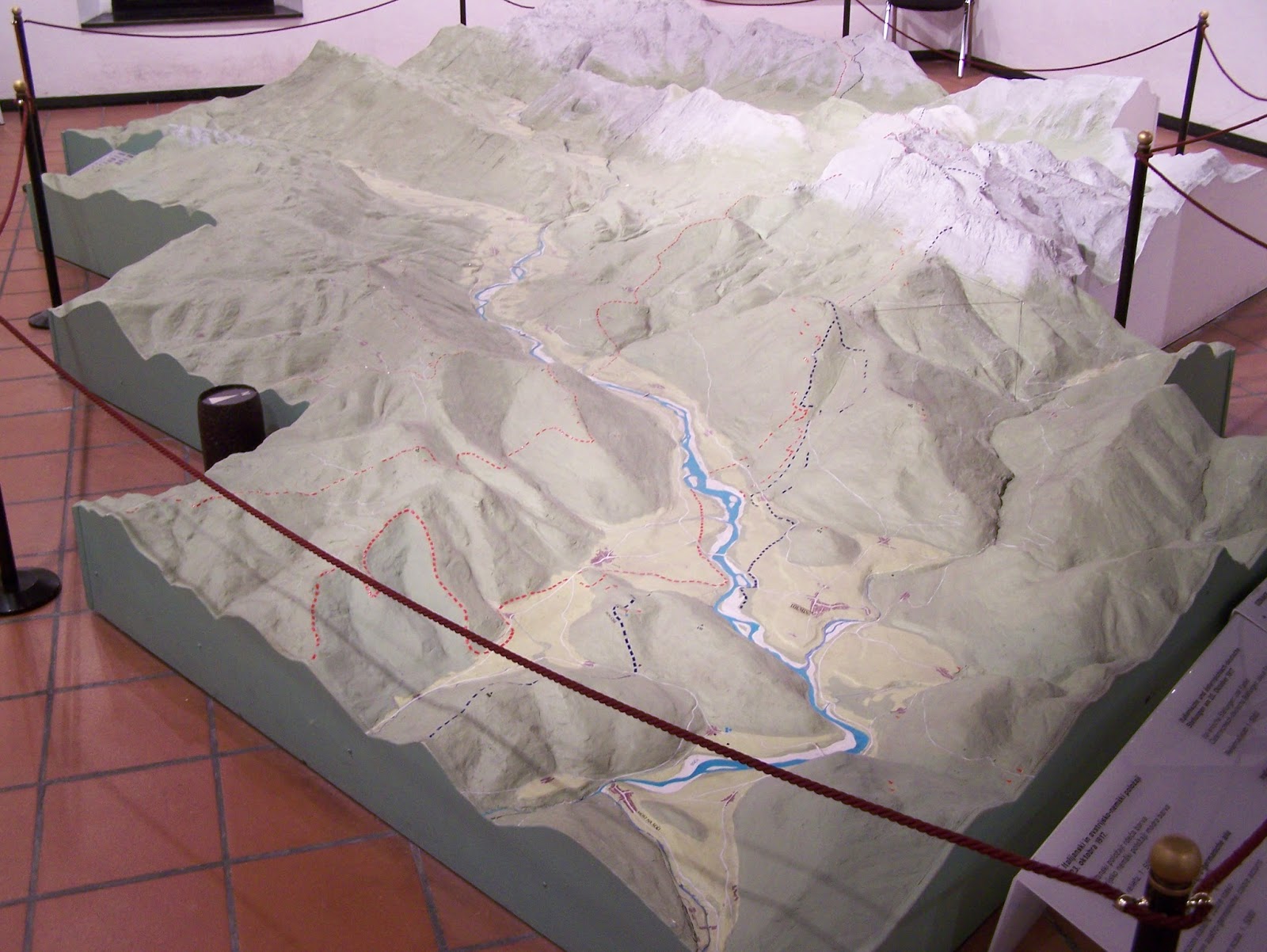
What strikes you from the relief maps and photos in the museum is that the front lines were high up in the mountains. It seems inconceivable that troops could fight at these altitudes, particularly in winter. There is a long distance walking path that follows the old trench lines, for the very hardy enthusiast!


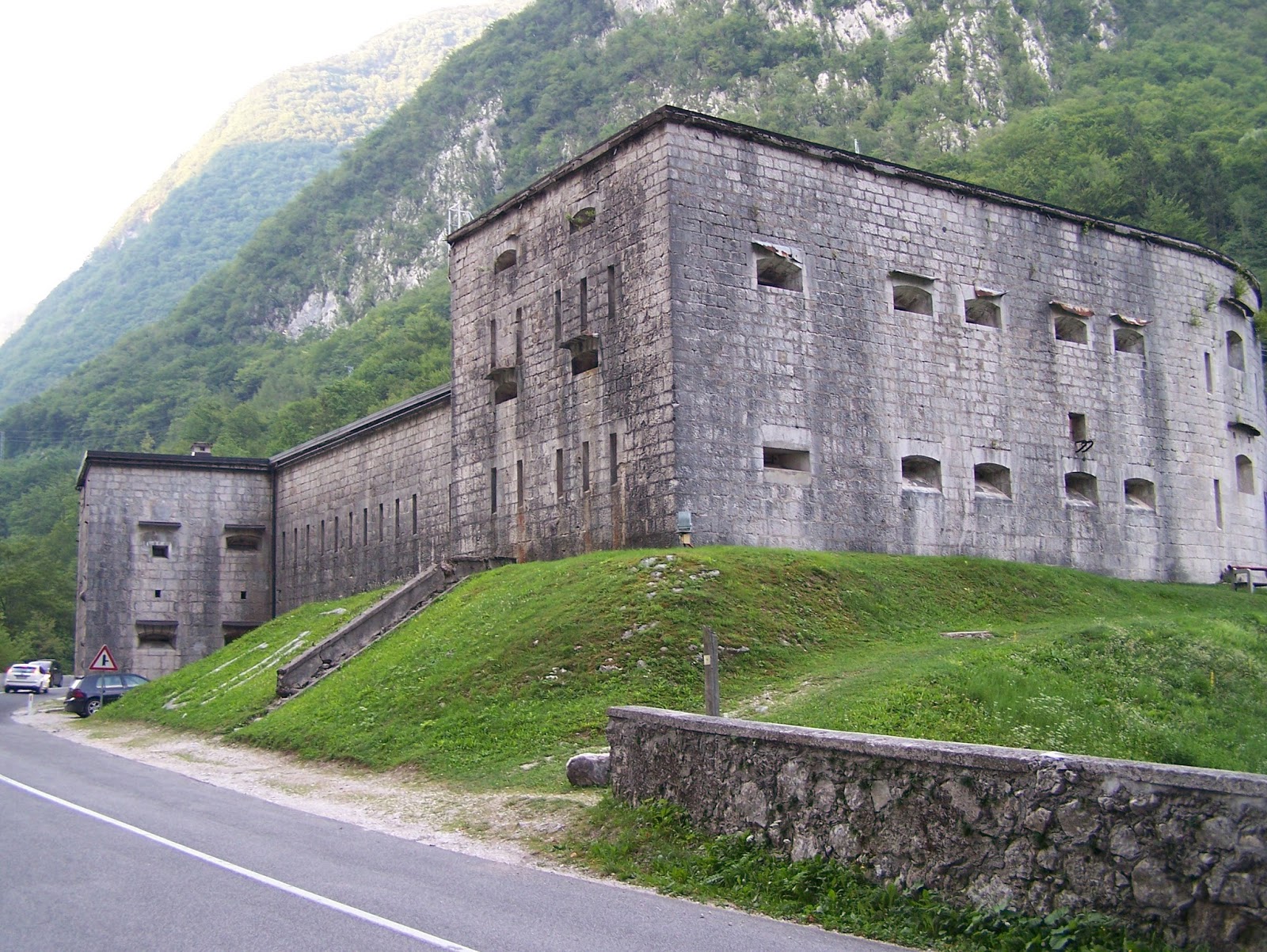
We finished the day off at the Austro-Hungarian fortress of Kluze. Built in 1882, on the site of earlier castles, it dominates the pass between Bovec and Tarvisio in Italy. There is a museum inside the fortress which is well worth a look.


In 1904 the Austrian’s built an additional artillery position, Fort Hermann, just above the fortress. There is a path up to it, although I wouldn’t recommend the direct route up the side of the mountain that troops in a hurry used. Look carefully at the photo and you can see the iron ‘ladder’ they spiked into the rock.


If you have time there is another fortress at the other end of the front lines at Tolmin.


Thursday, 6 August 2015

Military Frontier castles

I spent yesterday in the Military Frontier that used to cover most of Croatia and northern Bosnia - separating the Hapsburg and Ottoman empires.

For around three hundred years militias on both sides faced each other and conducted a small war in between the formal conflicts. The troops were variously labelled Hajduks, Vojnuks, Martelosi or Grenzer. It was more formalised on the Croatian side where the Grenzer settlers had special privileges and restrictions to provide a defensive buffer. Later they also provided useful regiments for wars away from the border.

My trip started at the Croatian city of Karlovac, formerly Karlstadt. This was the military headquarters of the Croatian part of the military border. It's now a busy industrial city and not much remains of the star shaped fortifications that surrounded the old city. However, there is the older castle of Dubovac to the west of city that is in excellent condition and provides a great view. Sadly, despite arriving within the published opening hours, it was closed.

After a quick stop at the Croatian Homeland War Museum, at what was formerly an outpost for the fortress, we drove through the border area. For the benefit of wargamers the terrain is overwhelmingly forest. There are even still a few scars on the buildings from the Homeland War, twenty years ago.

The next castle is just over the border into Bosnia at Velika Kladusa. The old castle has been extensively renovated and is used as holiday apartments with a function area for weddings. A very helpful young English speaking member of staff took us around. There are a few WW2 era artillery pieces in the grounds, used again in the Homeland War.

Finally, further down the road towards Bihac, there is Ostrozac. This really is a magnificent and very large Bosnian castle. When I last visited in 2006 there was some restoration work going on. Sadly, not much progress appears to have been made, but the essential features of the castle remain.

A word of warning if you fancy a trip here, allow plenty of time. Don't expect too many helpful road signs! Essentially, you have to drive into the towns and think, where would I build a castle here? Then drive around side roads until you come across it. A picture on the iPad is helpful when seeking help from the locals - who I have always found very friendly and helpful. If a bit bewildered as to what you are doing!

For further reading look no further than Gunther Rothenberg's two volume history on the military border. Long out of print I'm afraid, but your local library may be able to get a copy. However, this paper, The Krajina Project: Exploring the Ottoman-Habsburg Borderland, by R J Carlton and A Rushworth, is well worth a read.


Croatian Homeland War Museum

I came across this little gem at Turanj, just outside Karlovac, on the road south towards Bosnia yesterday. The plan is to build a full museum, but at present there are a number of external exhibits that are well worth a visit.

The Croatian Homeland War was fought from 1991 to 1995 between Croat forces loyal to the government of Croatia and the Serb-controlled Yugoslav People's Army (JNA) and after 1992 local Serb forces. A majority of Croats wanted to leave Yugoslavia while many ethnic Serbs living in Croatia, supported by Serbia, wanted Croatia to remain a part of Yugoslavia and attempted to conquer as much of Croatia as possible.

After they failed to do this, Serbian forces established the self-proclaimed Republic of Serbian Krajina (RSK) within Croatia. After the ceasefire of January 1992 and international recognition of the Republic of Croatia as a sovereign state, the front lines were entrenched and combat became largely intermittent. In 1995, Croatia launched two major offensives known as Operation Flash and Operation Storm which ended the war in its favour.

Here are a few photies of the current exhibits. Starting with the information board.

The tank line up. T55, Sherman, M36 and two Hellcats.

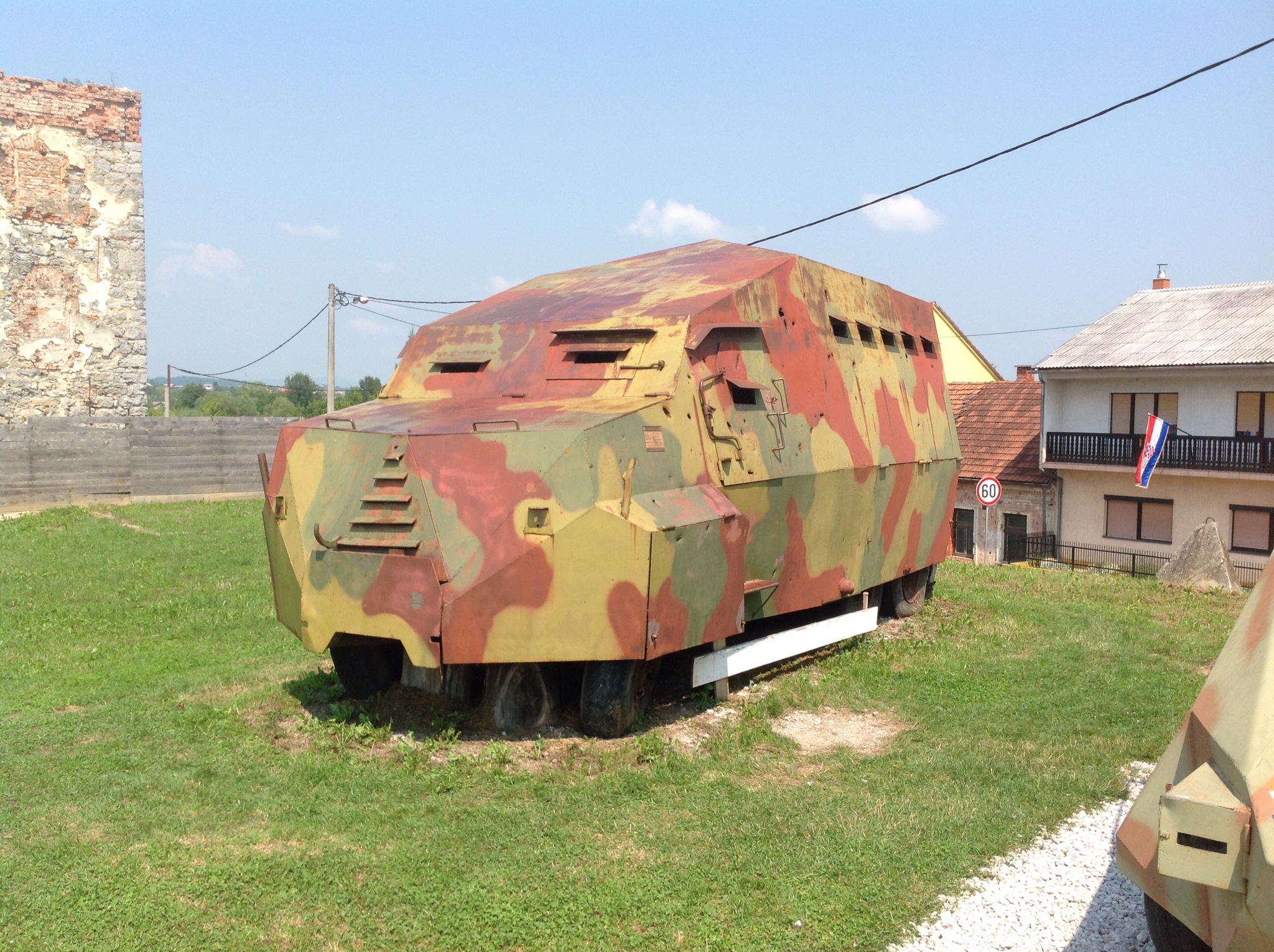
Then a couple of improvised armoured cars

I think this is a Yugoslav built OT recce vehicle, looks like the ones I have models of.

A 203mm Howitzer on the left and apparently a British 90mm AA gun on the right.

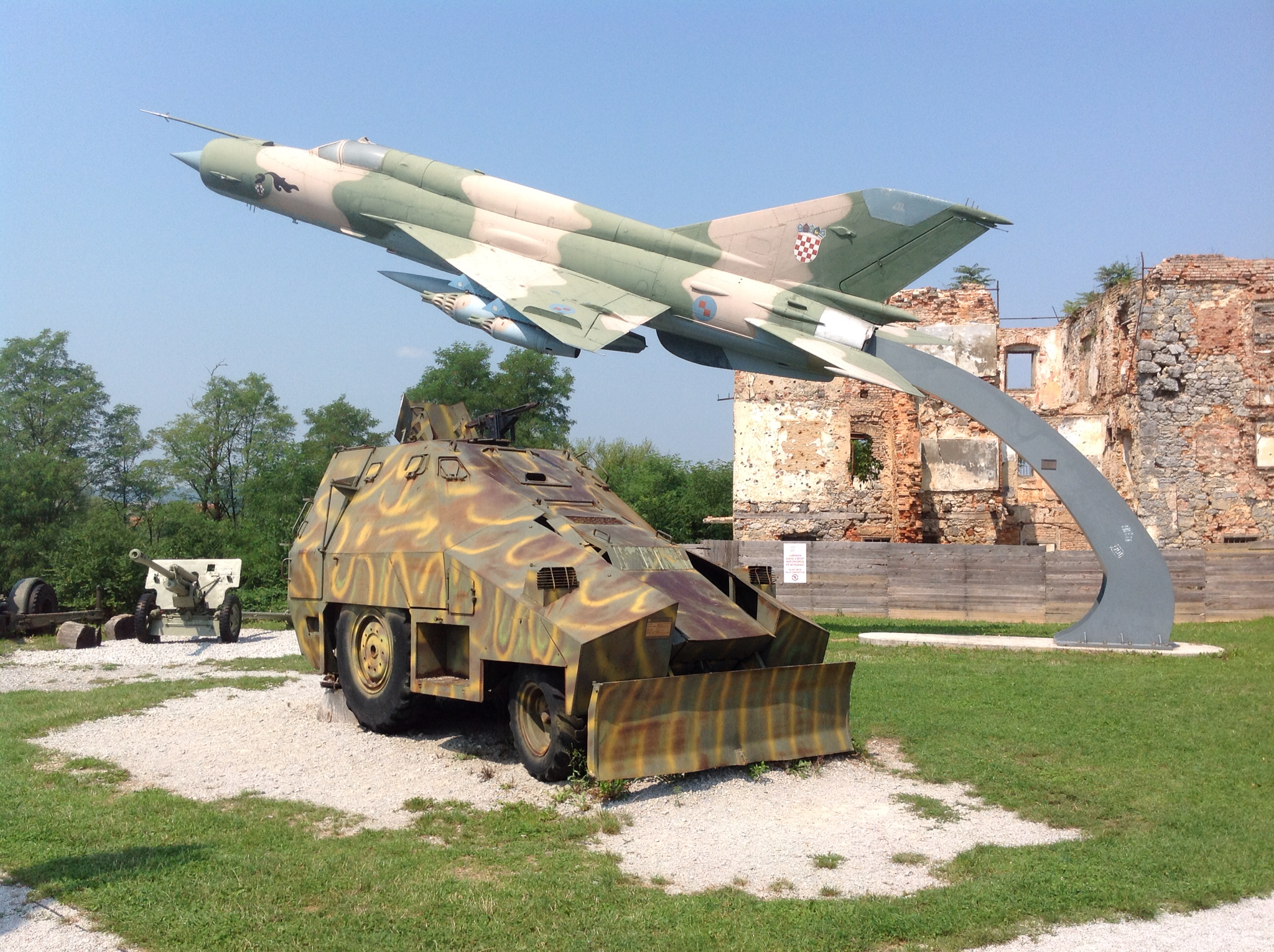
Finally, my favourite photie, a Mig 21 'over' a Strasko armoured tractor.


Tuesday, 4 August 2015

Uskok's of Senj

Northern Croatia for this year's Balkan travel fest with a focus on the military border between the Habsburg and Ottoman empires. First stop has to be Senj, home of the Uskok's. This is somewhere I have long wanted to visit, having written an article about them many years ago in The Arquebusier journal, together with an army list for DBR.

The name Uskok comes from a verb meaning ‘to leap over’ and originally referred to men who rejected Ottoman rule and crossed over to Christian lands. They originated in the fortress of Klis which guarded the pass above the port of Split around 1532. After an heroic defence, the death of their leader Petar Kruzic caused them to capitulate to the Ottoman besiegers. They were allowed to withdraw and moved north settling in the Dalmatian port of Senj around 1537.

The Uskok's used a type of light galley known as a Bracera. These mostly had eight oars and a crew of 24 to 36. The larger Bracere were twice this size. They could cover 100 sea miles in a night and were more manoeuvrable and of lighter draught than their largely Venetian prey. Robbing the Venetians was more profitable than attacking the Ottomans, but it led to their downfall when the Venetians declared war and the Habsburg's were forced to relocate them.

The castle is in excellent condition and houses a cafe and a museum with some excellent exhibits. I'll post more pictures on the web site when I get home.

The Uskok's were first relocated to Otocac, which is inland from Senj and was an important base in the Military Border. Sadly, the ruins of the castle are not even marked on the local tourist map. The airfield has an old C47 Dakota, sort of on display. Or at least I hope it's not in service!

For more on the Uskok's, you can read my original article on Balkan Military History and I strongly recommend Wendy Bracewell's book. Old Glory do figures in 28mm.


Sunday, 2 August 2015

Siege of Shkodra 1478

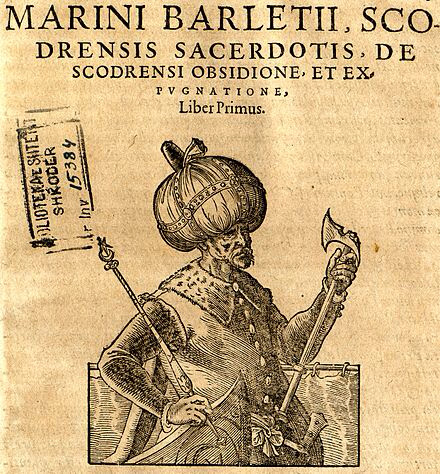
My poolside reading for today, some way further up the Adriatic coast, was The Siege of Shkodra by Marin Barleti, a local priest in 1504. It covers the Ottoman siege of Shkodra, which is in Northern Albania, in 1478, led personally by Mehmed the Conquerer. This epic siege was one of his few failures.

The original book was in Latin, later translated into Albanian. The recent English version was translated and edited by David Hosaflook and includes translations of the Albanian edition's introduction and notes. It also includes accounts of the siege from early Ottoman historians, new scholarly notes, the historical context by Prof. David Abulafia, new maps based on the information in the book, and appendixes including Barleti's chronology of battle events.

This is not objective history. Barleti wrote the book for a Venetian audience and they financed the defenders. They arguably also later sold them out! He also clearly made up most of the speeches, or at least embellished them. However, the modern version provides some context and the equally biased Ottoman sources.

What you end up with is a really good description of a savage medieval siege. It reminded me of the semi fictional work, The Siege, by another Albanian author, Ismail Kadare, and he must have been influenced by it.

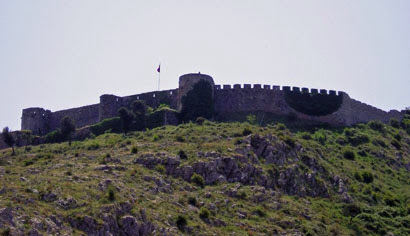
I visited the site of the siege a few years ago. Very impressive ruin today and you can see what a strategic position it commanded and why it was so important.

Oh, and let's have some of my Albanian wargame figures as well!


Saturday, 1 August 2015

Claymore 2015

Just a very quick visit to Claymore today. Flying out on my honeymoon, coincidently from Edinburgh Airport! Heading to the Balkans of course, as I type this from our hotel in Croatia.

So just time to say hello to folk and purchase a few essentials. Some Warlord French and Polish Napoleonic line infantry for my Peninsular project, together with some Perry cannon. A few books and foam storage.

The Wargamer's bride got into the spirit with the Durham lads 54mm Napoleonics. If my eyesight doesn't improve I might be joining them!

First stop of course was the GDWS display. Arial Dystopian Wars. Got an honourable mention in Wrgames Illustrated this month.

Then a few more games, some old and some new, that caught my eye.

Starting with a Balkan game, Gallipoli.

Then Iain (Flags of War) from our club with this ECW game

The Sally 4th team showing off their very fine buildings here

Not sure what this snowy naval scene is, but it's very good.

This looks like another day out for the Hydaspes game.

Ditto for these fine buildings.

And the Phoenix lads with Lion Rampant.

As usual, thanks to the Edinburgh lads for putting a fine show on.


Armies of the Greek-Turkish War 1919-22

An Osprey on a Balkan subject is of course a must buy and this title in the Men-at-Arms series by Philip Jowett is no exception.


After World War I, the Greeks attempted to extend their territory in Anatolia around the City of Smyrna (Izmir). They launched an offensive in Anatolia against the nationalist Turks commanded by Kemal Ataturk, who had defied the Ottoman government’s treaty commitments. In April, the Greeks were repulsed, but renewed their attack in July and advanced toward Ankara. However, they were defeated at the Sakarya River (Aug. 24–Sept. 16, 1921). By September 1922, the Turks had captured Smyrna and driven the Greeks out of Anatolia. 


The Treaty of Lausanne (July 24, 1923) obliged Greece to return eastern Thrace and the islands of Imbros and Tenedos to Turkey, as well as to give up its claim to Smyrna. The two belligerents also agreed to exchange their Greek and Turkish minority populations in a massive ethnic cleansing.

This book follows the usual Osprey MAA format. A chronology of the campaign and a description of both armies, organisation and equipment. Plenty of photos and of course colour plates.

For the wargamer, Greek armies of WW1 will work fine, although they were a bit ragged by this conflict. Turkish forces were very varied and WW1 figures will look a bit too regular.

A less well known conflict with pretty tragic consequences for whole populations, but well covered in this publication.

Here are some 28mm Greeks from my collection.


Friday, 31 July 2015

Second Serbian Uprising 1815

This year is the 200th anniversary of the Second Serbian Uprising that led to autonomy from the Ottomans for Serbs living in the Belgrade Pashalik.

After the first Uprising there were attempts at reconciliation under a new governor, Suleyman Pasha. However, by 1815 repression had returned and this resulted in the Second Serbian Uprising, led by Milos Obrenovic, starting on 23 April 1815. He was another pig farmer, but he learned from the first uprising and avoided major military confrontations with the Ottomans. His strategy was to negotiate a deal with the Ottomans.

Not that he didn’t raise forces and fight battles. When elected he famously said, "Here I am, here you are. War to the Turks!". There were actions at Cacak, Ljubic, Palez and Dublje before the Ottomans were driven from the Pashalik.

We don’t know a great deal about these actions. They appear to have been mostly defensive actions by the Ottomans who defended entrenchments that were stormed by the Serbian forces. On several occasions, negotiated surrenders ended the action with the Ottomans withdrawing leaving any cannon behind. The strategy was not to repeat the barbarity of the first uprising, to make a negotiated peace possible. For example at Dublje, the Bosnian Pasha was captured after his army fled. He was treated well, given presents and allowed to return home.


In mid-1815, the first negotiations began and agreement was reached on a form of partial autonomy. The Ottomans were wary of the Russians after Napoleon’s defeat and were busy with unrest elsewhere in the empire.  In 1816, formal documents acknowledged the Serbian Principality under which they paid a yearly tax to the Porte and had a garrison of Turkish troops in Belgrade until 1867. However, it was, in most other matters, an independent state.

Here are a few Serbian troops of the period. They looked pretty similar to the Greeks, so I used the new 28mm range by the very talented Steve Barber. 


On the tabletop with this skirmish game.


There is a more detailed feature article on this conflict in this month's Balkan Military History.

Thursday, 30 July 2015

Master of War - Defiant Until Death

My holiday fiction reading has been David Gilman's, Defiant Until Death in his Master of War series.

This is the saga of Sir Thomas Blackstone, who rose from a humble archer in the English army of the Hundred Years War, to be knighted after the battle of Crecy.

This book takes the story on onto the Poitiers campaign, with our hero holding towns in Normandy and getting involved in plots against the French king. This leads to his friends being butchered by the King and his family threatened by a character called the Savage Priest, who commands a band of routiers.

The climax of the book is the Battle of Poitiers, unusual for the period in that longbowmen played a less significant role in the victory due to a shortage of arrows - something few wargame rules replicate. It ends in a further battle in Northern Italy when our hero of course kills the Savage Priest. As Blackstone takes his band of warriors into Papal service, the next book will presumably cover Italian warfare of the period.

This is epic historical fiction. Numerous sub plots, some romance, plotting and of course plenty of action. Well researched and written, this is all you could ask for from the genre. Recommended.

Monday, 27 July 2015

Wargamer's Wedding

I got married to Liz on Saturday and as we held the ceremony in the garden of our home there was the opportunity to set up a wargame for our guests. When I say garden, given it's Scotland in July, we covered it front and back with marquees. However, we luckily got probably the only sunny day - a D6 there!

It was a small skirmish game based on the Battle of Jarama in the Spanish Civil War. The figures are 28mm and we used Bolt Action rules. Not much time to play it, but the handout explains what war gaming is all about.

Oh, and the wedding. Here's me and the new Mrs Watson. The tartan for my kilt is a new one in support of the UK military charity, Help for Heroes.

And my favourite wedding present from my wargame pals. Absolutely amazing, thanks lads.

And finally, an essential at any Scottish wedding, the piper. Neil is associated with the Royal Tank Regiment, very appropriate for me!


Wednesday, 15 July 2015

Ottoman naval matters

My latest reading has focused on Ottoman naval matters, albeit from very different periods.

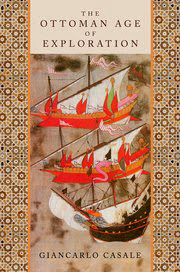
First, we have the Ottoman Age of Exploration by Giancarlo Casale. The author takes us through the various stages of Ottoman naval activity that mainly focused on the trade routes from the Middle East to India and South East Asia. Starting in 1512 with Selim the Naigator and completing the narrative in the early 1600's.

Ottoman naval activity was in part defensive - defending the Red Sea against Portuguese incursions, but then expanded, somewhat fitfully, depending on the enthusiasm of Ottoman officials from the Sultan down. Control of the spice trade was particularly important, given the fabulous prices such delicacies attracted in Europe.

I have to say I struggled a bit with this book. As is often the case with what was originally a PhD thesis, the quality of the research outshines the readability. None the less, the subject is an interesting one and for the wargamer gives a new opponent for those Ottoman galleys. And the Ottoman maps are also wonderful.

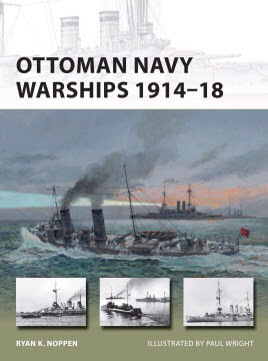
Second, we have Ottoman Navy Warships 1914-18 by Ryan Noppen. This Osprey, in the New Vanguard series, concisely describes the warships of the Ottoman navy and the actions they took part in. I was familiar with the actions in the Dardanelles having visited the forts and naval bases. In particular the minelayer Nusret's achievements in sinking or seriously damaging several allied battleships. I was less familiar with the naval actions in the Black Sea. Many of these revolved around Russian attempts to interdict Ottoman coal convoys. It was the lack of coal that most restricted Ottoman naval action.

The Ottoman navy had a disparate mix of ships at the start of WW1, built in Germany, France and Britain, partly as compensation for uprisings in the Empire. With the exception of the infamous Goeben, the navy even with German help, didn't really achieve its potential. It did however stop the superior allied navies from bombarding Istanbul, an action that might have knocked the Ottoman's out of the war.


Sunday, 12 July 2015

Spanish Civil War

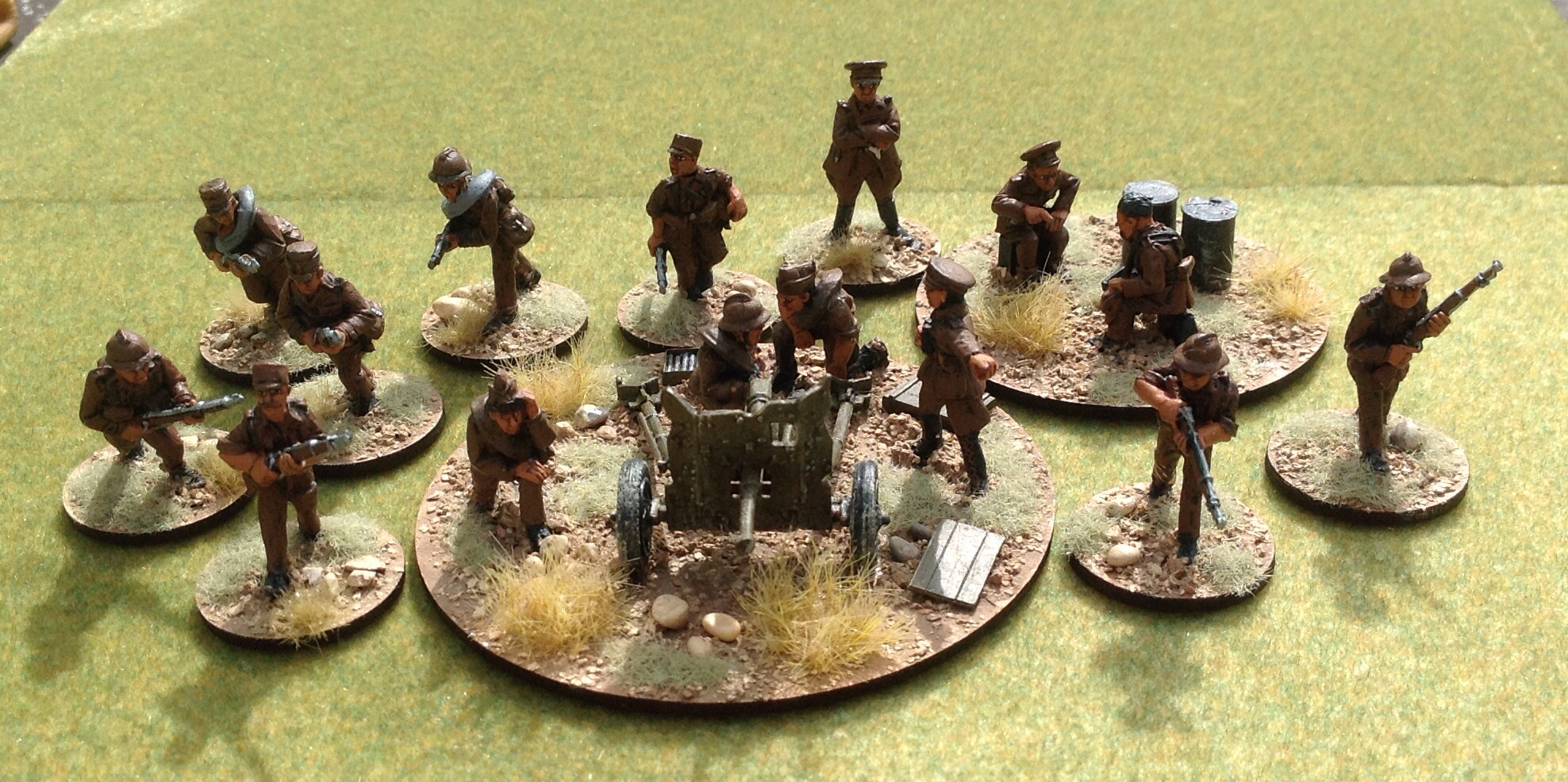
These are somewhat belated reinforcements for my Bolt Action Spanish Civil War armies in 28mm. Belated because I had planned to finish them the Falkirk show, but life etc intervened.

First up we have some Republican infantry with an ATG.

Then some rather nice female militia, the Miliciana.

And finally, the opposition in the form of Morrocan troops.

All figures are from the Empress range.