Welcome to my blog!

News from a wargamer with a special interest in the military history of the Balkans. It mainly covers my current reading and wargaming projects. For more detail you can visit the web sites I edit - Balkan Military History and Glasgow & District Wargaming Society. Or follow me on Twitter @Balkan_Dave
or on Mastodon @balkandave@mastodon.scot, or Threads @davewatson1683

Sunday, 3 December 2023

Lancashire Infantry Museum

On Saturday, I was heading south to Liverpool for the footie at Anfield on Sunday. My original plan was to walk in the Lake District, but the weather changed. Fell walking in snow and sleet is no fun! Looking for an alternative, I realised I had never visited the regimental museum of the Lancashire Regiments, based in Preston. The museum is on an army base (Fulwood Barracks), so you must book in advance, with the usual security checks.

This small museum covers the many regiments that finally merged into the current Duke of Lancaster's Regiment. From the late 17th century, these regiments fought in just about every conflict the British army was involved in. The barracks is a listed building and interesting in its own right. A member of staff/volunteer takes visitors around. Mine was very knowledgeable and helpful in tracking down my questions about the Balkan links. 

Pride of place in the museum goes to the Eagle captured at Salamanca, along with a fine collection of Napoleonic memorabilia. 


 They have a few items from the Seven Years War and a good collection of Crimean War exhibits.


All the Lancashire regiments sent a battalion to Macedonia in WW1. They also landed at Gallipoli, where a beach is named after them. The museum also has a WW1 German HMG and the first German anti-tank rifle. You could get a severe shoulder injury firing this beast.


You can also access the regimental chapel from the museum.


The tour takes about an hour, and the barracks are only a short detour off the M6. Well worth a look. 

Saturday, 2 December 2023

US Navy Gun Destroyers 1948-1988

 This is a new Osprey Vanguard book by Mark Stille looking at the post-war gun US destroyers before the missile became the primary weapon system for this class of surface warship. They are the forgotten warships of the Cold War, as most were built in WW2 and at least partially modernised to meet new threats. Even after leaving USN service, the Fletcher, Sumner, and Gearing classes continued serving worldwide in many foreign navies. My particular interest is in the ships that transferred to the Turkish and Hellenic navies.


The Fletcher class was the most successful, with 175 built. They had adequate room to retain a main battery of five 5in guns and ten torpedo tubes and accept an increase in 40mm and 20mm anti-aircraft guns. Most were deactivated after WW2 but brought back and modernised after Korea. Successor to the Fletcher class was the Sumner–Gearing class. The Sumner class kept the same dimensions as the Fletcher class but possessed a slightly larger beam. This allowed the fitting of a heavier main battery arranged in triple twin gun turrets. 58 of these warships were built as an interim design. The ultimate USN World War II destroyer design was the Gearing class. These were simply Sumner-class units with the addition of a 14ft section, used primarily for fuel bunkerage. 98 Gearings were built, and they operated into the 1980s. The Forrest Sherman class was the last USN all-gun destroyer, and many were converted into missile destroyers during the late 1960s. They were faster with better seakeeping qualities.

By the late 1950s. Many ships had been in constant service since 1945. Cost precluded replacements, so the USN rebuilt many of them, mostly Sumner and Gearing classes, to extend their service lives. This became the Fleet Rehabilitation and Modernization (FRAM) program. FRAM I work focused on the Gearings, improving the ships’ ASW capabilities – two Mk 32 triple torpedo launchers were added along with an ASROC launcher and other electronic ASW equipment. FRAM II focused on the Sumners with similar ASW upgrades but without the ASROC launcher because they didn't have space being shorter ships.

These ships fought in the Korean and Vietnam wars. Several also took part in the Cuba blockade and the intervention in Lebanon. During the early phases of the Cold War, carrier escort duties were performed predominantly by the gun destroyers built during and in the immediate aftermath of World War II. There was no real surface fleet threat, so they focused on anti-submarine and anti-aircraft warfare. However, their main fighting role remained shore bombardment.

Five Fletcher Class destroyers transferred to Turkey in the late 1960s and served until the 1980s. Two Sumners transferred in the early 1970s, just before the Cyprus conflict, and these served into the 1990s. Ten Gearings came to Turkey during the 1970s and early 1980s. This included the TCG Kocatepe (D-354), which was sunk by friendly fire in 1974 off Cyprus. The friendly fire incident occurred because the Hellenic Navy also received the same class of ships. These included six Fletchers and eight Gearings. Most of these ships served until the 1990s.

This book covers all the gun destroyers built for the US Navy. It describes each class and their armament and roles. It doesn't cover their service in other navies, which is a shame, but I suspect space constraints are the main reason. As expected in this series, it is profusely illustrated with drawings and colour plates. 

My Turkish fleet in 1/3000 for the Cyprus conflict includes Gearing and Fletcher classes.


And the matching Hellenic fleet for 'what-if' actions. 

Saturday, 25 November 2023

Witness to War

 This is Colin Turbett's new book on Arran and the Firth of Clyde in the Second World War. A local history of the coast I live on. 

For those unfamiliar with the area, the waterway leads to the River Clyde and the city of Glasgow. The region was pivotal in WW2, providing a seaport safer from the Luftwaffe than those further south. 500 million tons of shipping moved into and out of Glasgow, bringing cargo and troops from the USA. The Clyde shipyards also built 1,903 naval and merchant ships and converted a further 637 for wartime uses. 

Dominating the Firth of Clyde is the Island of Arran, often described as Scotland in miniature. It was a crisp winter day when I took this picture on my bike ride this morning.

Colin describes the many naval and air bases established along the coasts to protect the Clyde during wartime. These included a boom defence at the entrance to the Clyde near Gourock, consisting of a steel net defended by Boom Defence Vessels and shore batteries. If you travel to Arran today, it will be by ferry from Ardrossan. In WW2, this was a base for minesweeping and anti-submarine patrols called HMS Fortitude. There were subsidiary facilities in my town of Troon. Also near me is Prestwick Airport, a vital air bridge with 38,000 aircraft coming in from the USA. It was supported by an airfield at Dundonald, which, although closed, still has a few buildings standing.

The Firth of Clyde taken by me from a friend's plane based at Prestwick Airport.

Arran was a training base for Commandos until they moved up to the Highlands in 1942. Specifically, 9 and 11 Commando were based on the island. Colin tells the stories of the island during wartime and the service men and women who made it their home. He also lists the substantial loss of life from aircraft crashes and sinkings. Of the 15 ships lost, only one was caused directly by enemy action, although enemy mine laying was a problem. It is often forgotten how high the accident rate was on training flights when the safety standards were much lower than today's. He also tells the story of the sinking of U-33 by HMS Gleaner. Divers recovered parts of an Enigma coding machine that contributed to cracking the German coding system. 

This is a fine history of one community during wartime. I would also draw attention to a short booklet by Colin's son, Liam, Island Brigaders. This tells the story of local men Robert Milton and William Bamborough, who volunteered to fight in Spain, defending democracy as part of the broader struggle against fascism. Milton was a machine gunner in the International Brigades. Bamborough was a pilot who flew in the Republican Air Force. Well worth a read.


Wednesday, 22 November 2023

Napoleon - yes that film!

 After a year long hype and countless analysis of trailers, I have now seen the film at the first showing at my local cinema.


I expected to love the cinema experience even if I was irritated by the historical inaccuracies. However, I felt underwhelmed by the experience and even more irritated by the inaccuracies. In fairness, I thought Joaquin Phoenix did a good job of playing Napoleon, given that playing a character over twenty years is challenging. I also believe Vanessa Kirby gave a good performance. However, given the age gap and the importance of Josephine's experience to the young Napoleon, an older actress might have been a better choice.


Like many folks, when this project was announced, I assumed that this would either be Napoleon's early years or a multi-part film. When you try and fit so much into one movie, even one that lasts two and a half hours, it is inevitable that critical events are glossed over and risks the charge of superficiality. Telling the military history through just four campaigns misses a lot. 


As far as historical accuracy is concerned, it falls down in many ways. I could have lived with that if Ridley Scott said this was artistic licence for dramatic effect. But he didn't. He went on the attack, claiming because we weren't there, we don't know. I may need 'to get a life' in his words, but as someone who has undertaken a lot of historical research, primary and secondary, for my books, this response is just silly. Of course, there is room for debate over the interpretation of the evidence, but we know quite a lot. And it is certainly not to be found in the first two books. Some argue that because Ridley Scott comes from an advertising background, this is his way of creating controversy to sell the film. I'm sure that's a factor, but I remain unconvinced it is the whole story. Mind you, I did enjoy his retort to the British ambassador: “You think you’re so great because you have boats!”


Given the time constraints, I can understand picking a scene from a battle to convey the action. However, why not choose something that did happen rather than invent something? If you want to portray Napoleon's ruthlessness in Egypt, the siege of Acre would have been a better example than inventing him shooting at the pyramids. I am more sympathetic to the ice lake scene at Austerlitz, which has a germ of truth in it because it is a difficult battle to encapsulate in a few scenes. I am baffled by his depiction of Waterloo. He captured the rain and the cuirassiers charging the squares well, but where was Hougoumont or La Haye Sainte? And what on earth were the trenches about? Not to mention Napoleon charging into the combat!


I am relatively neutral about Napoleon, and I don't think this film feeds either of the entrenched camps. I believe historical myths matter, as we can do without them in a dangerous world. However, I didn't get upset about his portrayal as a leader. 


Overall, I left the cinema feeling that this was an opportunity missed. The hype may have raised my expectations too much, but it just wasn't the spectacle I was expecting. 


My 28mm Napoleon in Egypt.

Tuesday, 21 November 2023

A Folly of Princes

 This is the second in the Stewart trilogy of novels by Nigel Tranter. Part of my chronological re-read of his historical fiction books.


This book covers the reign of Robert III, King of Scots, from 19 April 1390 to 4 April 1406. I'm afraid the King, like his father Robert II, does not come out of this telling of his story well. Modern historians are a little kinder to him, but only a bit. In Independence and Nationhood (1984), Alexander Grant found Robert III to be "probably Scotland's least impressive king". And there was plenty of competition! 


For much of his reign, he was so incapable that a Governor, his brother Robert Duke of Albany, ruled the country. He is the archetypical baddie throughout this trilogy, not without justification. His son, David, also ruled for a period. However, I won't spoil the story if you are unaware of this gruesome episode of Scottish history.


The story is told again through the eyes of Sir James Douglas of Aberdour, who, in the best traditions of Tranter books, finds a way of being close to the significant events of the period. These include the great clan fight at Perth, Henry IV's siege of Edinburgh Castle and the victory against the invading Islesmen at Glen Arkaig. Raiding northern England was a regular event, with mixed success. Henry IV of England was occupied with conflicts with his barons, and the Welsh helpfully distracted him. 


However, the book ends with the disastrous defeat at the Battle of Homildon Hill on 14 September 1402. Sadly, the Earl of Douglas ignored the sage advice of our hero and chose to fight within range of English archers, who decimated the Schiltrons and two counterattacks—a lesson the Scots had still not learned. 


This is perhaps not one of Tranter's best books, but still a good read highlighting the internal conflicts that weakened Scotland during the period, not helped by a weak king and military incompetence. 


Some of my English longbowmen of the period. The Scots had very few archers to counter these.


Tuesday, 14 November 2023

James VII: Duke and King of Scots, 1633-1701

 My library pick this month was Alastair Mann's study of James VII (James II of England). A King who generally gets almost as bad a press as King John. While this is justified to a degree, we have to recognise the political and religious propaganda that went with the 'Glorious Revolution' that deposed him. 

This is a chronological study of James focusing on his Scottish roles, which have been overlooked in past studies. James was King of England and Ireland as James II and King of Scots as James VII from the death of his elder brother, Charles II, on 6 February 1685. He was deposed in the Glorious Revolution of 1688. He was the last Catholic monarch of England, Scotland and Ireland.

Although born in London, he spent much of his life in exile. Firstly, after the Civil War and the execution of his father, Charles I. Then briefly during the Restoration when his conversion to Catholicism caused significant political difficulties for this brother. Finally, after William and Mary deposed him.

The Civil War may have ended as a formal conflict, but there were several rebellions in Scotland, supported to a greater or lesser degree by the court in exile. They almost always depended on the French or the Spanish, so support depended on a war between England and France.

The most interesting part of the book for me was James as a soldier, something I was unaware of. James served with the French army in the Fronde Civil War and other conflicts, learning his trade under Turenne, one of the great generals of the period. James became the most experienced military prince, since Henry VIII in England and James IV in Scotland. Scottish service in the French army went back to medieval times, and more than 10,000 Scots served in the French military between 1624 and 1642. There were two Scottish regiments during James' service. At the Battle of the Dunes, James was in Spanish service under Conde after the French had allied with Cromwell. He commanded five regiments of English, Scots and Irish troops. He was personally brave as well as a competent commander.

James was less skilled when it came to politics, and from an early age, his lack of flexibility was noted by observers. This was also the case with religion. A successful rule in England or Scotland would never be achieved if he persisted with a return to Catholicism. Ireland was a different matter, and even after the revolution, he had enough support to fight, albeit unsuccessfully, at the Battle of the Boyne. Religious disputes in Scotland were complicated by the suppression of the Covenanters, a fascinating story in its own right, mainly as it was mostly fought out near where I live. He also fell into the trap of his father by relying on Royal Absolution dismissing parliaments in Scotland and England.

James was buried in Paris, although various body parts were cut out and sent to religious institutions. Many survive to this day. Even his brain was presented in a lead casket to the Scots College in Paris.

This book undoubtedly educated me, but I found it hard going in places. There are very long chapters and a level of detail that sometimes distracts from the bigger story. If you want to understand the whole story of James VII, this is undoubtedly the book for you. But I suspect the general reader will struggle.

Some of my early Jacobite Rebellion 28mm figures.


Thursday, 9 November 2023

Lords of Misrule

 This is the latest in my Nigel Tranter re-reading project. Lords of Misrule is the aptly named first book in a trilogy about the early Stewart kings of Scotland. When most people think of the Stewarts, they tend to recognise JamesVI (I of England) or maybe the later Jacobite rebellions. However, the Stewarts came to the throne in Scotland during the 14th Century.


Robert II was King of Scots from 1371 to his death in 1390. The son of Walter Stewart, 6th High Steward of Scotland, and Marjorie, daughter of King Robert the Bruce, he was the first monarch of the House of Stewart. Tranter portrays him as a mere shadow of his illustrious namesake, The Bruce, admittedly in his later period. This is the traditional view of his reign, although modern historians show a kingdom that had become wealthier and more stable, particularly during the first decade of his rule.

Tranter uses one of his common ploys to tell the story. He picks a small-part player as the narrator; in this case, it is Sir James Douglas, the illegitimate eldest son of the Lord of Dalkeith, an important Douglas lord. The Douglas family were Scotland's most potent military force during this period.

After some preliminaries, the story starts with the Battle of Otterburn (5 August 1388), a reasonably rare Scots victory in this period over the English led by Henry Percy (Hotspur). Percy outnumbered the Scots three to one, but he rashly engaged before all his forces arrived and was captured himself. The Earl of Douglas, commanding the Scots army, was killed in the battle, treacherously stabbed in Tranter's telling. Leading Sir James on a mission to find the power behind the culprit.

Robert, Earl of Fife, the King's second living son, plays a significant role as governor for the ailing King Robert. Again, modern historians would disagree with Tranter's take, but he makes a good villain for this story. We should never forget this is historical fiction. 

The other fascinating character is Alexander Stewart, Earl of Buchan, called the Wolf of Badenoch. He was the third living son of the King and ruled most of northern Scotland semi-independently. He is probably most famous for burning Elgin in a dispute with the Bishop. Of course, monks wrote the chronicles, so he doesn't fare well in the history books! The story features his Highland castles when Sir James goes up north. They remain today well worth a visit. Lochindorb was his main stronghold, although my personal favourite is Loch an Eilein Castle in Rothiemurchus. Not far from Aviemore, there is a fine walk around the loch to view the castle on its island.

The "Wolf's Lair": Lochindorb Castle in Badenoch.

Putting aside the historical take, the book is a typical Tranter read. There is less military action than many, with more focus on internal politics and a bit of medieval detective work. Still, a good read.

Wednesday, 8 November 2023

Skirmish of Tongue 1746

As part of my research for the book I am writing about HMS Ambuscade, I came across this small action with much more significant consequences during the Jacobite Rebellion of 1745/46. 

The first HMS Ambuscade (40) was a frigate built at Le Havre in 1745 for the French Navy as L'Embuscade. It was captured by HMS Defiance, a 58-gun fourth-rate ship of the line in the English Channel and taken to Plymouth. It was renamed HMS Ambuscade on 28 May 1746 after being refitted and up-gunned. She had a crew of 250 commanded by Captain Lucius O’Brien. He was commissioned as a Lieutenant in 1737 and served in the Russian Navy in 1739, which was not an uncommon career path then. He returned to serve in the Royal Navy in March 1744, commanding HMS Portsmouth (24) with the rank of Commander. 

In December 1745, O'Brien was promoted to Captain of HMS Sheerness (24). His ship played a role in defeating the Jacobite Uprising by capturing the sloop Le Prince Charles (14) (the renamed Le Hasard) off the north coast of Scotland near the Kyle of Tongue on 25 March 1746. The French ship carried £13,000 in gold, weapons and supplies for the Jacobites. The money was subsequently taken by government troops on land from Lord Loudon’s Regiment and loyalist clansmen led by Lord Reay in an action known as the Skirmish of Tongue. 

This was severe blow to the Jacobite cause because Prince Charles was out of cash and had no means of paying his troops. Morale dived and desertions accelerated. It also meant that Prince Charles could not advance on Aberdeen as planned forcing him behind the Spey and eventual defeat at Culloden. It also illustrates the divided loyalties, not just in the Lowlands but the Highlands as well. When I last visited the Culloden battlefield, I was standing next to a father explaining to his son that they were standing where the English shot the Scots. I had to politely explain that he was standing on the line held by a Scots regiment fighting for the Government forces. 

The report in the London Gazette said: 

‘Captain O'Brian of Sheerness man of war, now off this place giving an account that after chasing the Le Prince Charles above 56 leagues he drove her ashore and obliged the French and Spaniards who were in her to quit her and to land, which they did with five chests of money to the value of £12,000 and upwards.’

I thought the action on land might make an interesting midweek game using the Rebels and Patriots rules. The Gazette takes up the story on land: 

"Lord Reay (Mackay) in whose country they were landed and whose house Captain Mackay, Sir Henry Munro, Lord [?Captain] Charles Gordon, and Captain MacLeod with some others of Lord Loudon's regiment were, with about 80 men of said regiment, who had been driven thither by the rebels, marched out and attacked them, and after killing three or four, and dangerously wounding eight, took the remaining 156, officers, soldiers, and sailors prisoners, who were immediately embarked on board the Sheerness, and the prize with the Highland officers and men who made the capture are now here.....The money that was landed out of the Hazard sloop, was taken by Lord Reay's men."

The principal commanders did well out of the action, receiving £700 each of the captured booty. The sergeants each received £50, and the privates each got £7 or £8, equivalent to eight or nine months' pay.

My Jacobite rebellion 28mm figures are mainly focused on the 1715 Rebellion, but I have some Seven Years War figures, and the Highlanders would look pretty similar. The Government army has two units of line, a unit of Mackay Highlanders and some mounted clansmen. The Jacobites have a French unit described as the 'cream of Berwick's Regiment', two units of Highlanders, a light cannon and a small command unit. All guarding the gold!


I have pasted a new photographic backdrop today, which although I bought it for Balkan settings, works well for the Highlands. I am very pleased with this and I have another to do. They are produced as model railway backdrops by a firm called Scaleology.


Sunday, 5 November 2023

Targe 2023

 For many years, the Kirriemuir Wargames Club ran the Targe show in a school venue. It's no mean feat for a club based in a small town just north of Dundee. They haven't been able to run the full show since the pandemic, but they do run an annual games day, which is supported by several Scottish clubs and is open to the public. This year's event was held yesterday (4 November), and I took a GDWS participation game. It is an early start for me as it's a two-and-a-half-hour drive, but few hold-ups on a Saturday morning.

The venue is small but crammed with some excellent games. There isn't enough room for the usual trade stands, but Ian was there with his Flags of War stall, and Dave Imre had his excellent Claymore Castings medieval figures. They also had a large bring-and-buy, at which I picked up another 28mm ship for my harbour scenarios.

The games were all participation, and I took the Siege of Ragusa 1814, a scenario from my book, The Frontier Sea. Thanks to those who bought a copy. I'll do a more detailed write-up for the website, but you can read the handout on the GDWS site. In essence, the French had to get a supply convoy into the city while the Austrians, British and Ragusan rebels tried to stop them. We played the game three times, and they all went to the wire. The French succeeded each time, essentially, I suspect, because the Allies focused too much on shooting rather than getting stuck in with the bayonet.


All the games were limited to standard 6x4 tables, but that didn't stop some fine games from being organised.

Cowboy shoot-out using Dead Man's Hand.

Sherrifmuir 1715 was a Jacobite battle that deserves to be played more.

The Gothenburgers game won the best in the show.

I Tweeted that this was Border Wars, as it was next to Ian's stall, but I got that wrong. Still, very well done. 

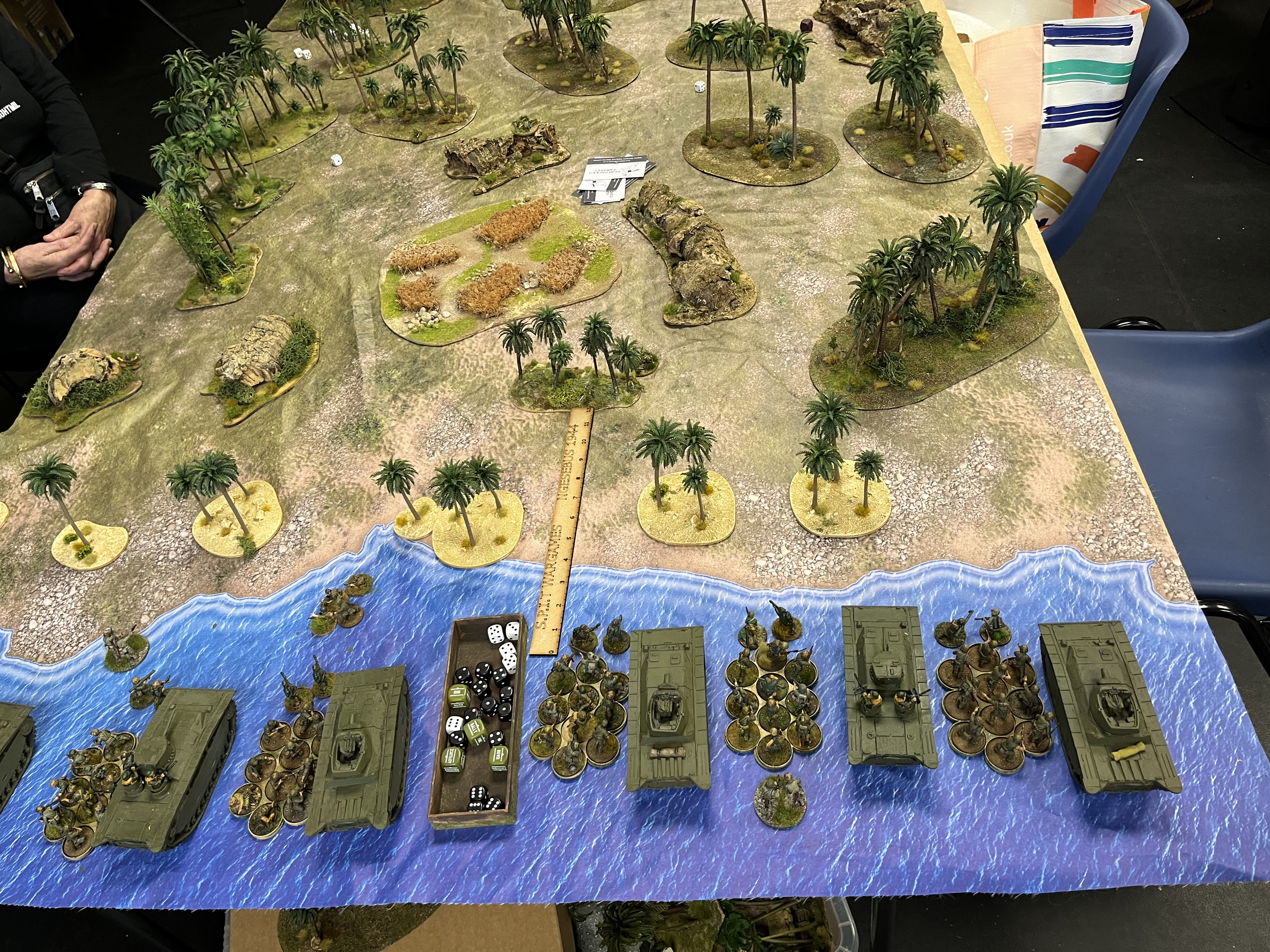
Just to show that an amphibious landing can be done on a small table.

The Claymore Castings Lion Rampant game. The mat is very realistic.

Glasgow Phoenix brought a sci-fi game using Xenos Rampant.

It was a long day out, but I am glad I made the effort. Lots of good chats with gamers and the public interested in the history behind the game as well as the modelling and figures. Many people have been to Dubrovnik, so it's a good talking point to explain a bit more about the history. Even the local paper turned up. Many thanks to the Kirriemuir club for putting this on.

Tuesday, 31 October 2023

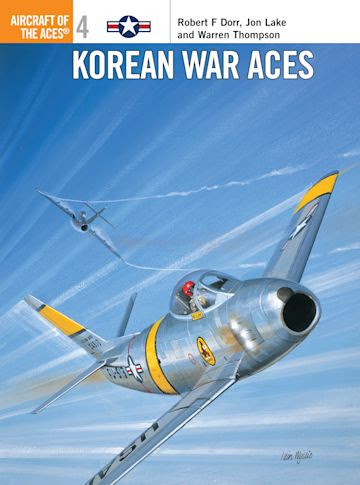
Korean War Aces

 I picked up this 1994 Osprey 'Aircraft of the Aces' book at the IPMS show in Glasgow last Saturday. It is very timely for my Korean War project and the new Blood Red Skies set, 'Mig Alley', that I bought at Partisan. The additional rules needed are in the Wing Commander supplement.

At the start of the war, the North Koreans flew Yak-9 fighters, which were quickly replaced by the Mig-15 with Russian pilots. The US counter to this was the F-86 Sabre, although the F-84 continued to fly in Korea as well. The Mig-15 had the advantage of a higher service ceiling and a shorter distance to their bases. The USAF had the pilot skill advantage because the Russians rotated whole units rather than the American practice of rotating pilots, which allowed their experience to be passed on. 

The RAF fielded the F.8 Meteor, which proved to be no match for the Mig, although verbal Russian kill claims exceeded anything the RAF could possibly have fielded. Prop aircraft did, on occasion, manage to defeat jets, using their slower speed to advantage in dogfights. One example of this was Fleet Air Arm Sea Fury fighters shooting down a Mig-15 in August 1952.

The Sabre was improved with a hard wing that enabled it to better the Mig's service ceiling. This significantly increased kills and the number of US aces. However, post-war victory claims by UN pilots turned out to be exaggerated when new information became available from Russia after the Cold War. This wasn't dishonesty but rather a loose criterion compared with the stricter Russian system. Many Mig's that appeared to be mortally wounded actually limped home due to the light calibre of the Sabre's guns. The author calculates a final kill ratio in favour of the Sabre of 3.5:1, although closer to 1:1 if the F-80s and F-84s are brought into the equation.

As you would expect from Osprey, the book contains period photos and at least 50 colour plates. Mostly Sabre aces, but also Corsairs, Panthers, Tigercats and the RAFs Meteor and Sea Fury fighters. There is, disappointingly, only one Mig-15. I assume sources for these were more challenging to obtain. Overall, it's just the job for Mig Alley modelling and background for wargamers.

The Warlord Mig Alley box comes with two Sabres and two Mig-15s, along with decals. The 'North Korean' ones are pretty straightforward; the USAF ones are a bit trickier, but some decal fix helps. You also get all the playing aids required for the Blood Red Skies game.


Friday, 27 October 2023

Ripped Apart - The Cyprus Conflict 1963-1974

 My latest book will be no surprise to anyone following my wargaming over the past year. Ripped Apart provides a richly illustrated account of the military history of Cyprus between independence from Britain and the events of 1964. Volume 1 examines the local military build-up and a series of armed clashes that shook the island in 1964 and lays much of the background to the events that would follow in the 1970s. There will be two further volumes, one dealing with the conflicts of the late 1960s and then a final volume on the Turkish intervention in 1974. All published by Helion Books.

The hard copies arrived yesterday. While digital has its place, I like to leaf through the hard copies of my work.

I focused on the Turkish armed forces and their operations, while my co-writer Dimitris Vassilopoulos focused on the Greek operations. Tom Cooper did the introduction and filled in the gaps. He also did most of the fantastic artwork, although I did persuade the aircraft buffs that some AFVs were required as well! The flyboys are all very well, but wars are won by boots on the ground 😂.


I emphasise 'focus on' because neither of us is writing from a Greek or Turkish perspective. If you want nationalist polemic, this is not the book for you. There are plenty of books that do that from either side. You can usually tell because so much text is in capital letters! 

In this volume, you get a generous introduction to Greek and Turkish history because the Cyprus conflict has to be put in the context of Greek-Turkish relations over a long time period. Then, chapters on the Hellenic and Turkish armed forces of the period. There is a chapter on the history of Cyprus followed by a description of the important British bases on the island and NATO bases in Greece and Turkey. These all had an important role in the conflict, and there are many British veterans who served on Cyprus, which continue to this day. I learned a lot from the archives about how British policy in relation to the bases developed and how they responded to Greek and Turkish interventions. Finally, we cover the operations on land, sea and air during the first crisis in 1963-64. 

I have been painting up some additional units recently to expand my armies back to 1964. I mostly use 20mm for this period, and there is a dedicated page on this blog for the wargaming aspects and some further reading.


Our midweek game scenario was the road to Kokkina. This was a vital harbour for smuggling weapons to the Turkish resistance organisation, the TMT. The Greek National Guard tried to capture the harbour and would probably have succeeded had it not been for the intervention of the Turkish Air Force. That is how the game played out, with the superior Greek numbers and artillery starting to break into the TMT defences, when eventually, the air support arrived to devastating effect.


The figures come from several ranges, including Elheim, SHQ, Liberation and EWM. Mostly from WW2 British Mediterranean ranges as that was how the student volunteers mostly looked like if a little less well equipped. I will be adding some more Liberation figures for those in civilian dress. The Marmon Herrington armoured car is from Butlers. The F-100C Super Sabre is from PM Model, an easily put-together model, which is robust enough for wargaming. It also comes with the early Turkish decals. 

Anyway, I hope that sparks some interest in what I think is a fascinating period.

Sunday, 22 October 2023

Septimius Severus in Scotland

This is Simon Elliot's book on the two campaigns Emperor Severus made in Scotland. His swansong before dying at York after the second campaign. Only one chapter in the book is devoted solely to the actual campaigns; the rest of the book sets the scene. In fairness, the sources and archaeology are scarce, and the campaigns must be seen in the broader context. There was, of course, not Scotland as such, but we are describing campaigns in the area covered by modern Scotland.


The sub-title referencing 'Hammer of the Scots' is justified based on the quote from Cassius Dio's campaign narrative. 'No: we are not going to leave a single one of them alive., down to the babies in their mothers' wombs - not even they must live. The whole people must be wiped out of existence, with none to shed a tear for them, leaving no trace.' Edward I thought similarly, and he also died making the effort!


For context, Severus ruled in the latter part of the Principate Empire just before the chaos of the crisis of the Third century. He came to power in AD 193; his Scottish campaigns were AD 209 and AD 210. He died in AD 211. Elliot gives us an overview of the Severan period, one of overall success, and Severus was one of the more effective rulers of the Empire. He implemented several military reforms, beginning the process of change from the border force to the later defence-in-depth model. The three key elements are described: the legions, auxiliaries and the fleets. All would participate in the Scottish campaigns. Fortifications were also important, both permanent and marching forts. The archaeology of these forts has helped trace the route Severus took in his invasion.


In the early third century, Roman Britain had a large Roman garrison of around 55,000, plus another 7,000 men in the Classis Britannica regional fleet. This is about 12% of the total manpower for only 4% of the Empire's land mass. Perhaps because of this, the tribes south of Hadrian's Wall were pretty settled, with growing urban and agricultural development. However, the northern tribes often raided over the border. In particular, the Maeatae just north of the border and the Caledonians above the Highland line. These were confederations of tribes, fighting in a more open style than other 'barbarian' tribes the Romans faced, and they retained the use of light chariots long after others had abandoned them. 


Severus was a warrior emperor, and the limited evidence points to him wanting one last great military triumph before he died. A plea for assistance from the governor was, therefore, probably welcomed. He brought the Empire to Britain, with the Imperial court set up in York. He also had challenging sons who needed to be taken away from the fleshpots of Rome for campaign experience. He brought detachments from several legions with him to supplement the three already in Britain, as well as the Praetorian Guard and Guard cavalry (Equites singulares Augusti). A total force of around 50,000 men plus the fleet.


Severus advanced into Scotland along Dere Street in the spring of AD 209. The local tribes in the borders sued for peace, given the size of the force. The crossing point across the Forth is disputed, but Elliot goes for the route of the current Forth Railway bridge, which is some engineering achievement for what would have been a pontoon bridge. After crossing the Tay, Severus split his force into two. One column marched with him along the coast, with the fleet alongside. His son Caracalla led the other inland along the Highland line—a hammer and anvil strategy which worked well. There were no major battles, but the tribes did cause significant casualties through harassing attacks and ambushes. The experience was grim for both sides, and the weather seems to have been worse than usual. As I write this, the area is subjected to Storm Babet, flooding large parts of the route. 


The Romans did not intend to occupy the region above the Tay, although a naval base may have been maintained. The following year, the Maeatae and Caledonians rebelled, and Severus sent his son north again with the genocide order. He appears to have carried that order out, as little is heard from either tribe for years after this campaign. The Scottish weather probably did for Severus, as he died the following year at York. His sons quickly made peace and returned to Rome to scrap over the Emperorship.


I have been playing the Strength and Honour rules recently in 2mm. I don't have chariots, but my Dacians were repurposed as Caledonians for a game in tricky terrain for the Romans.


The warband on the Caledonian left managed a tricky manoeuvre to turn through the woods into the flank of Praetorian Guard. They even rolled a six in the combat, but the Praetorian discipline held firm. 


It was downhill after that for the Caledonians as the Romans ground their way northwards. 


I never thought I would take to 2mm, but I am enjoying these rules.

Thursday, 19 October 2023

Putin Takes Crimea 2014

 This is Mark Galeotti's take on Putin's Crimea grab for Osprey, which almost certainly emboldened him for the later full-scale of Ukraine. This is the story of the 'little green men' as the news media described them then. In practice, the occupation was delivered by a mix of Russian special forces, Ukrainian defectors and local gangsters. 


The history of the Crimean Peninsular is fascinating in its own right. Even in Britain, many city streets have Crimean names thanks to the Crimean War. The Greeks were one of the earliest to colonise the Crimea, followed by invasions from the Scythians, Huns, Mongols and others. The Tartars were vital allies/subjects of the Ottoman Empire and spearheaded most of their assaults on Christian Europe. Russia used the Cossacks primarily as a buffer against the Tartars, although there were significant Armenian and Jewish populations even then. It was only in the Soviet period that the Tartars were ethnically cleansed from the region, and large numbers of Russians moved in. It was Khrushchev who gifted Crimea to the Ukraine in 1954.

A narrow majority of the Crimean population voted for Ukrainian independence, but disputes quickly broke out over the Black Sea Fleet. A partition deal was agreed in 1997, along with Russia leasing naval bases. However, tensions continued, leaving large numbers of Russian forces and many more retired ones in Crimea.

Galeotti describes the military doctrine behind the hybrid warfare that was the basis of Moscow's strategy in Crimea. There has been a parade of new terms – asymmetric war, sub-threshold operations, non-linear warfare – but the favoured term appears to be ‘grey zone warfare’, operations somewhere in that hazy conceptual no-man’s land between peace and full warfare. There was nothing 'grey' about the 20,000 Russian troops already based in Crimea. They faced a slightly larger Ukrainian force, although few were in a high state of readiness. Even those who were well-trained suffered from years of underfunding.

The new Ukrainian government made a political blunder by revoking the law that made Russian a second official language in regions such as Crimea. Pro-Russian elements used this as proof of enforced ‘Ukrainianization’. Provocateurs turned peaceful demonstrations into violent ones, and units of cossacks and the Night Wolves motorcycle club were used to fan the flames. Local gangsters were financed to set up local defence militias. These all provided deniable assets as cover for the Russian takeover, led by troops without unit insignia. Conventional units sealed off the peninsular as more troops were flown in or landed on the coast. The Ukrainian response was patchy and poorly coordinated, aided by naval commanders who defected to the Russians while the remaining Ukrainian navy ships were blockaded. There were brawls but little actual combat.

Crimea was a successful operation. However, it also proved disastrous for Moscow as it drew them into the Dombass insurgency and then used it as a blueprint for the 2022 invasion of Ukraine. Many in the military warned that the circumstances in Crimea were exceptional, but the political figures trusted by Putin became overconfident. Today, the Black Sea Fleet has largely abandoned Crimea and Ukrainian forces regularly attack Russian bases. Fortress Crimea has evaporated.

Mark Galeotti has written many books on the Russian military, and this book demonstrates yet again his detailed knowledge of the subject. The actions are clearly described with ORBATS, maps and illustrations. There is the basis of some 'what-if' actions for wargames, but I don't expect to see many 'little green men' on the show circuit anytime soon. 

Some of my 20mm modern Russian forces.