Welcome to my blog!
or on Mastodon @balkandave@mastodon.scot, or Threads @davewatson1683
Wednesday, 12 August 2015
Taken at the Flood - The Roman Conquest of Greece
He starts with the Roman's early involvement in the Balkans, largely due to piracy on the Adriatic. This led to wars against the Illyrian's that led into Epirus, Macedon and mainland Greece.
Greece during most of this period was not the united entity of Alexander's time. It had reverted to warring cities and leagues of states that the Roman's carefully manoeuvred, as much by diplomacy, as by war. The author argues that Rome adopted a policy of remote control. Even when they defeated their opponents, they usually withdrew. It wasn't until the end of the period when Rome was in absolute control, not only of Greece, but Asia Minor as well, that direct rule with garrisons became a feature of Roman rule.
This book covers all the decisive battles of the period, Pydna, Thermopylae, Cynoscephalae etc. Perhaps not in the detail I would have liked, although there are sections on the armies and the legion v phalanx debate. The book is much stronger on the Roman strategy and its impact not just on Greece, which was economic ruin, but also on how the plunder and new wealth impacted on Roman society. Sowing the seeds of its own decline.
This is very readable book on a subject that has received less attention than the Punic wars. Recommended.
Tuesday, 11 August 2015
Pula
The Roman influence is most obvious in the well preserved amphitheatre.
The Venetian star fortress dominates the city and incorporates a small museum.
The best example of Austro-Hungarian fortifications is Fort Bourguignon. This is south of the city and tricky to find. Go through the reception barrier at Hotel Splendid and turn sharp right into their car park. You will see a pyramid structure on top of the hill and the fort is next to it. The guide book says that there are galleries with details of the fortifications around the city, but it was closed. I suspect the lack of signs means this is permanent.
If its medieval castles that interest you, there are several north of the city around Pazin. This is Pazin's medieval castle, the setting for a Jules Verne novel.
A ruin at Sumber.
Monday, 10 August 2015
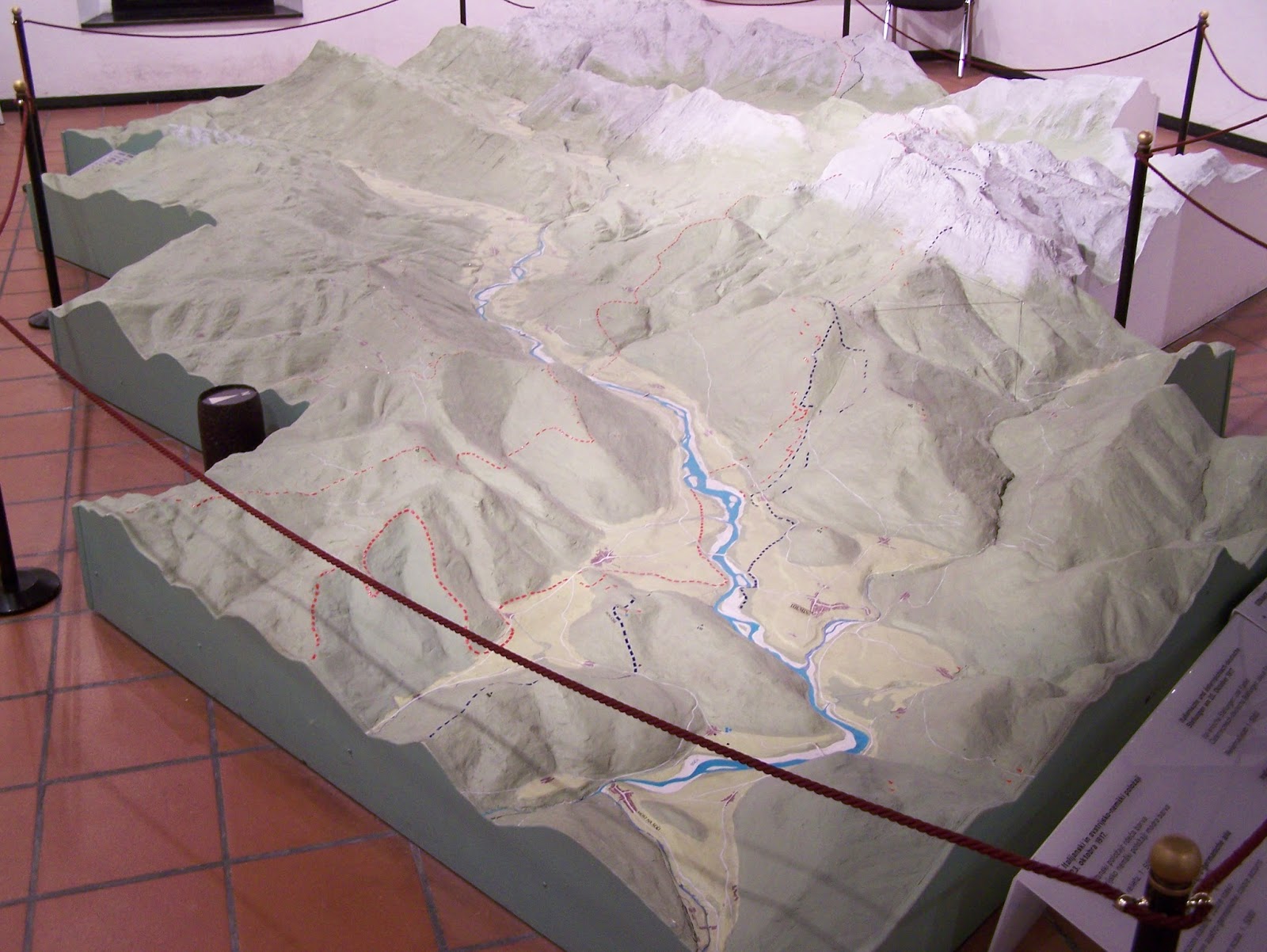
Battle of Caporetto 1917
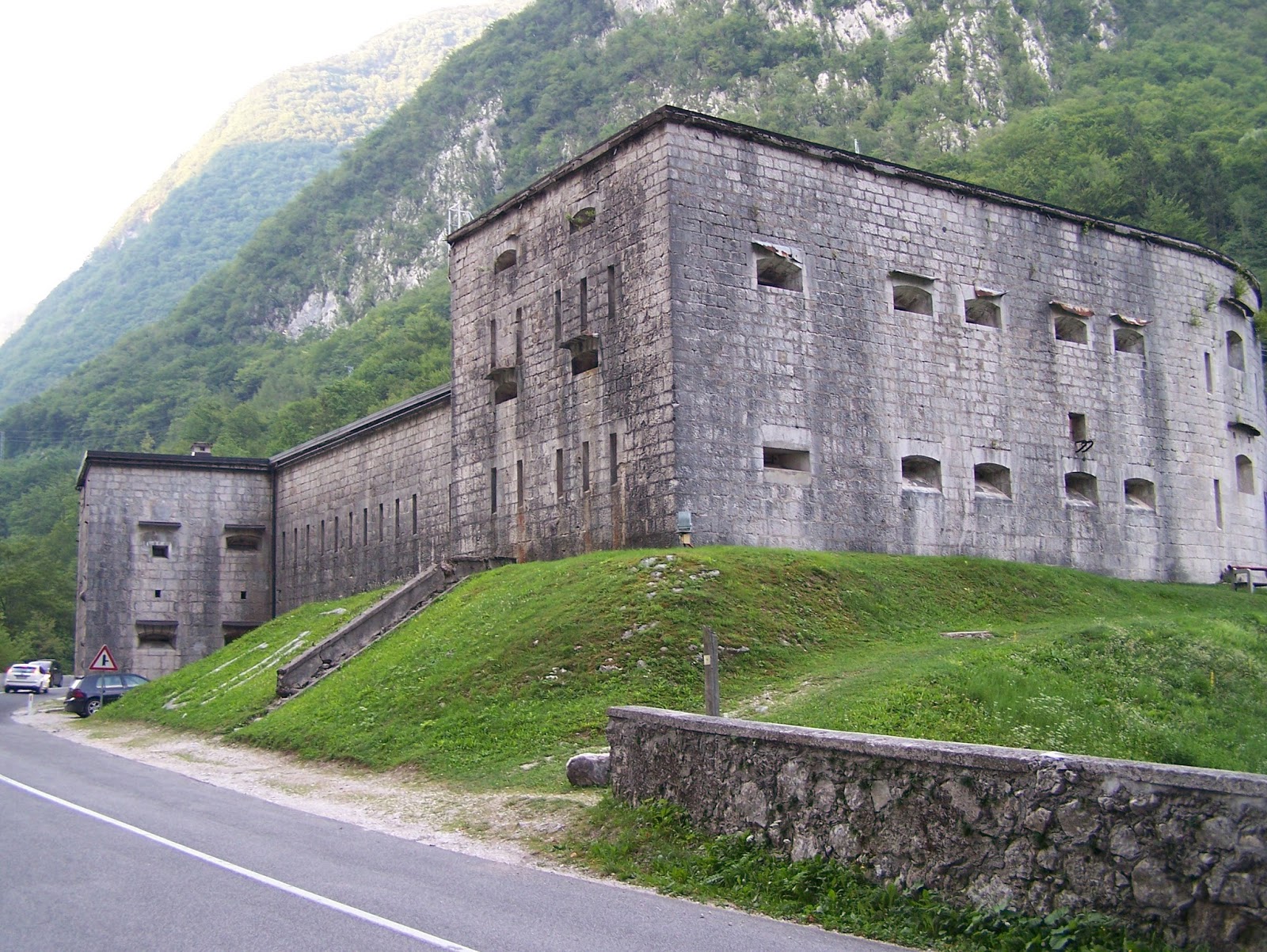
We finished the day off at the Austro-Hungarian fortress of Kluze. Built in 1882, on the site of earlier castles, it dominates the pass between Bovec and Tarvisio in Italy. There is a museum inside the fortress which is well worth a look.
If you have time there is another fortress at the other end of the front lines at Tolmin.
Thursday, 6 August 2015
Military Frontier castles
I spent yesterday in the Military Frontier that used to cover most of Croatia and northern Bosnia - separating the Hapsburg and Ottoman empires.
For around three hundred years militias on both sides faced each other and conducted a small war in between the formal conflicts. The troops were variously labelled Hajduks, Vojnuks, Martelosi or Grenzer. It was more formalised on the Croatian side where the Grenzer settlers had special privileges and restrictions to provide a defensive buffer. Later they also provided useful regiments for wars away from the border.
My trip started at the Croatian city of Karlovac, formerly Karlstadt. This was the military headquarters of the Croatian part of the military border. It's now a busy industrial city and not much remains of the star shaped fortifications that surrounded the old city. However, there is the older castle of Dubovac to the west of city that is in excellent condition and provides a great view. Sadly, despite arriving within the published opening hours, it was closed.
After a quick stop at the Croatian Homeland War Museum, at what was formerly an outpost for the fortress, we drove through the border area. For the benefit of wargamers the terrain is overwhelmingly forest. There are even still a few scars on the buildings from the Homeland War, twenty years ago.
The next castle is just over the border into Bosnia at Velika Kladusa. The old castle has been extensively renovated and is used as holiday apartments with a function area for weddings. A very helpful young English speaking member of staff took us around. There are a few WW2 era artillery pieces in the grounds, used again in the Homeland War.
Finally, further down the road towards Bihac, there is Ostrozac. This really is a magnificent and very large Bosnian castle. When I last visited in 2006 there was some restoration work going on. Sadly, not much progress appears to have been made, but the essential features of the castle remain.
A word of warning if you fancy a trip here, allow plenty of time. Don't expect too many helpful road signs! Essentially, you have to drive into the towns and think, where would I build a castle here? Then drive around side roads until you come across it. A picture on the iPad is helpful when seeking help from the locals - who I have always found very friendly and helpful. If a bit bewildered as to what you are doing!
For further reading look no further than Gunther Rothenberg's two volume history on the military border. Long out of print I'm afraid, but your local library may be able to get a copy. However, this paper, The Krajina Project: Exploring the Ottoman-Habsburg Borderland, by R J Carlton and A Rushworth, is well worth a read.
Croatian Homeland War Museum
I came across this little gem at Turanj, just outside Karlovac, on the road south towards Bosnia yesterday. The plan is to build a full museum, but at present there are a number of external exhibits that are well worth a visit.
The Croatian Homeland War was fought from 1991 to 1995 between Croat forces loyal to the government of Croatia and the Serb-controlled Yugoslav People's Army (JNA) and after 1992 local Serb forces. A majority of Croats wanted to leave Yugoslavia while many ethnic Serbs living in Croatia, supported by Serbia, wanted Croatia to remain a part of Yugoslavia and attempted to conquer as much of Croatia as possible.
After they failed to do this, Serbian forces established the self-proclaimed Republic of Serbian Krajina (RSK) within Croatia. After the ceasefire of January 1992 and international recognition of the Republic of Croatia as a sovereign state, the front lines were entrenched and combat became largely intermittent. In 1995, Croatia launched two major offensives known as Operation Flash and Operation Storm which ended the war in its favour.
Here are a few photies of the current exhibits. Starting with the information board.
The tank line up. T55, Sherman, M36 and two Hellcats.
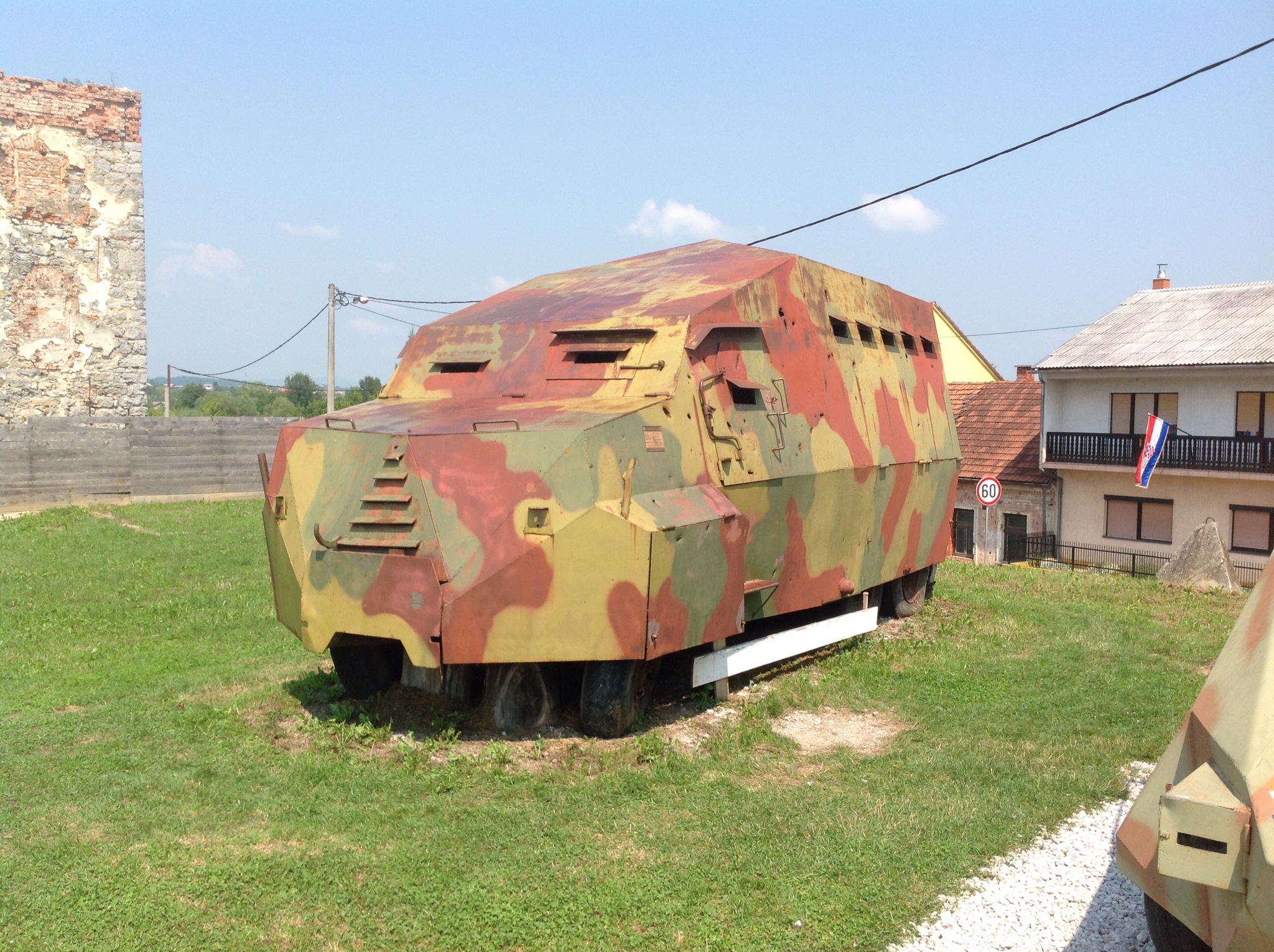
Then a couple of improvised armoured cars
I think this is a Yugoslav built OT recce vehicle, looks like the ones I have models of.
A 203mm Howitzer on the left and apparently a British 90mm AA gun on the right.
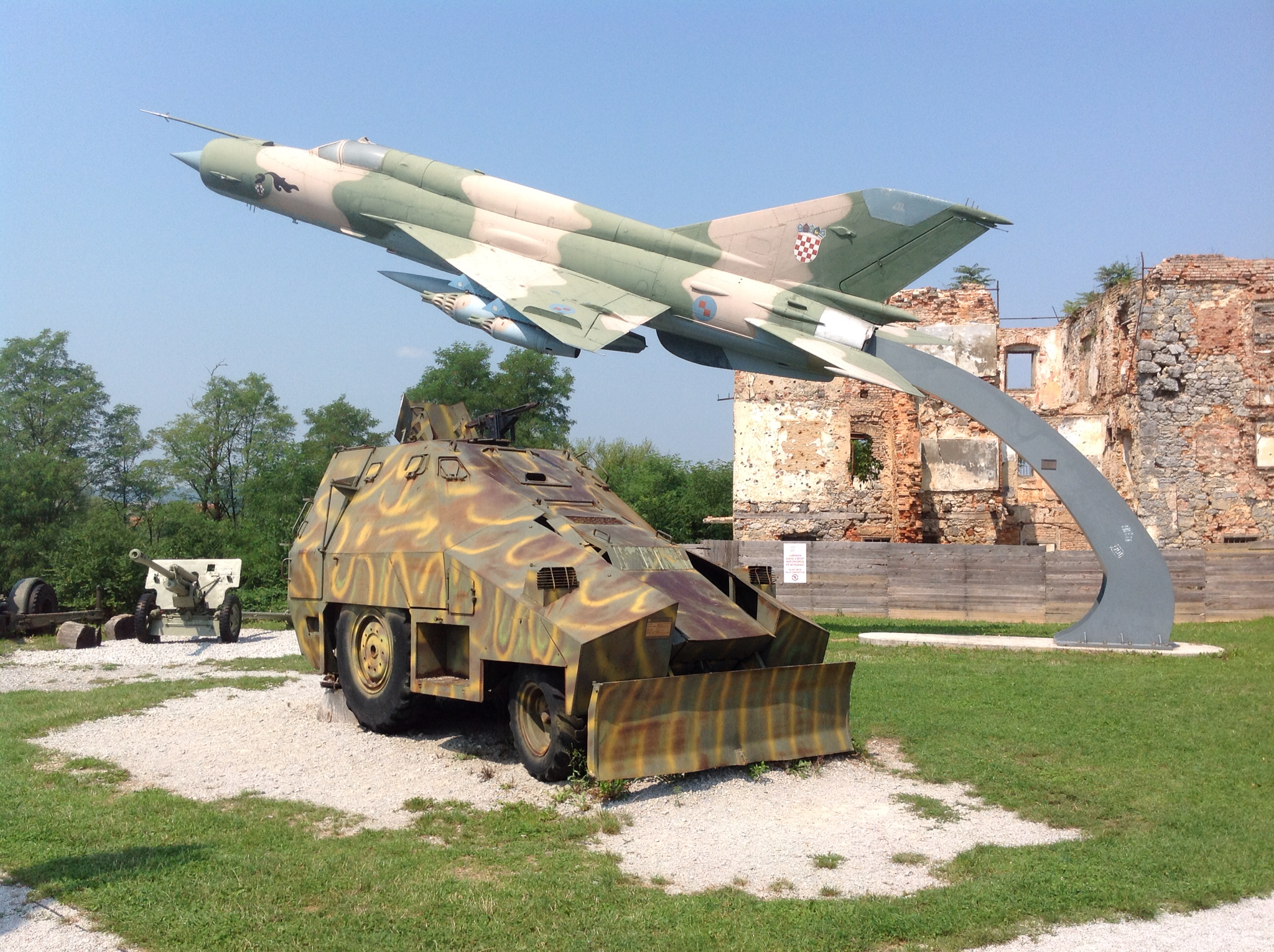
Finally, my favourite photie, a Mig 21 'over' a Strasko armoured tractor.
Tuesday, 4 August 2015
Uskok's of Senj
Northern Croatia for this year's Balkan travel fest with a focus on the military border between the Habsburg and Ottoman empires. First stop has to be Senj, home of the Uskok's. This is somewhere I have long wanted to visit, having written an article about them many years ago in The Arquebusier journal, together with an army list for DBR.
The name Uskok comes from a verb meaning ‘to leap over’ and originally referred to men who rejected Ottoman rule and crossed over to Christian lands. They originated in the fortress of Klis which guarded the pass above the port of Split around 1532. After an heroic defence, the death of their leader Petar Kruzic caused them to capitulate to the Ottoman besiegers. They were allowed to withdraw and moved north settling in the Dalmatian port of Senj around 1537.
The Uskok's used a type of light galley known as a Bracera. These mostly had eight oars and a crew of 24 to 36. The larger Bracere were twice this size. They could cover 100 sea miles in a night and were more manoeuvrable and of lighter draught than their largely Venetian prey. Robbing the Venetians was more profitable than attacking the Ottomans, but it led to their downfall when the Venetians declared war and the Habsburg's were forced to relocate them.
The castle is in excellent condition and houses a cafe and a museum with some excellent exhibits. I'll post more pictures on the web site when I get home.
The Uskok's were first relocated to Otocac, which is inland from Senj and was an important base in the Military Border. Sadly, the ruins of the castle are not even marked on the local tourist map. The airfield has an old C47 Dakota, sort of on display. Or at least I hope it's not in service!
For more on the Uskok's, you can read my original article on Balkan Military History and I strongly recommend Wendy Bracewell's book. Old Glory do figures in 28mm.
Sunday, 2 August 2015
Siege of Shkodra 1478
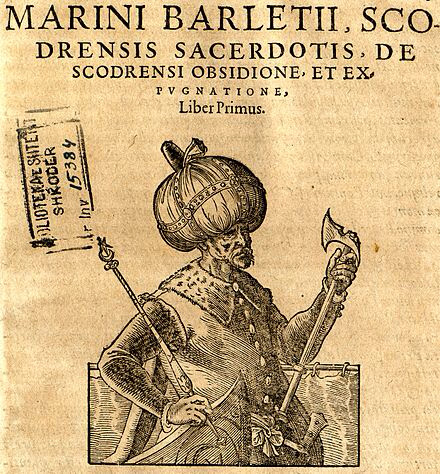
My poolside reading for today, some way further up the Adriatic coast, was The Siege of Shkodra by Marin Barleti, a local priest in 1504. It covers the Ottoman siege of Shkodra, which is in Northern Albania, in 1478, led personally by Mehmed the Conquerer. This epic siege was one of his few failures.
The original book was in Latin, later translated into Albanian. The recent English version was translated and edited by David Hosaflook and includes translations of the Albanian edition's introduction and notes. It also includes accounts of the siege from early Ottoman historians, new scholarly notes, the historical context by Prof. David Abulafia, new maps based on the information in the book, and appendixes including Barleti's chronology of battle events.
This is not objective history. Barleti wrote the book for a Venetian audience and they financed the defenders. They arguably also later sold them out! He also clearly made up most of the speeches, or at least embellished them. However, the modern version provides some context and the equally biased Ottoman sources.
What you end up with is a really good description of a savage medieval siege. It reminded me of the semi fictional work, The Siege, by another Albanian author, Ismail Kadare, and he must have been influenced by it.
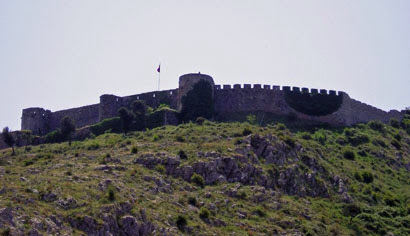
I visited the site of the siege a few years ago. Very impressive ruin today and you can see what a strategic position it commanded and why it was so important.
Oh, and let's have some of my Albanian wargame figures as well!
Saturday, 1 August 2015
Claymore 2015
Just a very quick visit to Claymore today. Flying out on my honeymoon, coincidently from Edinburgh Airport! Heading to the Balkans of course, as I type this from our hotel in Croatia.
So just time to say hello to folk and purchase a few essentials. Some Warlord French and Polish Napoleonic line infantry for my Peninsular project, together with some Perry cannon. A few books and foam storage.
The Wargamer's bride got into the spirit with the Durham lads 54mm Napoleonics. If my eyesight doesn't improve I might be joining them!
First stop of course was the GDWS display. Arial Dystopian Wars. Got an honourable mention in Wrgames Illustrated this month.
Then a few more games, some old and some new, that caught my eye.
Starting with a Balkan game, Gallipoli.
Then Iain (Flags of War) from our club with this ECW game
The Sally 4th team showing off their very fine buildings here
Not sure what this snowy naval scene is, but it's very good.
This looks like another day out for the Hydaspes game.
Ditto for these fine buildings.
And the Phoenix lads with Lion Rampant.
As usual, thanks to the Edinburgh lads for putting a fine show on.
Armies of the Greek-Turkish War 1919-22
After World War I, the Greeks attempted to extend their territory in Anatolia around the City of Smyrna (Izmir). They launched an offensive in Anatolia against the nationalist Turks commanded by Kemal Ataturk, who had defied the Ottoman government’s treaty commitments. In April, the Greeks were repulsed, but renewed their attack in July and advanced toward Ankara. However, they were defeated at the Sakarya River (Aug. 24–Sept. 16, 1921). By September 1922, the Turks had captured Smyrna and driven the Greeks out of Anatolia.
The Treaty of Lausanne (July 24, 1923) obliged Greece to return eastern Thrace and the islands of Imbros and Tenedos to Turkey, as well as to give up its claim to Smyrna. The two belligerents also agreed to exchange their Greek and Turkish minority populations in a massive ethnic cleansing.
This book follows the usual Osprey MAA format. A chronology of the campaign and a description of both armies, organisation and equipment. Plenty of photos and of course colour plates.
For the wargamer, Greek armies of WW1 will work fine, although they were a bit ragged by this conflict. Turkish forces were very varied and WW1 figures will look a bit too regular.
A less well known conflict with pretty tragic consequences for whole populations, but well covered in this publication.
Here are some 28mm Greeks from my collection.