A little off my normal beat, but I am a sucker for obscure conflicts. And this new Osprey MAA by Philip Jowett is certainly that.
It covers border wars and revolutions in Central and South America. Most of these conflicts were low-level guerilla wars and even the conventional ones involved fairly small armies. This was because many countries were small and economically weak, which found it difficult to recruit and supply large armies. Modern equipment was always at a premium.
A good example is the Coto War between Panama and Costa Rica in 1921. A disputed region had been awarded to Costa Rica by arbitration, but when Panama refused to relinquish it, Costa Rica invaded. Their regular army consisted of only 400 men and the Panamanians had only 50 rifles. Both sides eventually pulled together small armies, before the USA intervened. This was another common feature, as the US regarded this region as their 'backyard' - keeping the Marines busy for most of the period.
As is usual with Osprey publications, this book is profusely illustrated with period photos and colour plates. They show very clearly the range of uniforms and equipment. Uniformity is very rare.
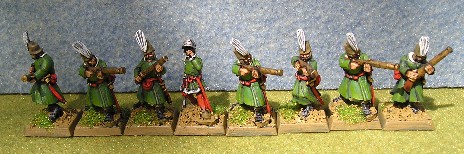
For the wargamer, the small size of the conflicts means that only small numbers of figures are required. Bolt Action would work very well. My Pancho Villa and Federale armies will work for several armies. You can also use US forces and some European figures. French equipment was popular along with the Adrian helmet. The Ecuadorian infantry of the Zarumilla War of 1941, could be Italians of the same period.
Certainly an excuse to dust down Pancho and his exotic equipment, including early aircraft - Viva! somebody or other!
Welcome to my blog!
News from a wargamer with a special interest in the military history of the Balkans. It mainly covers my current reading and wargaming projects. For more detail you can visit the web sites I edit - Balkan Military History and Glasgow & District Wargaming Society. Or follow me on Twitter @Balkan_Dave
or on Mastodon @balkandave@mastodon.scot, or Threads @davewatson1683
Wednesday, 24 October 2018
Monday, 22 October 2018
The Raven King
This is the story of the Hungarian King, Matthias Corvinus and the fate of his lost library by Marcus Tanner. History and books, what's not to like!
Matthias Corvinus, or Hunyadi in Hungarian, was the son of the better known Janos Hunyadi, the great medieval warlord and crusader who at least slowed the Ottoman advance into Europe. Matthias ruled Hungary from 1443 to 1490. This was a much larger state than the Hungary we know today, encompassing Bohemia, Silesia, Transylvania and Croatia - even capturing Vienna, displacing the early Habsburgs. Hungary was a superpower of the age and Matthias's 'Black Army' was a formidable force.
He was the main bulwark against the Ottomans and a truly renaissance monarch. The arts and science were probably appreciated at his court more than any other, outside of Italy. This was reflected in his great library, possibly containing 8-10,000 works, only exceeded by the papal library in Rome. It is worth remembering that these were hand copied books, usually beautifully illustrated.
After his death, Hungary collapsed following the Battle of Mohacs in 1526. The library was looted by the Ottomans when they reached the capital Buda - or what was left of it after Mary, the last Queen fled. The library has reached an almost mythical status and many efforts have been made to track down its contents. Numerous volumes have been found and many exist in libraries and museums across Europe and beyond.
This book tells the story of the library and the efforts to find the contents. In doing so the author provides a narrative history of the period and Matthias's reign. A period that is not well known and the author brings it to life in an unusual way through the story of the great library.
Matthias Corvinus, or Hunyadi in Hungarian, was the son of the better known Janos Hunyadi, the great medieval warlord and crusader who at least slowed the Ottoman advance into Europe. Matthias ruled Hungary from 1443 to 1490. This was a much larger state than the Hungary we know today, encompassing Bohemia, Silesia, Transylvania and Croatia - even capturing Vienna, displacing the early Habsburgs. Hungary was a superpower of the age and Matthias's 'Black Army' was a formidable force.
He was the main bulwark against the Ottomans and a truly renaissance monarch. The arts and science were probably appreciated at his court more than any other, outside of Italy. This was reflected in his great library, possibly containing 8-10,000 works, only exceeded by the papal library in Rome. It is worth remembering that these were hand copied books, usually beautifully illustrated.
After his death, Hungary collapsed following the Battle of Mohacs in 1526. The library was looted by the Ottomans when they reached the capital Buda - or what was left of it after Mary, the last Queen fled. The library has reached an almost mythical status and many efforts have been made to track down its contents. Numerous volumes have been found and many exist in libraries and museums across Europe and beyond.
This book tells the story of the library and the efforts to find the contents. In doing so the author provides a narrative history of the period and Matthias's reign. A period that is not well known and the author brings it to life in an unusual way through the story of the great library.
Saturday, 20 October 2018
Military modelling inspiration
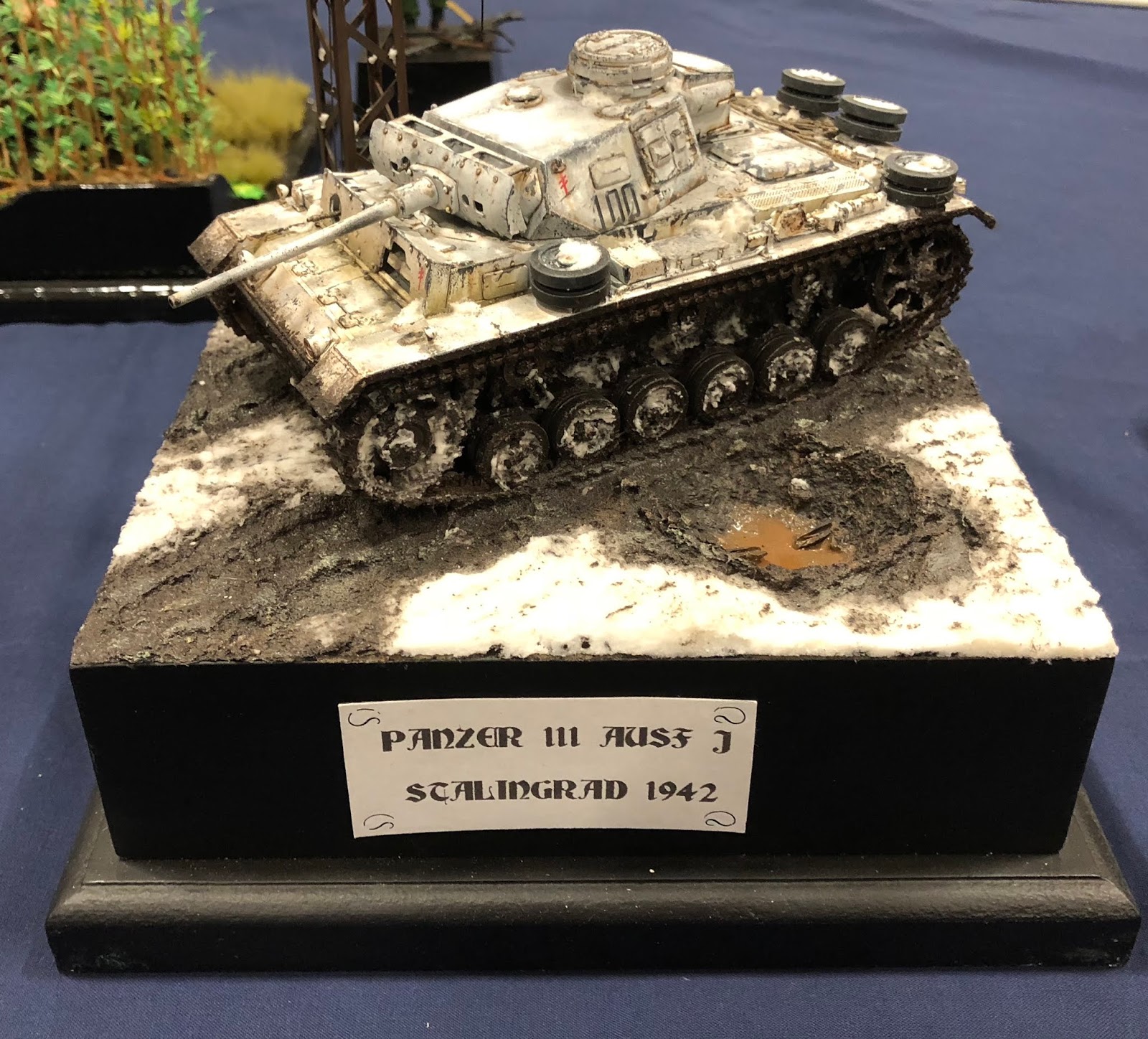
I was at the IPMS show in Glasgow today. Not my hobby, but the standard of modelling should be an inspiration for any wargamer - even if we have to compromise for quantity and robustness.
I am not a big fan of kits for wargame purposes, but that doesn't mean I didnt make a few purchases. Modelling weathering materials can be used on wargaming AFVs, so long as you varnish afterwards. Paints and sprays are usually very good and in a wider range of colours than you get at wargame shows. They also have books and I picked up a volume on the Habsburg's early air force that I hadn't seen before.
The main reason for going is to see the displays. This rail gun was my favourite - frightening to think how many hours went into this.
And more than a few others that caught my eye.
And in case you were tempted to pick any of the models up, as is common at wargame shows - don't!
I am not a big fan of kits for wargame purposes, but that doesn't mean I didnt make a few purchases. Modelling weathering materials can be used on wargaming AFVs, so long as you varnish afterwards. Paints and sprays are usually very good and in a wider range of colours than you get at wargame shows. They also have books and I picked up a volume on the Habsburg's early air force that I hadn't seen before.
The main reason for going is to see the displays. This rail gun was my favourite - frightening to think how many hours went into this.
And more than a few others that caught my eye.
And in case you were tempted to pick any of the models up, as is common at wargame shows - don't!
Thursday, 18 October 2018
Second Battle of Kosovo 1448
On this day in 1448, Hungarian and allied forces yet again faced the Ottoman Empire on the Kosovo Polje. This battle was probably not as significant as the 1389 clash, which sealed the fate of Serbia, but still an interesting late medieval action.
After the disastrous crusade of Varna in 1444, the Hungarians were occupied in another civil war, which left Janos Hunyadi as Regent for the young king. With the Ottomans occupied in Albania, fighting Skanderbeg, Hunyadi assembled an army to attack the Ottoman flank in Macedonia. The Pope urged support for the crusade, which brought mercenaries and a large Polish contingent to his army. Wallachian and Moldavian forces also joined the campaign, although there is some limited evidence that the Wallachians may have defected during the battle.
The Serbian Despot, Djuradj Brankovic, refused to join the campaign, honouring his treaty with the Sultan, and actively hindered the Hungarian advance. They may also have slowed Skanderbeg's efforts to link up with Hunyadi. Recognising the danger, Sultan Murad moved his army quickly to attack the Hungarians before the two Christian armies could join.
Hunyadi held a strong position overlooking the plain, building a fortified camp around his wagons, manned by handgunners and artillery. His cavalry included Hungarian, Bohemian and Polish knights, supported by Cuman horse archers and Szekeler light cavalry. The lighter Wallachian and Moldavian cavalry was on the left wing.
Murad had his Janissaries with vassal infantry in a fortified centre. Sipahi horse formed on both wings, supported by Akinci and Deli light cavalry. He kept his own guard cavalry, the Kapikulu Sipahis, in reserve behind the Jannisaries.
The battle opened with the Ottoman cavalry wings attacking the Hungarian line and when the centre had been weakened by sending troops to the wings, Murad ordered his infantry to attack the wagons. This attack was initially successful, but a counter-attack restored the line. Feigned attacks drew the Hungarian cavalry away from the line where they could be encircled, but by nightfall the line held.
Hunyadi then tried a night attack, but the Janissaries held firm.
The next day saw a repeat attack on the Hungarian line, but this time the feigned attacks encouraged Hunyadi to order a general advance. This took the army through the Jannisary camp, but Murad had retained a reserve division that forced the Hungarians back. A flank attack by Thessalian Ottoman horse hit the Hungarians and Wallachians on the left flank hard, causing a rout. Hunyadi decided to break out, leaving the infantry centre to its fate. Many of those who escaped were captured by the Serbs, including Hunyadi himself.
After the disastrous crusade of Varna in 1444, the Hungarians were occupied in another civil war, which left Janos Hunyadi as Regent for the young king. With the Ottomans occupied in Albania, fighting Skanderbeg, Hunyadi assembled an army to attack the Ottoman flank in Macedonia. The Pope urged support for the crusade, which brought mercenaries and a large Polish contingent to his army. Wallachian and Moldavian forces also joined the campaign, although there is some limited evidence that the Wallachians may have defected during the battle.
The Serbian Despot, Djuradj Brankovic, refused to join the campaign, honouring his treaty with the Sultan, and actively hindered the Hungarian advance. They may also have slowed Skanderbeg's efforts to link up with Hunyadi. Recognising the danger, Sultan Murad moved his army quickly to attack the Hungarians before the two Christian armies could join.
Hunyadi held a strong position overlooking the plain, building a fortified camp around his wagons, manned by handgunners and artillery. His cavalry included Hungarian, Bohemian and Polish knights, supported by Cuman horse archers and Szekeler light cavalry. The lighter Wallachian and Moldavian cavalry was on the left wing.
Murad had his Janissaries with vassal infantry in a fortified centre. Sipahi horse formed on both wings, supported by Akinci and Deli light cavalry. He kept his own guard cavalry, the Kapikulu Sipahis, in reserve behind the Jannisaries.
The battle opened with the Ottoman cavalry wings attacking the Hungarian line and when the centre had been weakened by sending troops to the wings, Murad ordered his infantry to attack the wagons. This attack was initially successful, but a counter-attack restored the line. Feigned attacks drew the Hungarian cavalry away from the line where they could be encircled, but by nightfall the line held.
Hunyadi then tried a night attack, but the Janissaries held firm.
The next day saw a repeat attack on the Hungarian line, but this time the feigned attacks encouraged Hunyadi to order a general advance. This took the army through the Jannisary camp, but Murad had retained a reserve division that forced the Hungarians back. A flank attack by Thessalian Ottoman horse hit the Hungarians and Wallachians on the left flank hard, causing a rout. Hunyadi decided to break out, leaving the infantry centre to its fate. Many of those who escaped were captured by the Serbs, including Hunyadi himself.
Monday, 15 October 2018
Military history tourist in London
Being semi-retired allows a bit more time to enjoy the sights. So, instead of hurtling back from a conference in London, we spent a few days being a tourist.
On Saturday, after my wife insisted we visit the rubbish London Bridge Experience, we went to the Tower of London. While she queued (in the rain) for the Crown Jewels, I visited the Royal Fusiliers Museum.
Passing the 25 pounder...
A 'liberated' bust of the Duce.
And of particular interest to me, caps from peacekeeping duties in Bosnia.
Having been spared the queue, I have to admit the Crown Jewels are impressive. The story of Captain Blood, does get a passing mention!
Then into the White Tower and the Royal Armouries. This is very impressive, especially as I am planning to get to the northern branch in Leeds next weekend.
English Civil War trooper.
A presentation gold plated SMG, which was used in a London murder.
If Ann Boleyn is to be believed, the armourer left a bit too much space for Henry VIII's 'crown jewels' in this suit of armour.
The Goliath and the dwarf
A striking Dragon made from various bits of arms and armour.
James II's royal armour.
They have a few breastplates!
On Sunday, I went to the football. Please to say, my team, Fulham has a number of Serbian connections, including the manager and Alexsander Mitrovic. We will pass on the score!
On Monday we went to Greenwich and the National Maritime Museum.
It has the largest ship in a bottle I have ever seen.
The Jutland room is very good.
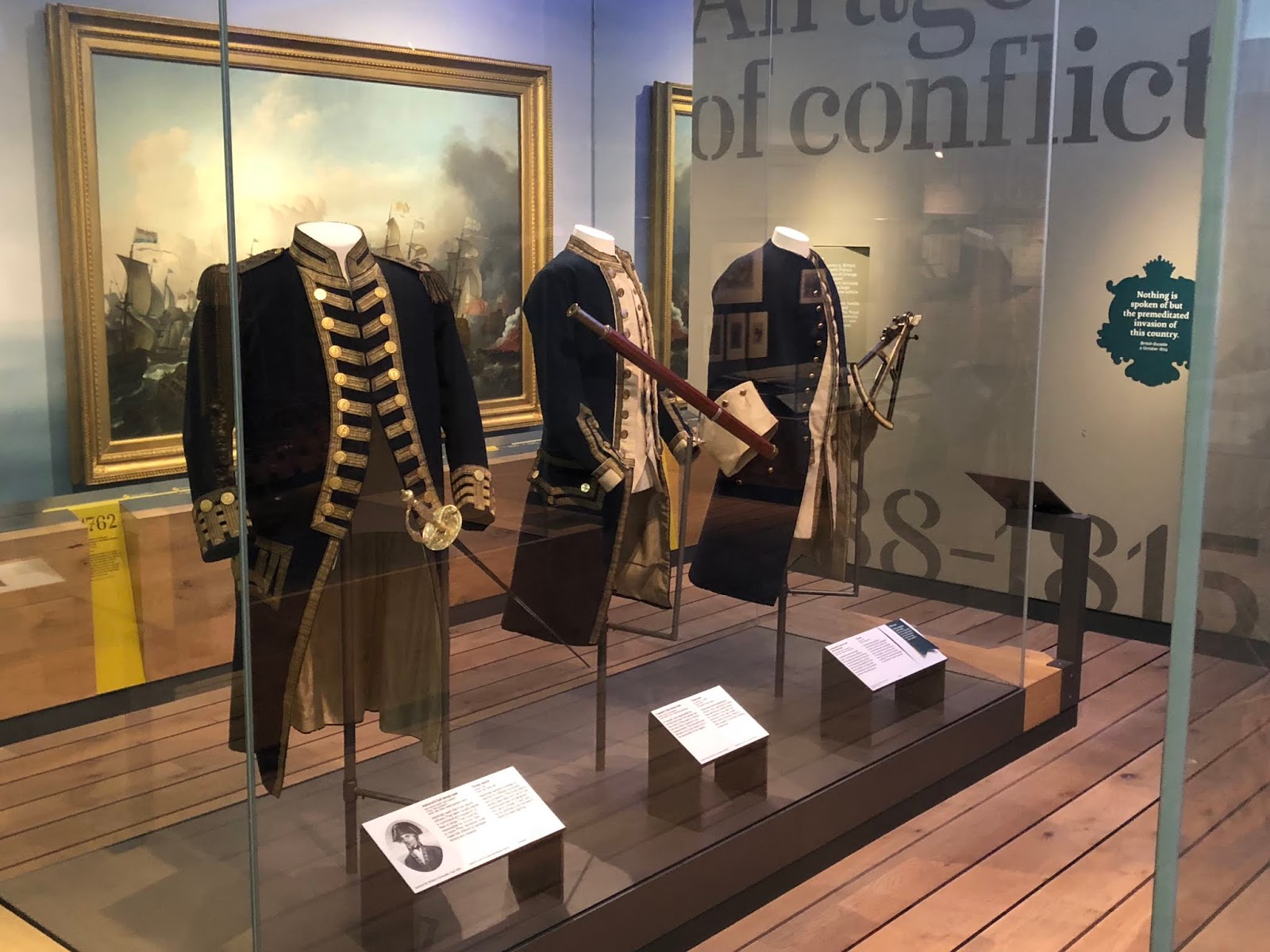
And of course Nelson's navy gallery.
We missed the Cabinet War Rooms, as the queue was ridiculous, but the Household Cavalry Museum was a decent substitute.
And finally on Tuesday morning, The British Library. Including this Ottoman gem.
On Saturday, after my wife insisted we visit the rubbish London Bridge Experience, we went to the Tower of London. While she queued (in the rain) for the Crown Jewels, I visited the Royal Fusiliers Museum.
Passing the 25 pounder...
A 'liberated' bust of the Duce.
And of particular interest to me, caps from peacekeeping duties in Bosnia.
Having been spared the queue, I have to admit the Crown Jewels are impressive. The story of Captain Blood, does get a passing mention!
Then into the White Tower and the Royal Armouries. This is very impressive, especially as I am planning to get to the northern branch in Leeds next weekend.
English Civil War trooper.
A presentation gold plated SMG, which was used in a London murder.
If Ann Boleyn is to be believed, the armourer left a bit too much space for Henry VIII's 'crown jewels' in this suit of armour.
The Goliath and the dwarf
A striking Dragon made from various bits of arms and armour.
James II's royal armour.
They have a few breastplates!
On Sunday, I went to the football. Please to say, my team, Fulham has a number of Serbian connections, including the manager and Alexsander Mitrovic. We will pass on the score!
On Monday we went to Greenwich and the National Maritime Museum.
It has the largest ship in a bottle I have ever seen.
The Jutland room is very good.
And of course Nelson's navy gallery.
We missed the Cabinet War Rooms, as the queue was ridiculous, but the Household Cavalry Museum was a decent substitute.
And finally on Tuesday morning, The British Library. Including this Ottoman gem.
Wednesday, 3 October 2018
Back to Bokhara
In one of my frequent trawls through a second hand bookshop, I came across 'Back to Bokhara' by Fitzroy Maclean. I have of course read his memoirs in 'Eastern Approaches', largely for his WW2 activities with Tito in Yugoslavia.
This book was written in 1959 and covers his return to the Soviet Union, six years after Nikita Khrushchev had taken over from Stalin. Twenty years earlier, Maclean had spent two years in the British Embassy in Moscow during the height of the Stalin purges. A point often forgotten by his critics, who argue that he was duped by Tito. Maclean was a Tory MP, no fan of communism!
This book is something of a travelogue, as he revisits parts of the Soviet Union, including what are now central asian states like Uzbekistan. He compares the Soviet Union of this period positively compared with the Stalin era. Khrushchev introduced wide ranging reforms and less oppressive government, denouncing the Stalin purges.
His struggles with the Soviet bureaucracy are mildly entertaining, as he seeks permission to visit places tourists rarely went to. His description of the sites in Samarkand, Tashkent and Bokhara are particularly vivid, as are his black and white photographs. However, like many memoirs by soldiers of his class, he inexplicably feels the need to describe his meals in some detail. It's obviously a public school thing!
This is a slim volume, a period piece that is interesting, but not a page turner. Perhaps not an objective view of the Soviet Union during this period of change, but not a particularly hostile one either.
Subscribe to:
Posts (Atom)