Welcome to my blog!

News from a wargamer with a special interest in the military history of the Balkans. It mainly covers my current reading and wargaming projects. For more detail you can visit the web sites I edit - Balkan Military History and Glasgow & District Wargaming Society. Or follow me on Twitter @Balkan_Dave
or on Mastodon @balkandave@mastodon.scot, or Threads @davewatson1683

Tuesday, 17 November 2015

Greece 1940-41

'The Defence and Fall of Greece 1940-41' by John Carr, primarily covers the Italian invasion of Greece that started in October 1940.

It plugs an important gap, in the English language at least, in the history of the Balkans in World War 2. Mario Cervi's excellent 'Hollow Legions' looks at the campaign from the Italian side, albeit critically. I used his work, together with the memoirs of British participants, in my own article on the campaign after I visited some of the battlefields and the museum at Kalpaki. This really is one battlefield you need to visit to understand what happened.

Mussolini's bungled campaign was far from the quick campaign he planned. Badly led Italian divisions ground to a halt against determined Greek resistance, in terrain that levelled the technical inferiority of the Greek forces. A Greek counterattack forced the Italians back into the Albanian mountains and a winter campaign that took a terrible toll on both armies. By the Spring, Hitler was forced to bale out his allies with a blitzkrieg in the Balkans that rolled up the exhausted Greek armed forces and their recently arrived British and Commonwealth allies.

The author has drawn heavily on Greek sources for this book, both from the diaries of front line soldiers as well as the war diaries of Prince Peter, who served on the General Staff and as liaison with the British. It covers the war on the ground as well as in the air and at sea. It is very well written, a real page turner. It could have done with more maps and illustrations, but that is a small criticism for what is an excellent history.

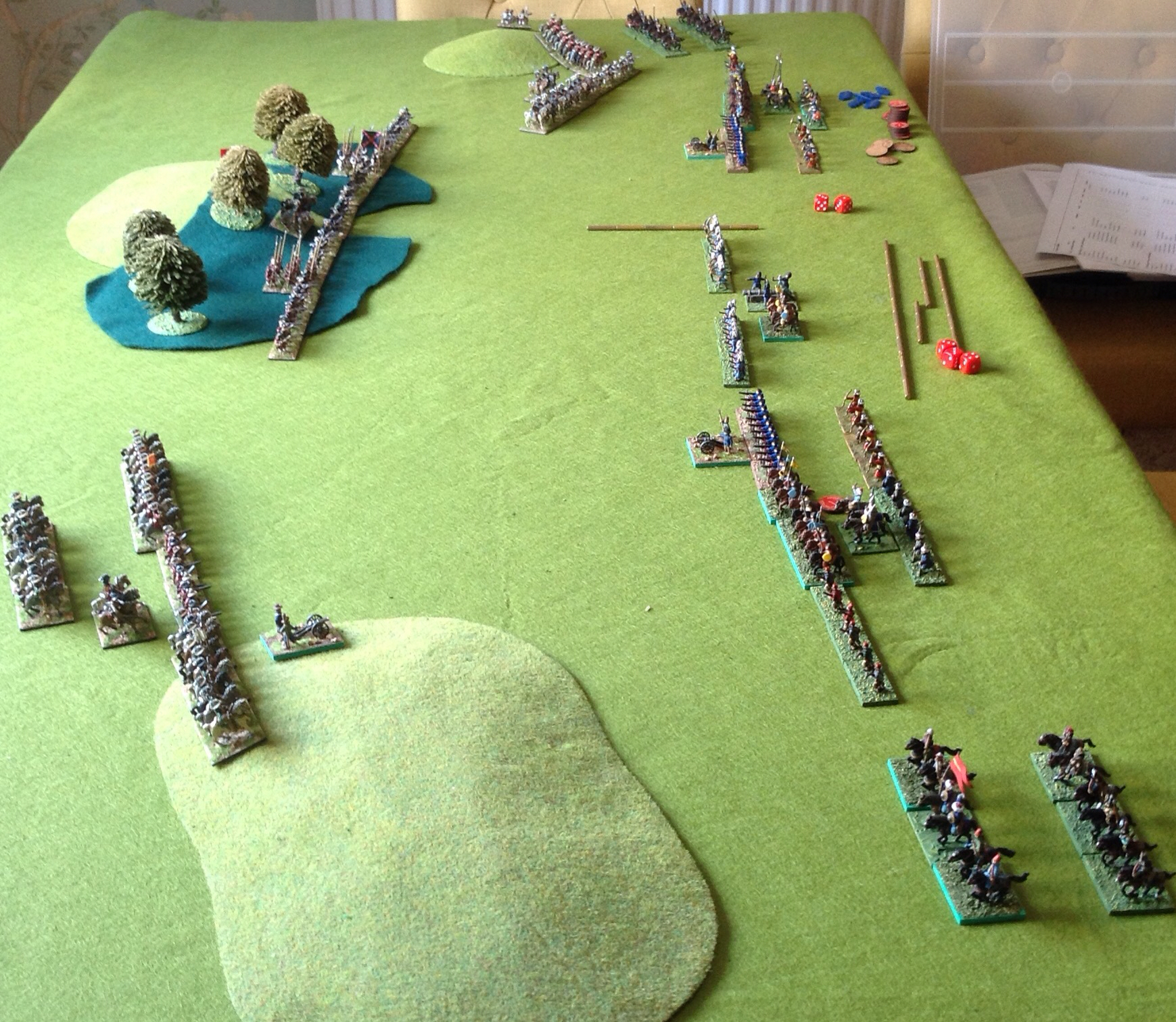
Reading the book inspired me to dust down my 15mm Flames of War armies for the campaign. On this occasion the Italians broke through.

Here is the battlefield with the Italians storming across a stream from the left.

Finally a link to my 25mm figures for the campaign. You can tell I'm really into this period!


Saturday, 24 October 2015

Shattering Empires - Russia and Turkey 1908-18

My latest reading has been Shattering Empires by Michael Reynolds. 


This book traces relations between the Ottoman and Russian empires from the Young Turk Revolution of 1908 to the end of World War I. It examines Russia's policies toward eastern Anatolia and the Caucasus and how the new Ottoman state responded. The author aims to show how the confrontation between the Ottoman and Russian states contributed to the collapse of both empires by describing the rivalry between the two empires and their downfall between 1908-18. 

The book is stronger on the political and diplomatic history of the conflicts, rather than the military operations. The final chapters on the post-1917 campaigns is the strongest from the military historian’s perspective and covers some fascinating campaigns in modern day Armenia, Georgia and Azerbaijan. It also goes some way towards explaining modern conflicts in the region.


Perhaps not a book for the general reader, but if your looking for something different to do with those WW1 Turkish, Russian, and even British and German figures - this might be worth a read.

Tuesday, 13 October 2015

The Last Ironsides

My half term holiday reading has been Jonathon Riley's 'The Last Ironsides'. I am often attracted to obscure campaigns and I picked up this book in a London bookshop a while ago. It is a history of the English expedition to Portugal 1662-1668.

Portugal had been fighting for its independence from Spain for many years when Charles II was restored to the British throne. He agreed to marry the Infanta, Cathrine of Braganza, in return for a much needed cash dowry, trade concessions, and possession of Bombay and Tangier.

Part of the deal was that he would send two regiments of foot and a regiment of horse to support the Portuguese army. This was an opportunity to ship out of the country the remnants of Cromwell's New Model Army. A win-win deal by any standard.

The author covers the diplomatic background and then the campaigns the English regiments fought in. They became, with French regiments, the cutting edge of the Portugese army and distinguished themselves in several battles and sieges. Only a thousand were left standing when the war was won and 400 of these were sent to Tangier, a virtual death sentence in itself.

The English regiments mostly fought in Southern Portugal and Spain. Many of the place names are familiar to the later Peninsular War campaigns in the early 18th and 19th centuries. Badajoz, Merida and Albuquerque, amongst others.

The book is well illustrated with period drawings and modern maps. The English regiments even kept their New Model Army redcoats, so this provides another campaign for wargamers with later civil war armies.


Monday, 12 October 2015

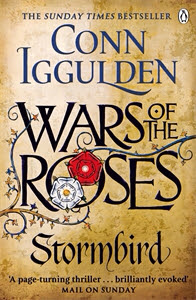
Stormbird

The Wars of the Roses has never been a period of great interest to me. Perhaps being born in Lancashire, but married to a Yorkshire woman, has meant that this is a subject best avoided! In wargaming terms the serried ranks of archers and plate armed foot lumbering towards each other for a slog fest, has also never appealed.

However, it is certainly in fashion at present. Dan Jones's book looks interesting, but I was drawn in by Conn Iggulden's series of historical novels, staring with Stormbird.

He starts in 1437, when Henry VI, the Lamb, accedes to the English throne after years of regency. As the name suggests, he was not a chip of the old block of his father Henry V, hero of Agincourt. His poor health and frailty of mind render him a weakling king, relying on his closest men, Spymaster Derry Brewer and William de la Pole, Duke of Suffolk. Others, such as the Plantagenet Richard, Duke of York, believe England must be led by a strong king if she is to survive.

This book focuses on a secret deal struck for Henry to marry a young French noblewoman, Margaret of Anjou, in return for territories in France. However, one of the book's heroes, Thomas Woodchurch, an archer living in these territories, resists the French occupation. This allows the French King to capture most of the English territories in France. Woodchurch then returns to Kent and takes part in Cade's rebellion.

Iggulden is of course a first rate writer and this is classic historical fiction. Well researched, plenty of action, and numerous sub plots. I doubt if it will make the period any more attractive to me in wargaming terms, but it's a great read.


Sunday, 4 October 2015

Battle of Leva 1664 - the game

There is a very good article by Iain Stanford in the latest edition of The Arquebusier on the 4th Austro-Turkish War 1663/4 and the battles of Leva (Levice) and St Gotthard.

Leva was the smaller warm up to the more decisive clash at St Gotthard, but it is a very manageable game for the tabletop. I used 15mm figures and Pike and Shotte rules.

The Imperial forces in Northern Hungary were commanded by Souches and he was opposed by Ottoman forces, including Wallachian and Moldavian vassals, commanded by Ali Pasha of Buda. Souches was besieging Leva when he heard Ali Pasha had moved to cut off his lines of communication. So he abandoned the siege to meet the Ottoman army.

The Ottoman forces crossed the river towards the visible Left and Right wings of the Imperial army. The centre was held back behind some woods. Ottomans on the right of this photo.

The Imperial left commanded by Knigge advances against the Wallachians with Tartar horse.

While the Moldavians advance boldly against the Imperial right commanded by Heister.

The Wallachians get the upper hand.

But it's harder going for the Moldavians. Those curaissiers aren't much bothered by Tartar arrows and the best Moldavian cavalry is slow to advance because of shooting disorganisation.

Then the Imperial centre advances against the best Ottoman troops, the Janissaries.

However, they are split because the Wallachians rout the Imperial left wing.

Game over when the Moldavians do the same on the Imperial right.

A reversal of history as in the historical battle the centre crushed the Janissaries and then rolled up the Moldavians.

An enjoyable game, that the rules played well. My only reservation is how they treat pike and shot regiments, it doesn't feel quite right. FoGr does this better, but the command mechanisms in Pike and Shotte work better for this period. Ah, the search for the perfect rule set goes on!


Monday, 21 September 2015

Sheriffmuir 1715 - on the tabletop

The last unit of lowland militia finished. These are League of Augsburg figures. A more slender sculpt than Front Rank and others chosen for this project.

This enabled me to get the whole project on the table for a game using Donnybrook rules. These work well for this period, nice easy mechanics that allow a quick game. A bit too quick for the Jacobites, as the highlanders got gunned down by the regulars and militia firepower. The horse did better, riding down the militia at least.


Sunday, 13 September 2015

Sheriffmuir 1715 - The Horse

Latest stage of the Sheriffmuir 1715 anniversary project is the mounted troops.

Here we have some fine mounted gentlemen to ride down the riff raf.


And then some command figures.


Just the lowland foot to finish off and we can have some tabletop action.

Saturday, 12 September 2015

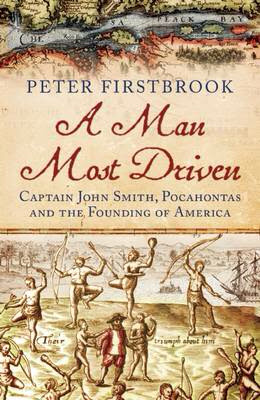
A Man Most Driven

Peter Firstbrook has written a biography of Captain John Smith, famous for being saved from execution by a Native American tribe, by his captor's daughter, Pocahontas.

American history isn't normally my thing, but this biography attracted me because of John Smith's earlier exploits were in the Balkans. Between 1601 and 1604, Smith was a mercenary captain in the Habsburg armies fighting the Ottoman Turks.

It is a pretty astonishing story as well. Smith fought in Hungary, Translyvania and Wallachia, before being captured by the Turks. He then spent a short period as a slave, before escaping through Muscovy.

We have very few English language sources for these campaigns. Of course we have Smith's own account, but what the author has done is to check that account by travelling the same route. He has given us credible evidence on the places and battles Smith took part in. As best he can, he concludes that most of Smith's account is probably broadly correct.

This is also a very readable history. It's also a great story of very interesting character. You will find this a difficult book to put down.


Sunday, 6 September 2015

Scottish Air Show

It was the Scottish Air Show at Prestwick this weekend.

The Saturday is the air display off the coast near Ayr and the Sunday is the static display day, plus take offs at Prestwick airport.

The star for me was the B17.


Closely followed by the Vulcan in its last Scottish visit.


 And of course the amazing Red Arrows


Hurricane and a Spitfire from the Battle of Britain flight
 
And their modern cousin
 
 
Swedish preserved jets did some elegant displays 

 
The Catalina flying boat
 
 
and finally some WW2 ground displays
 

Monday, 31 August 2015

Sd.Kfz. 234/2 Puma

I was following a thread on a bulletin board about roughly 20mm Russian tanks and a Matilda available at some branches of The Works. Thinking, as did others, why are they never done in larger scales for Bolt Action

I was in Beverley, Yorkshire over the weekend at a wedding and decided to stretch my legs with a walk around the town. Passing The Works branch I popped in to see if they had them. They didn't, but they did have a few very nice Puma armoured cars. No indication of scale, but obviously bigger than 20mm. No manufacturer either, although they are made in China.

On getting them home and measuring up, they appear to be roughly 1/45 scale. A bit big for 28mm, but not absurdly so. They are marketed as 20 Panzer Division, Sudetenland 1945. They look pretty accurate models to me and will look good when weathered. At £10 each, I hope there are more in this range.

Three views of the model with a 28mm German infantryman, so you can make your own mind up.


Wednesday, 26 August 2015

Sheriffmuir project - Highlanders

Well you can't have a Jacobite uprising without some Highlanders.

These are Warlord figures from their boxed set. They are a bit stereotypical I suppose; bare arse, drinking etc. But for this skirmish project they provide a bit of everything.

I also used one of the flags they provide because the Stewart of Appin Regiment was at Sheriffmuir. Stuart Reid's book provides an appendix listing what we know of the Jacobite regiments.

He says they were led by Robert Stewart of Appin and appeared to have 260 men on the roll, but only 180 were drawing rations by 22 November. They are described as 'but ill armd' - I suppose they mean the beer tankards that my guys brandish!

Next up either the lowland foot or some horse.


Wednesday, 19 August 2015

Sheriffmuir 1715

I do like an anniversary for wargaming inspiration. This year is the 300th anniversary of the Battle of Sheriffmuir in 1715.

On 6 September 1715 the Earl of Mar declared for the Jacobite cause. He collected an army of about 12,000 and captured Perth. The government army of around 4000 was led by the Duke of Argyll and included lowland Scots and English troops, mostly based in Stirling.

After a period of skirmishing, on 10 November Mar lead his full army south. Argyll responded by moving his army to Sheriffmuir, near Dunblane and the two armies met on 13 November.

Argyll was seriously outnumbered by the now albeit smaller Jacobite army. Argyll's right wing attacked, and managed to drive the Highlanders back, but his left wing was overwhelmed. By evening, both armies were seriously reduced, and although Mar had a great advantage in numbers, he refused to risk the entirety of his army, allowing Argyll to withdraw.

Both sides claimed victory, but it was a strategic victory for Argyll as he had halted the Jacobite advance. Mar’s supporters drifted away and his army dispersed. On 23 December, James Stuart, the Old Pretender, landed at Peterhead, but was unable to rouse the disheartened army. The revolt in England also ended in defeat at Preston.

For more on the battle there is a new book by Stuart Reid that I reviewed in February. It includes all we know about the units that fought in the battle, although that is far from complete.

My wargame project is a skirmish one, largely based on the various actions that took place in Fife in the period running up to the battle.

The first unit is painted and based. These are government troops mostly from the Front Rank range. I will be using the Donnybrook rules.


Sunday, 16 August 2015

The Serbian Army in the Wars for Independence

I have just finished Dusan Babac's 'The Serbian Army in the Wars for Independence against Turkey 1876-1878', published by Helion Books.


In 1875, a number of revolts against Ottoman rule broke out across the Balkans. The Bulgarian revolt was quickly and savagely subdued, but the fighting in Herzegovina and Bosnia continued. Taking advantage, the two semi-independent Principalities of Serbia and Montenegro proclaimed their independence and declared war on the Ottoman Empire on 18 June 1876.

The Serbian army commanded by the Russian General Cherniaev, adopted an ambitious plan of attack. The army was poorly equipped, despite an influx of volunteers. The southward advance was halted and the Ottoman commander Abdul Kerim concentrated 40,000 troops at NiÅ¡ and advanced up the Morava valley towards Aleksinac. Cherniaev had less than 30,000 men, stretched across a long position and the Ottoman’s concentrated their attacks routing the Serbian army. 

A one-month truce allowed peace negotiations, but when these broke down a renewed Serbian assault was repulsed and an Ottoman counter attack forced the Serbs back to Deligrad. With Russia threatening a war a peace agreement was reached. 


War broke out again when Serbia took advantage of the Russo-Turkish War of 1877 to capture large areas of Old Serbia. The subsequent Congress of Berlin recognised full Serbian independence within expanded borders, although not all the areas the Serbian army had occupied.

This is a beautiful book, lavishly illustrated with prints and photographs. It covers everything you could need to understand the Serbian army of the period. Organisation, weapons and most importantly, uniforms are comprehensively covered. 

I am not aware of any wargame figures for this period. The basic uniform isn't much different from Romanian troops (even some ACW, French and Russian figures could work), with the big exception of the distinctive forage cap. A bit of work on the kepi with a file might work, at least in 15mm or smaller. Ottoman's are well provided for in 1877 ranges.


As a history of both wars it is more limited. It is written solely from a Serbian perspective and it desperately needed maps. The author of course knows the country, but the general reader will need a good detailed map of Serbia to follow the text.

There is very little written in English on these wars and therefore this is a much needed study. Recommended.

Wednesday, 12 August 2015

Taken at the Flood - The Roman Conquest of Greece

The second half of my poolside holiday reading was Robin Waterfield's history of the Roman invasion of Greece.


He starts with the Roman's early involvement in the Balkans, largely due to piracy on the Adriatic. This led to wars against the Illyrian's that led into Epirus, Macedon and mainland Greece.

Greece during most of this period was not the united entity of Alexander's time. It had reverted to warring cities and leagues of states that the Roman's carefully manoeuvred, as much by diplomacy, as by war. The author argues that Rome adopted a policy of remote control. Even when they defeated their opponents, they usually withdrew. It wasn't until the end of the period when Rome was in absolute control, not only of Greece, but Asia Minor as well, that direct rule with garrisons became a feature of Roman rule.

This book covers all the decisive battles of the period, Pydna, Thermopylae, Cynoscephalae etc. Perhaps not in the detail I would have liked, although there are sections on the armies and the legion v phalanx debate. The book is much stronger on the Roman strategy and its impact not just on Greece, which was economic ruin, but also on how the plunder and new wealth impacted on Roman society. Sowing the seeds of its own decline.

This is very readable book on a subject that has received less attention than the Punic wars. Recommended.


Tuesday, 11 August 2015

Pula

The city of Pula (Pola Italian) in Croatia, was the main naval base of the Austro-Hungarian Navy. There is plenty to see reflecting its varied history. Primarily Venetian influence until it became part of the Hapsburg Empire in 1813. Then back to Italy after WW1, before becoming part of Yugoslavia after WW2.

The Roman influence is most obvious in the well preserved amphitheatre.

 The Venetian star fortress dominates the city and incorporates a small museum.


The best example of Austro-Hungarian fortifications is Fort Bourguignon. This is south of the city and tricky to find. Go through the reception barrier at Hotel Splendid and turn sharp right into their car park. You will see a pyramid structure on top of the hill and the fort is next to it. The guide book says that there are galleries with details of the fortifications around the city, but it was closed. I suspect the lack of signs means this is permanent.


If its medieval castles that interest you, there are several north of the city around Pazin. This is Pazin's medieval castle, the setting for a Jules Verne novel.


A ruin at Sumber.


and finally Krsan Castle.