Welcome to my blog!

News from a wargamer with a special interest in the military history of the Balkans. It mainly covers my current reading and wargaming projects. For more detail you can visit the web sites I edit - Balkan Military History and Glasgow & District Wargaming Society. Or follow me on Twitter @Balkan_Dave
or on Mastodon @balkandave@mastodon.scot, or Threads @davewatson1683

Sunday, 21 August 2022

For want of frigates

'Frigates!' cried Nelson, 'Were I to die this moment, want of frigates would be found engraved on my heart!' The frigate was big enough to carry significant firepower but fast enough to evade larger enemies. The light cavalry of the seas, patrolling, scouting and above all, fighting. As Nelson put it, 'The eyes of the fleet'. They often operated alone, while the larger ships of the line typically operated in squadrons or fleets blockading enemy ports. 

I have been building more ships for Black Seas to go with my Adriatic project. I only do the basic build as my fingers and thumbs can't manage to rig, but these are perfectly adequate wargame models, not fine ship models.

The focus has been on frigates and brigs, as they were the typical warships fighting in the Adriatic during the Napoleonic wars. Having said that, the Russians brought a fleet of ships of the line into the Adriatic, which were very effective in bombarding French forts. So here we have a Russian 3rd rate, a frigate and a brig engaging an Ottoman squadron. There were still plenty of frigate actions, and I would recommend the memoirs of Vladimir Bronevskiy, who served on one.


Most frigate actions were the interception of cargo ships. These involved either a shot across the bow or using the ship's boats to board. These don't make great games unless they are in convoys with warship escorts. Late in the war, the French used warships to carry vital cargoes.

One such attack is known as the Action of 29 November 1811. The commander of the Lissa squadron was Captain Murray Maxwell on the frigate HMS Alceste (38) with HMS Active (38), HMS Unite (36), HMS Acorn (20) and HMS Kingfisher (18). He received a signal that a French convoy was heading north from Corfu carrying a cargo of some 200 cannon to Trieste and set sail, leaving Acorn and marines at Lissa. The French convoy was commanded by Commodore François-Gilles Montfort on the Pauline (40), with Pomone (40) and Persanne (26). 

The French convoy was sighted near the island of Lastovo, and Montfort ordered his ships to make full sail to avoid pursuit. The Persanne could not keep pace with her faster frigates and broke off being pursued by Unite. The French ship, primarily a store ship, was heavily outgunned and surrendered after a token broadside. The main action developed into separate duels between Active and Pomone and Alceste and Pauline. Pomone suffered heavy damage, as did Active, with its captain (James Gordon) having his leg blown off. When HMS Kingfisher appeared on the horizon, Montfort decided that he could no longer protect the battered Pomone and sailed away in the Pauline, with the British ships too damaged to pursue. Instead, they concentrated their fire on the Pomone who, after losing her masts, surrendered. This ending is captured in the wonderful painting by Pierre Julien Gilbert.

I have been building some additional French and British frigates and replayed this action with the same outcome. Although I refuse to damage the ship models!


I have also been reading some mostly older books on frigate actions. This 1897 history of the Royal Navy, The royal navy: a history from the earliest times to the present, can be read on the internet archive. There are many good books on frigate actions. My latest purchase has been James Henderson's The Frigates. 


Frigate actions are an excellent way to get into Black Seas. 

Friday, 19 August 2022

Lion Rampant - Second Edition

 My copy of the new edition of Lion Rampant thudded onto the door mat yesterday. I say thudded because this is a weightier tome than the original standard Osprey softback. This is my favourite set of rules for small battles in the medieval period. 

For those not familiar with these rules, they are fast-play small battle rules written by Dan Mersey. You command a Warband, typically of five to seven units. Cavalry units usually have six figures and infantry twelve. There is a point system, but this is a scenario-driven game, raids, convoys etc. It doesn't take itself too seriously; the emphasis is on fun games that can be all over in an hour or so. Most games are played in 28mm, but you can play with any scale.

The mechanisms have spawned versions for later periods, including the renaissance and the horse and musket era. There is also a fantasy version called Dragon Rampant. Some of this learning has been imported into this new edition. There are also a couple of excellent supplements for the crusades and the Vikings, published by Edinburgh University.

So what's new, and what do you get for the extra hard cover dosh? Well, in terms of the rules themselves, not a lot. The basic mechanisms work well, so he hasn't changed them much. Some of the unit names have changed to reflect a broader historical period, back into the Dark Ages. And units failing a Wild Charge can still test for a move in the ordered activation phase. There is quite a bit of rule clarification, which adopts the many house rules some of us have been using. There is also a stack of optional rules, including playing with smaller and larger warbands, flanks, shieldwalls, weather and group moves. Unit variants introduce camels, chariots, and later troop types such as pikes and handgunners. 

I am surprised that the unit proximity rule from three inches to one is only an option. He rightly changed it in Pikeman's Lament, and the one-inch proximity is probably the most widely used house rule. The problem with three inches is that players started forming their units in columns to get them onto the table, which looked ridiculous. 

There are 16 scenarios and a simple campaign system. You also get many more sample 24-point warbands in this edition and some legendary fun ones like Robin Hood and his merry men. The production quality is all you would expect from Osprey. Lots of lovely artwork from their books and nice eye candy models. 

I suspect a few folks will complain that a lot of the extra fluff isn't necessary and has just added to the cost. The cynic might think the driver is - this is a very popular rule set, so let's produce a new higher value version. I believe the saying, 'you may think that, but I couldn't possibly comment,' may be apposite here! It is certainly less easy to use in this format, although many of us use our own club quick reference sheets, which have already been updated (thanks, Rab!).

Anyway, I personally don't begrudge the cost of a new edition that I enjoyed reading. I just need to find time to play it more!

On the subject of eye candy, I can now field my Vikings.

Thursday, 18 August 2022

Bushido Dawn

 This is the fourth of Andy Johnson's WW2 novels. I absolutely loved his first book Seelöwe Nord, which assumed that Operation Sea Lion happened on the Yorkshire coast. I played a very enjoyable mini-campaign based on it, with my Matilda tanks just stopping the panzers on the River Ouse. This book is based on the Burma campaign of 1942.

The book follows the invasion of Burma by Japanese forces and the retreat of British and Empire units to the Indian border. It wasn't Britain's finest hour, although the author in his historical note is kinder to the generals concerned than most historians have been. He fairly points out that the hastily put together forces were simply not equipped to deal with the experienced Japanese forces who could regularly outflank each defensive line. The command structure going all the way back to India didn't help. 

The author doesn't break the story down into conventional chapters. Instead, you get brief sections with military-style headings that tell you the where and when of each action. This is an effective way of clearly identifying when he shifts from the strategic to the operational and then the front line. In addition, this gives the reader a comprehensive perspective of the campaign at many levels. 

The Japanese side is told mainly through the lens of an infantry company. You get a clear picture of the ideology and tactics that were so successful in this campaign but sowed the seeds of later defeats. The British perspective is more detailed, and we visit a Yorkshire battalion and Indian and Gurka units. The procession of generals and the challenges they faced are fairly covered, with a limited look at the air war as well.

I really enjoyed this book. Some of the best WW2 fiction around. I hope he keeps going.

I have Japanese and British armies in 15mm and 28mm, painted mainly for the Malayan campaign. But with the exception of the Aussies, they work fine for Burma.


Sunday, 14 August 2022

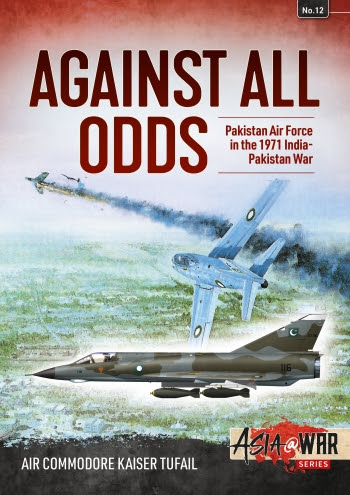
Against All Odds - Pakistan Air Force in 1971

 I have long thought the Indo-Pakistan wars deserve more attention. Helion Books obviously believe the same as they keep feeding my interest! The latest is Air Commodore Kaiser Tufail's study of the Pakistan Air Force in the 1971 war.


Obviously, a Pakistani air force officer will find it challenging to be objective, but there are other studies of the Indian Air Force in this series for balance.

The Pakistan Air Force (PAF) had performed well in the 1965 War, punching well above its weight. However, the Indian Air Force had remedied some of their problems and, as ever, would enter the war with a material advantage. The 1971 conflict was essentially about East Pakistan, or Bangladesh as it is now known. The geography alone created enormous problems for the PAF, and as other studies on the ground war have shown, the forward defence strategy was pretty optimistic, if not foolhardy.

The PAF had not stood still since 1965, although the US arms embargo created procurement challenges. Their biggest acquisition was 90 Shenyang F-6 fighters from China. This is the Chinese version of the Mig-19. They also wangled a way around the embargo by buying 90 ex-Luftwaffe F-86E (Sabre) jets. The most modern additions were 24 Mirage III from France. In total, they had 290 combat aircraft, of which 215 were operational. 

The PAF's strategic and tactical problems were not limited to the geography of a country split in two. Even West Pakistan lacked depth, which meant every air base was within easy strike reach. The lack of comprehensive radar cover only added to this problem. They did attempt to defend these bases with the side effect of drawing IAF attacks rather than their exposed lines of communication. The PAF's primary mission remained to provide air cover for the army's thrust into India, its only way of distracting the Indian army from its invasion of East Pakistan.

The PAF flew a total of 288 offensive counter-air sorties. 81 sorties (28% of the effort) were unsuccessful as the armament could not be delivered for several reasons. Five aircraft were lost during the missions, two during the day and three at night, amounting to a campaign attrition rate of 1.7%, which was considered within acceptable limits. The PAF had very few assets to support the heavily outnumbered Pakistan Navy and even had to resort to converting civilian airliners. Overall the IAF lost 60 aircraft to the PAF 27. However, the IAF flew many more sorties and more challenging ones. 60% of the IAF losses were from AA fire. A quarter of the PAF losses were on the ground due to poor dispersal practice at air bases. The bottom line was that the IAF numbers counted, as it did in the land war.

This book gives the reader a detailed account of the air war at a strategic and operational level. Masses of data and profusely illustrated, including colour plates for the modeller and wargamer. An excellent read and everything you need to reproduce the conflict on the tabletop.

Sunday, 7 August 2022

1945 Victory in the West

 This is Peter Caddick-Adams' study of the final campaign of WW2 in western Europe from the perspective of Allied land forces. My late war interests are in eastern Europe and the Mediterranean. Therefore my understanding of anything after the Battle of the Bulge and, of course, the Bridge at Remagen is limited. I vaguely thought this was primarily a grand charge across Germany - how wrong I was!


It would appear I am not entirely at fault for this ignorance. Montgomery, in his Memoirs allocated only ten pages to this campaign; Bradley and Eisenhower scarcely double that. One part I was familiar with was the harrowing pictures of the concentration camps, as Allied troops liberated the few remaining survivors. However, that is only one part of the story. There were also about 45,000 labour camps, where over 12 million foreigners were used as serfs, comprising 26 per cent of the entire workforce within Greater Germany. Many of these people were worked or starved to death; the 'slow-death 'amps for the still useful', noted one'GI, as opposed to 'quick-death'camps for the unwanted.' Not to men'ion the three million Russian POWs who died in captivity.

On the military aspects of the campaign, the operations in the south led by US General Devers, commanding the Sixth Army Group of Patch's SevePatch'sand de Lattre's FirLattre'sh Armies, were also new to me. He was less of a publicist than Montgomery and Patton, and he had the challenge of managing the French army with de Gaulle interfering from afar. After grinding their way through the High Vosges, he had an opportunity to cross the Rhine, but Eisenhower blocked it. Even Patton thought it was practical, but Eisenhower was perhaps overly cautious after Market Garden. As Peter concludes, 'For Devers, it was'probably a case of right solution, wrong time.' The achievements 'f Devers and Patch in stemming the German Nordwind offensive also remain remarkably little known. This story was repeated to a certain degree when it came to exploiting the bridge at Remagen.

Another under-publicised story was the Canadians' contribution in opening t'e vital Ways'y port of Antwerp. Thanks to the 'We Have Ways' podcast interviews, I was aware of this. Canadian casualties were 20 per cent higher than comparable British formations due to the days spent in close combat. The role of engineers in bridging the many rivers under fire is also an understated contribution to victory.

The politics of the French army is interesting, and the treatment of French colonial troops was appalling. De Gaulle needed these fighters but was equally determined there could be no hint that France had been rescued by her colonies. Battle-hardened Berbers, Senegalese and Cameroonians handed over their weapons, helmets and even greatcoats to former Resistance fighters. The young teenagers knew no discipline and had little training, but they were white. In his memoirs, de Gaulle described the goodwill of the United States as scanty, which was nonsense given the scale of equipment and training provided. There is also an interesting story of how the Ameri'ans whisked atomic scientists and equipment from the'Hitler'sthe Fren'h.

There is a snippet of interest to 'argame rule writers (Bolt Action in particular) who big up the MG42. Peter compares the Allied MGs favourably with this weapon, not least the advantages of the magazine-fed Bren. He concludes, 'Thus, the Allies had more of an equivalence against ‘Hitler’s bandsaw’ than most writers generally realise.' There are lots of snippets like this in the book. For example, the scale of Black Market theft was pretty staggering, with only 11 million of 77 million packs of cigarettes reaching US troops in Europe. Patton's reckless, and costly, raid to rescue his son-in-law is another. Or the comment of a US doctor that ‘It was really the Jeep that was Hitler’s secret weapon. I recall one hospital I visited had half its beds filled with victims of Jeep accidents.’

One of the reasons I thought the campaign in Germany was something of a parade was because of the strength and poor quality of most German units. In January 1945, there were 146 German divisions on the Eastern Front; in the West, there were seventy-nine. The following month, the Western Front had declined to 68, with 173 opposite the Russians as they neared Berlin. And not a single German unit was at full strength. However, there were significant pockets of resistance with some units fighting to the last man. Also, the one weapon system left in the Reich in abundance was flak guns of every size. As the Allies learned early the war, these could very very deadly ground attack weapons.

I'll stop as there is so much more in this book. I really liked the blend of the strategic down to the front line, which gives the reader a broad perspective of this campaign. I now have a better understanding of a campaign that was anything but a parade.

There were still a few of these around! (Swedish Tank Museum)


Saturday, 6 August 2022

Claymore 2022

I was off to Edinburgh today for the Claymore show, the only Scottish wargame show that has survived this year. As always, well organised by the South East Scotland Wargames Club. There appeared to be a good attendance with a good range of traders and games. The GDWS Battlegroup members volunteered for our game, which gave me a lot more time to see the games, chat with old friends and generally enjoy the show. My purchases were surprisingly few. Some 28mm late Austrians for my Adriatic project along with some British sailors, a ships boat and a few personality figures. Plus bases and paint. Not one book caught my eye!

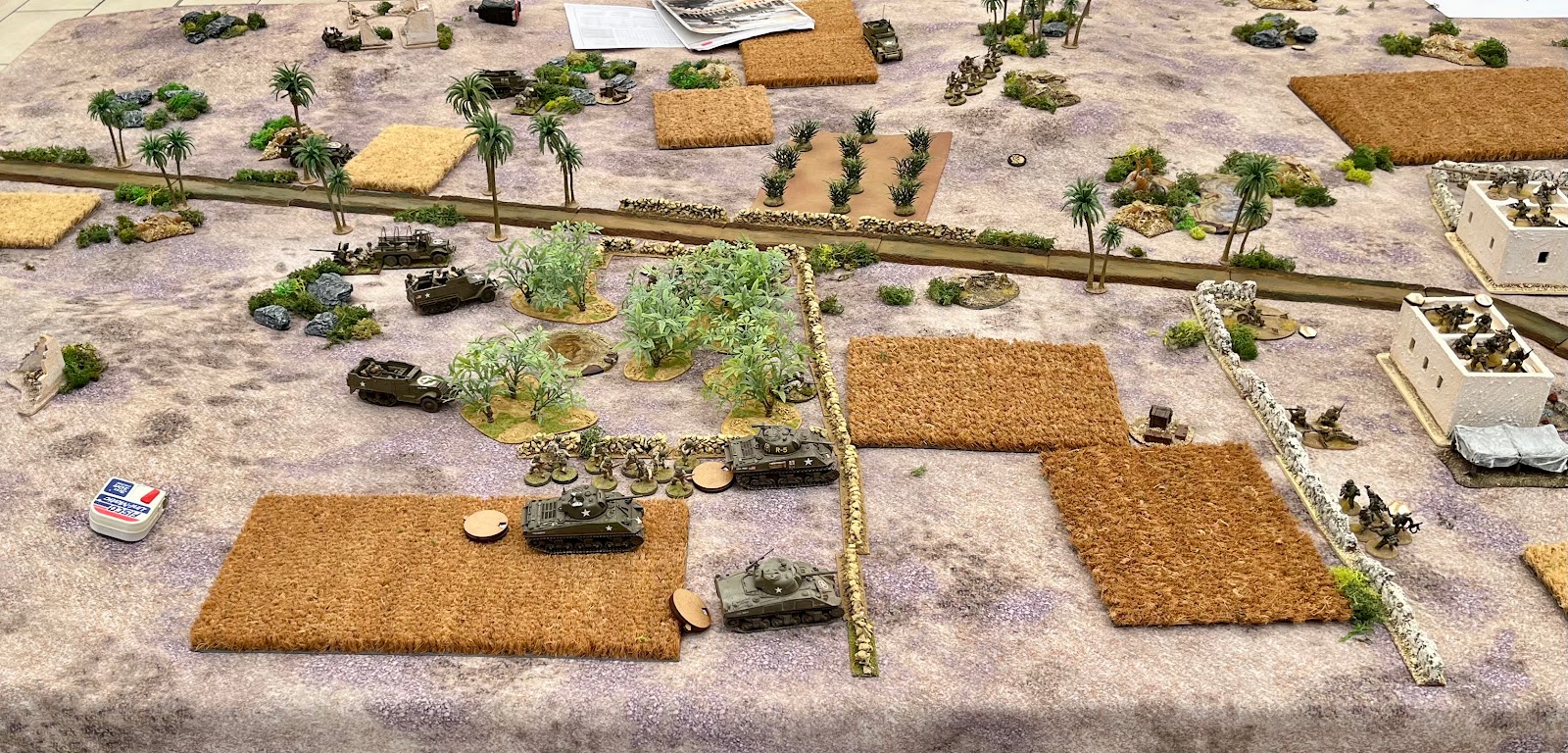
The GDWS game was 'Holding Carentan'. A 15mm WW2 game using the Battlegroup rules, with its growing pile of scenario booklets.


I have bought into the Border reivers Kickstarter, so it was good to see Iain running a participation game.


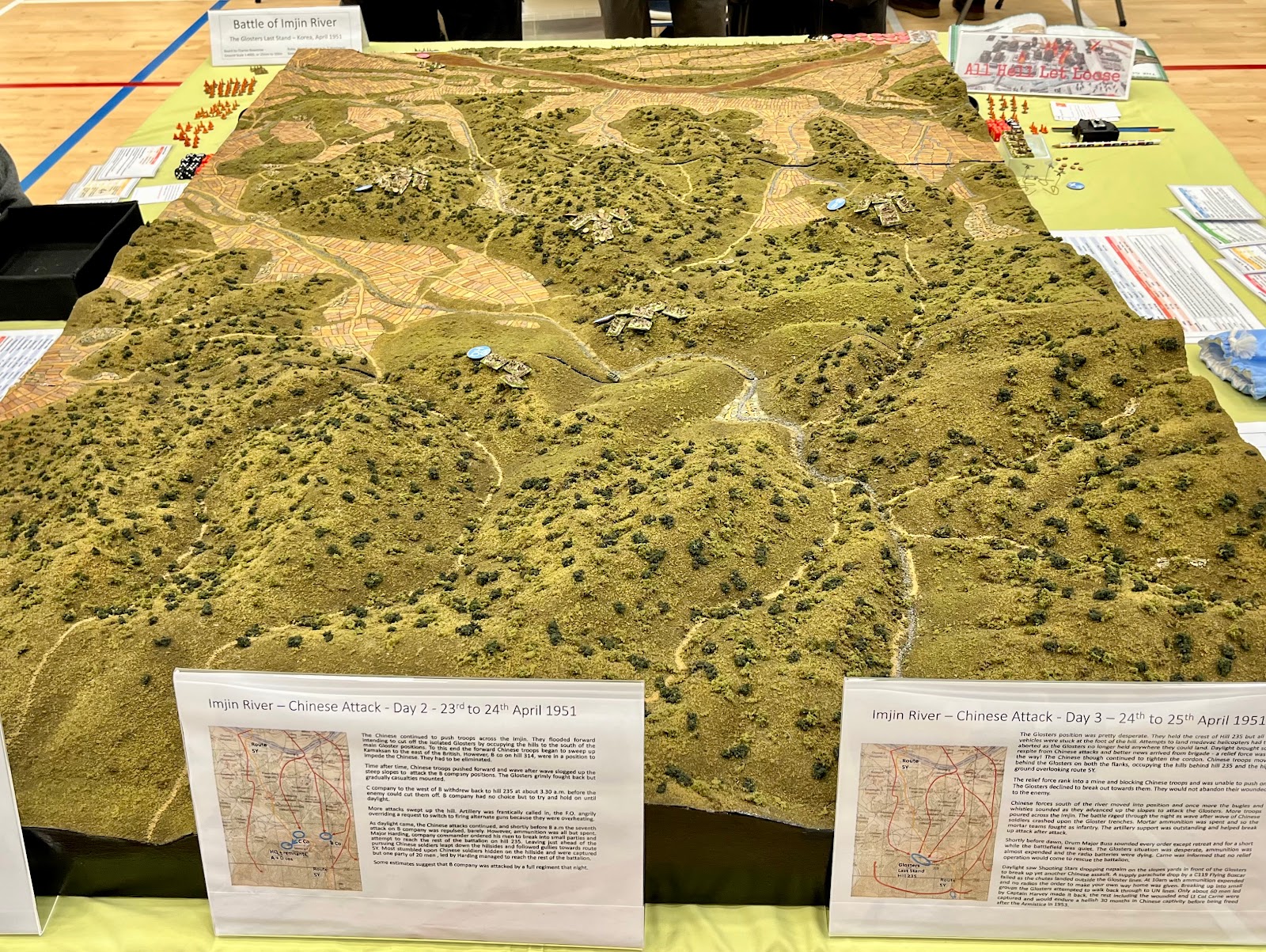
I was very impressed with the terrain for the Injim River, a Korean war battle.


I'm not sure about the use of maps as terrain. I just can't visualise the terrain. However, this Bautzen game was certainly a spectacle.


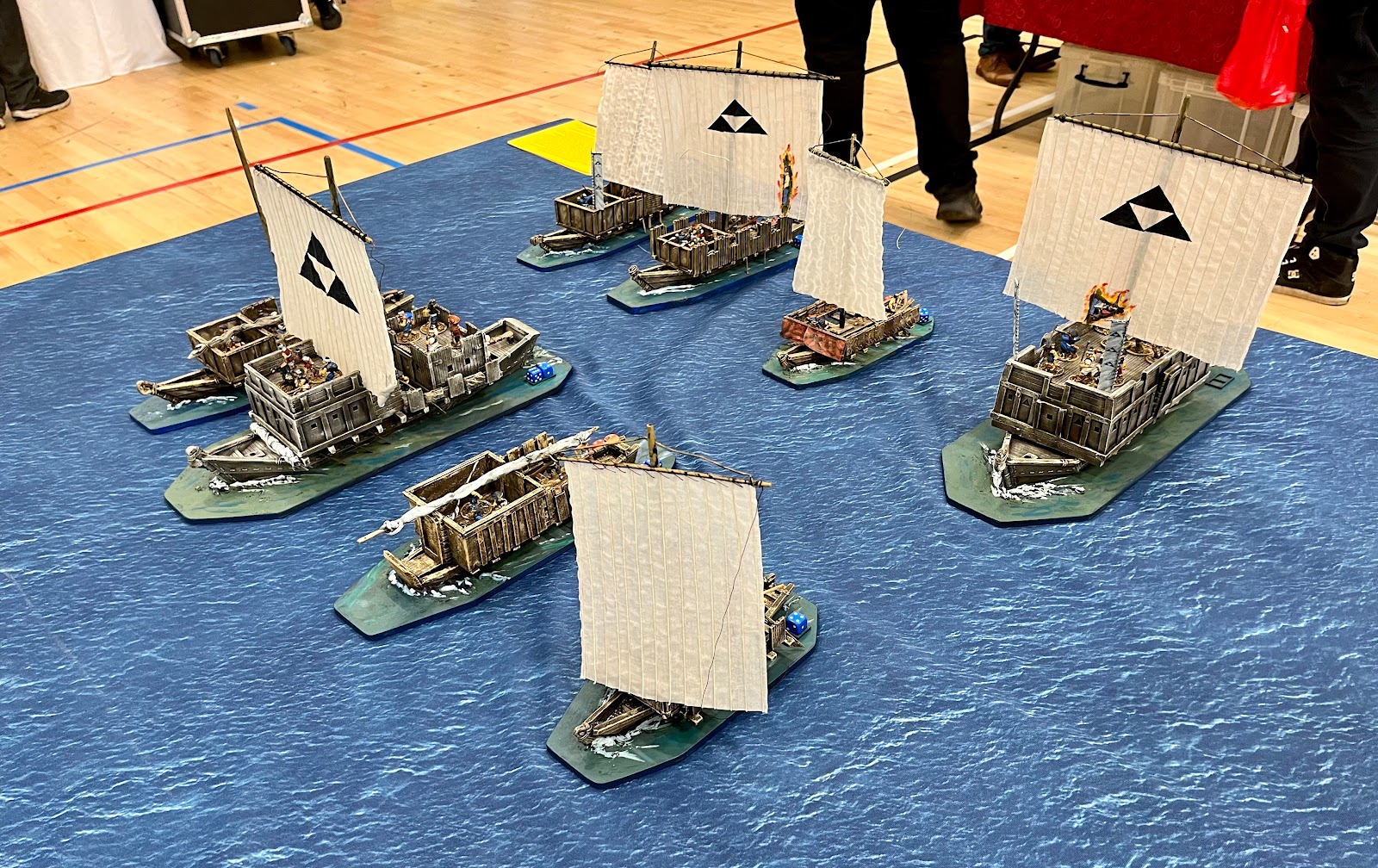
At 28mm, more suitable for my eyesight, this Samurai naval warfare game had some excellent ships.


Also, at sensible scales. The Indian Mutiny.


And Bhagdad on the Rio Grande using Sharp Practice from the Falkirk club.


A naval game close to my current interests was Lemnos with Ottomans and Russians.


The Prestwick club had a popular Dragon Rampant game.


Strength and Honour, Mons Graupius in 2mm.


Bolt Action.

A nice 28mm ACW cavalry battle.


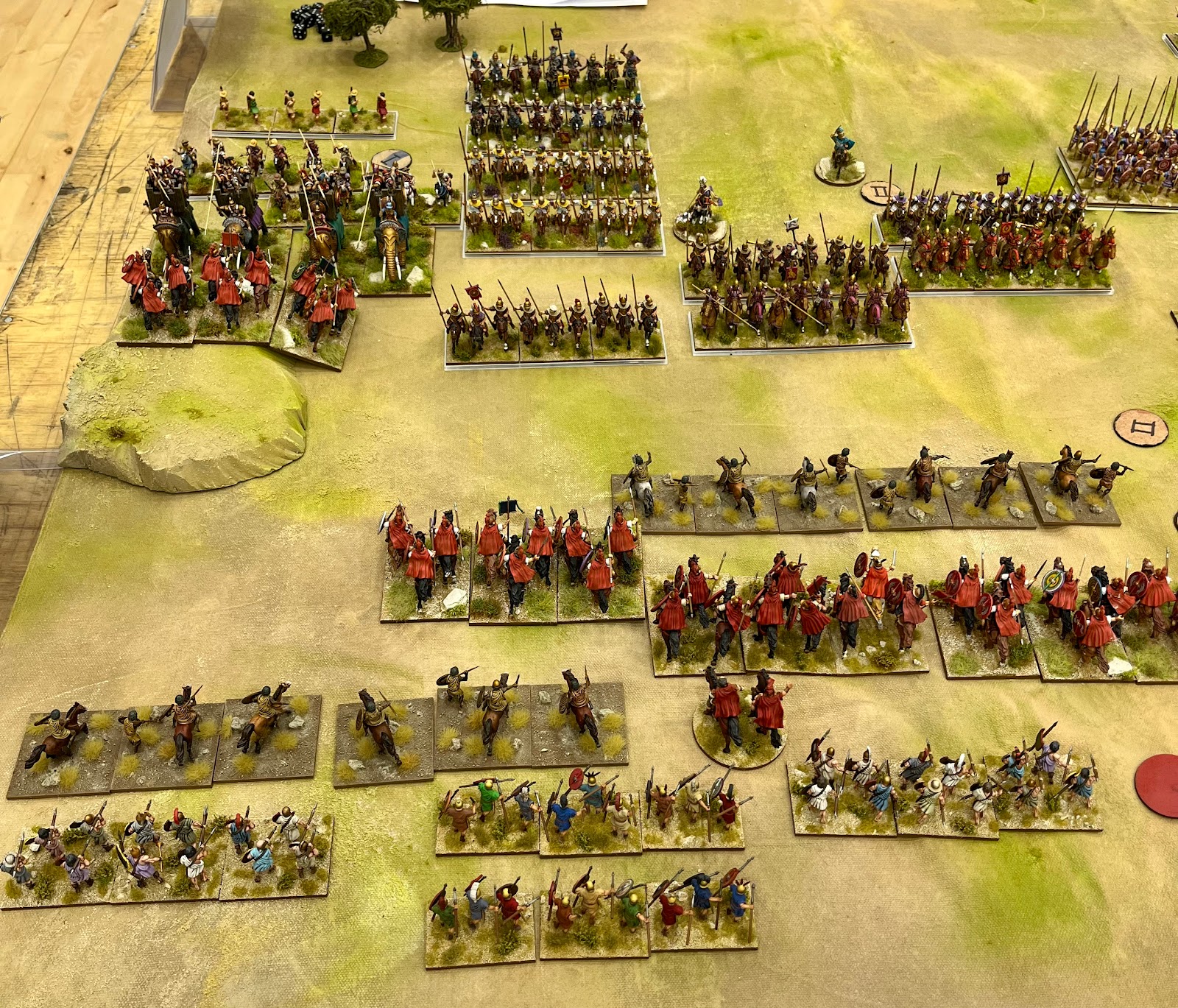
And finally, a superb big scale Battle of Pydna in 28mm.


A good day out and many thanks to SESWC for organising it.


Wednesday, 3 August 2022

Ionian Mission

 Many years ago, I worked through most Napoleonic naval fiction writers, from C.S Forester to, probably my favourite, Douglas Reeman (Alexander Kent). As part of my Adriatic project, I sought relevant historical fiction as a break from archival research. I picked Patrick O'Brian's Ionian Mission just by the title. He has written over 20 books in this genre alone, the most famous being Master and Commander, which was made into a film of the same name, starring Russell Crowe.


O'Brian's hero is Jack Aubrey, with his friend, the ship's doctor Stephen Maturin. In this book, Aubrey has been promoted to senior captain commanding a ship of the line that has been sent out to reinforce the squadron blockading Toulon. After the first few chapters, I remembered why O'Brien wasn't my favourite writer in this genre. He loves the fine detail of life on board a ship of the period, which is described in endless detail. In places, it reads more like social history than an action book. 

In fairness, blockade duty was pretty dull, and it is broken up by one spy mission into France, although I wonder if a ship of the line would have been used on such a mission. The problem is that two-thirds of the book is taken up with the blockade. The bit I was interested in came much later when he shifted to a frigate (with supporting sloop) for a mission to the Ionian islands. There were French garrisons on the islands and neighbouring ports and competing Ottoman warlords at this time. Aubrey is tasked with choosing which one to back with artillery.

I won't spoil the story, but this part is told well and captures the confused power structures in the Adriatic. Having decided, he then has to fight one of the warlords at sea. 

In hindsight, I should have cut to the book's last third. But if you like your naval fiction fast-paced, this isn't the book for you. Below is my tabletop take on the final sea battle in the book, using Black Seas models and rules.


Tuesday, 26 July 2022

StuG III Brigade 191

 This is the operational history of the German Army Brigade 191, known as the 'Buffalo Brigade', written by one of its members, Bruno Bork. The unit was equipped with the Sturmgeschutz III assault gun throughout WW2. 


The unit started as Abteilungen 191, formed of three batteries of six vehicles each and an extensive tail of support vehicles, something that wargamers tend to forget. They were part of the artillery and wore the field grey of that branch rather than the black uniforms of the panzers. Their role was generally to support infantry units with close-range firepower. It was equipped with the StuG III and the short-barrelled 75mm L/24. This was upgraded to the long-barrelled L/48 at the end of 1942, which enabled it to knock out Russian tanks.

My main interest in getting this book was because they first saw action in the Balkan campaign of 1941. The unit was based near the Romanian oilfields at Ploesti. In March, they crossed the Danube at Giurgiu into Bulgaria, travelling across the Balkan Mountains through the Shipka Pass and down to the Greek border. It was a strange route for an armoured unit, which put a lot of strain on the vehicles. It took 14 days to overhaul and repair them.

The unit's baptism of fire came in the attack on the Metaxas Line, supporting I/Inf.Regt 100. Despite some remarkable driving in the mountains, they suffered serious casualties and didn't break through the lines. However, once the Greeks surrendered, they advanced through Salonika and down to Thermopylae before being sent all the way back to Moravia to refit for the Russian campaign.

In the early stages of the Russian campaign, they fought over some topical places in Ukraine, including Kyiv. The speed of the advance meant they were attacked by Luftwaffe bombers, despite having swastika flags on the top of the vehicles. Apparently, the Luftwaffe thought this was a false flag operation. It is worth remembering that German ground-air coordination was not always as good as claimed as this wasn't the last time this happened. The appearance of T34 tanks came as a shock, as it took 18 AP rounds to knock them out. 

The Russian winter was the next shock, with a lack of winter clothing and adequate supplies. They supplemented these with captured Russian stocks, although one platoon ended up with super-diarrhoea when they translated 'Rata Aircraft Motor Oil' as 'finest salad oil'! The battalion was part of the thrust south into the Caucasus, and the descriptions of how they were used tactically are interesting. When working with the panzers, they were in reserve until the panzer spearhead came upon enemy resistance when they took cover while the StuG's took over. Needless to say, this wasn't popular, and they were pleased to get back to supporting the infantry.

Having reached the Caucasus, they had to retreat back via the fierce fighting in the Kuban Bridgehead and the Crimea. The unit was abandoned at Sevastopol, although many troops were evacuated. During the retreat, when they lost vehicles, crews were formed into ad-hoc infantry units. The unit was reformed and sent back to the Balkans, fighting in Romania, Yugoslavia and Hungary. The street fighting in Belgrade is another reminder of the importance of armour being supported by infantry. Finally, the unit ended up in Austria, where it surrendered to the Americans.

The author was a professional soldier before the war and served as an NCO before he was wounded. He ended the war as a Leutnant. While this isn't an entirely objective study, it's a bit vainglorious in parts, but it does give a detailed understanding of how assault guns were used in combat. It is also very readable, with more than 100 illustrations.

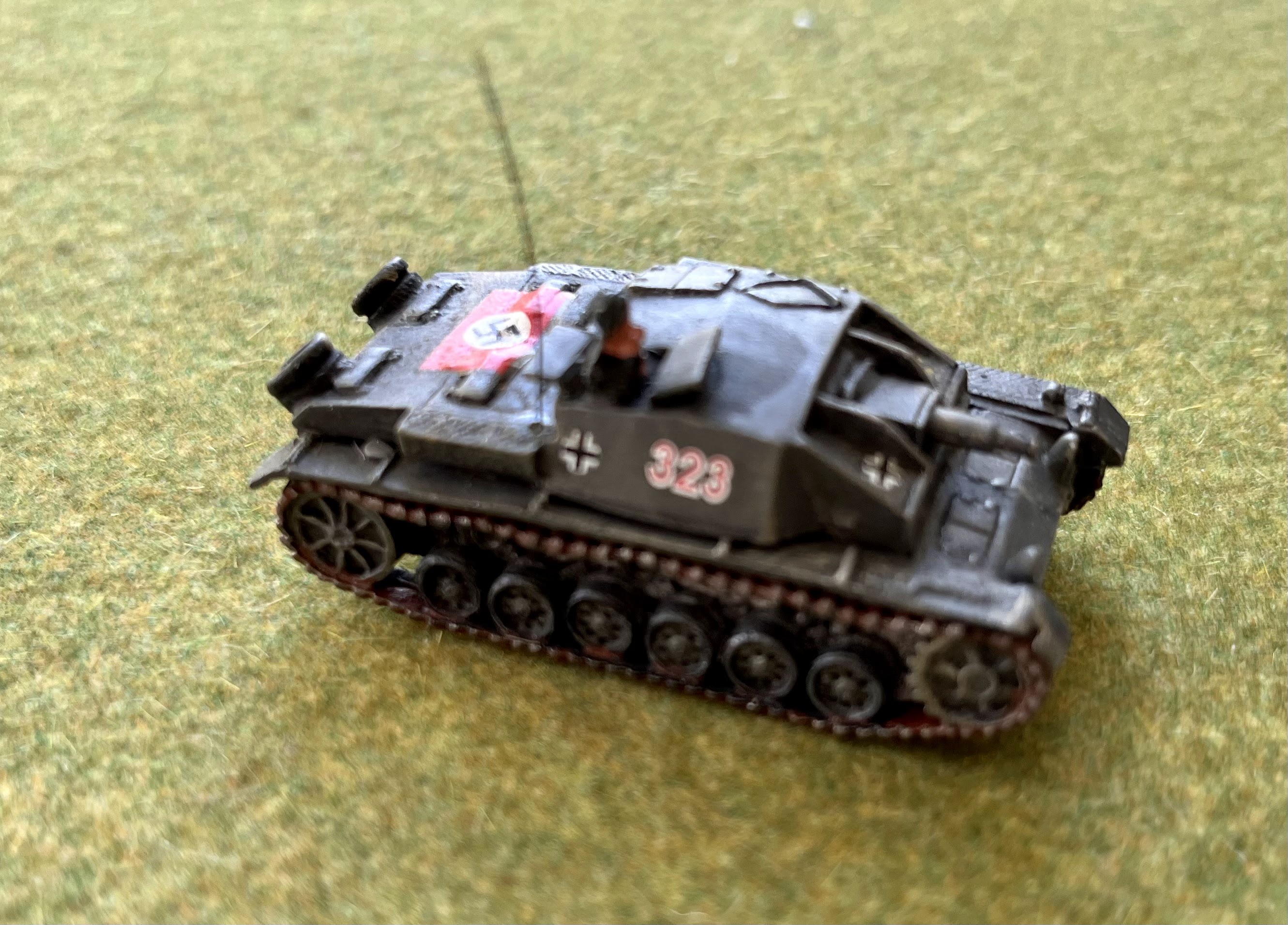
I was quite pleased with my 15mm StuG III and its flag until I read this book!


Thursday, 21 July 2022

Budapest: The Stalingrad of the Waffen-SS

This is Richard Landwehr's study of the siege of Budapest with a focus on what he calls 'the backbone of the defensive effort', IX SS Corps and the 'Florian Geyer' and 'Maria Theresia' cavalry divisions. There are more detailed and more objective studies of the siege. In particular, Battle for Budapest by Krisztian Ungvary, as well as a good Bolt Action supplement for wargames. I collected a Hungarian army based on the supplement.

I started to get suspicious when there was no introductory chapter on the divisions and how they got there. The soldiers are described as 'sharing one thing in common: an inner fortitude of inextinguishable dimensions'. No mention that the 'Florian Geyer' Division killed an estimated 3,000 Russians in a 'pacification' campaign, the great majority of whom were unarmed! 

While there is a decent collection of photographs and descriptions of the action, the narrative continued to emphasise that these SS troops were 'saving countless lives that otherwise would have been engulfed in the red tide.' 

At this stage, I thought I had better check out the publisher and the author. The publisher has had a mixed background, but the author is noted for his extreme admiration of the Waffen SS. As Wikipedia sums him up, 'Richard Landwehr is the author of numerous books about the Waffen-SS, its non-German volunteers, in particular, providing revisionist and apologetic accounts of these men and their battles. He has been producing the magazine Siegrunen on the same topic for over 30 years. Landwehr has written for the Journal for Historical Review (JHR), which is published by the Institute for Historical Review, an American Holocaust denial organization.'

So, one to avoid. 

Here are some 28mm Hungarian cavalry from the Great Escape Games range.

P.S. I see Helion has the edited Soviet General Staff study, The Budapest Operation, with 20% off.

Tuesday, 19 July 2022

HMS Amphion 1798

 This is Michael Feather's short study of the Royal Navy frigate HMS Amphion, which served during the Napoleonic wars. He has looked at the frigate's life from construction to decommissioning. My interest is that this was the ship William Hoste took into the Adriatic for his earlier voyages before he was given command of the larger frigate HMS Bacchante.


The author's interest was sparked when he passed the abandoned Betts yard at Mistley in Norfolk, where the 32-gun HMS Amphion was built between 1796-1798 at the cost of £13,958. One of five frigates constructed to the same design from English oak. She served for 22 years, which was quite long for a frigate. She was fitted out at the Chatham shipyard. Her guns were 26 18lbrs on the upper deck, 6 24lbr carronades on the quarter deck and fo'c'sle, and 6 6lbr long guns on the fo'c'sle deck and fo’c’sle (this gave a specification of 32 guns as the small 6lbrs were not counted).

William Hoste was a protege of Nelson's and was given command of Amphion on 13 October 1805 at the age of 24. He was on a mission to Algiers, so he missed Trafalgar. After some limited action with Sir Sydney Smith, he was sent on ‘the best cruise in his command’ to the Adriatic, joining the Unité in harassing enemy shipping and shore stations. In 1809, Hoste became the senior captain and, for a time, the only frigate captain in the Adriatic, which meant that he did not have to share so much of the prize money with others. A constant concern as he was financing his spendthrift father.

Hoste was commanding Amphion at the Battle of Lissa in 1811, the last major naval action of the war. The Amphion returned to England and lay shattered at Greenwich for a while, needing more than the typical hasty repairs. As a point of honour, she was repaired although she was already obsolete, not big enough. The Americans were causing havoc with their large, heavy frigates, and the French were building 44 gun frigates. Hoste returned to the Adriatic campaign in Bacchante. When Amphion was repaired, she performed anti-smuggling tours in home waters and a show the flag tour of South America before being sunk as a breakwater in 1820.

This is an interesting study using the original records in the archives. I know from my own experience that this is pretty challenging, not just because of the age of the documents but also trying to interpret the handwriting.

There are plenty of scenarios here for games of Black Seas. I am currently painting Russian ships, but the Royal Navy ships are ready to sail once again.


Saturday, 16 July 2022

The Devil's Pact

 I have read most of James Holland's history books, but his historical fiction has passed me by. However, I saw this book in his Jack Tanner series in my local library and decided to give it a go. 


Jack Tanner is an infantry officer in a fictional Yorkshire regiment. This is book 5, and he has reached the rank of Captain. The Tunisian campaign is ending, and he is seconded to the Americans as the allies prepare to invade Sicily. He takes part in an undercover operation to liaise with the Mafia, who have agreed to assist with the invasion in return for giving them a free run to return to their pre-fascist glory days. This is a historical fact, although the details have remained shrouded in secrecy. This is the devil's pact in the title.

On returning to the unit for the invasion, there is a new battalion commander. They have a past, and the new commander engages in various dirty deeds to get Tanner killed or injured. As if war isn't dangerous enough. I won't spoil the story, but our hero fights his way up the east coast of Sicily, around Mount Etna, with Monty's army. With a bit help from the Mafia, his American pals under Patton go the long way around.

The sales blurb calls this series 'A Sharpe for the Blitz years', which is a pretty good description of the style. Tanner has been promoted from the ranks and is despised by some of his seniors and supported by others. He has a positive relationship with his men and leads from the front. If you like Sharpe, you will enjoy this. I certainly did and will probably go back to the start. That appears to be the Norway campaign, a particular favourite of mine.

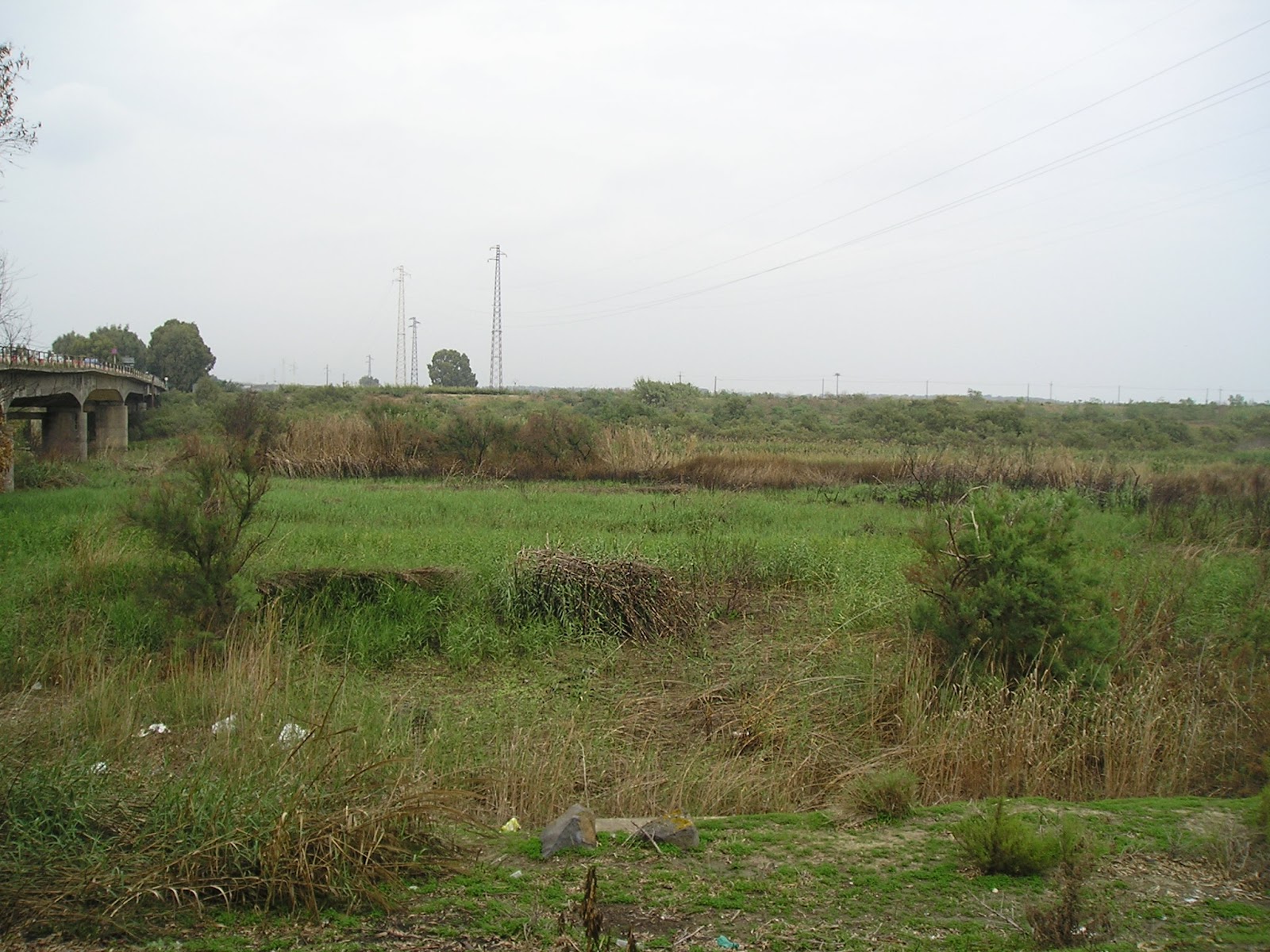
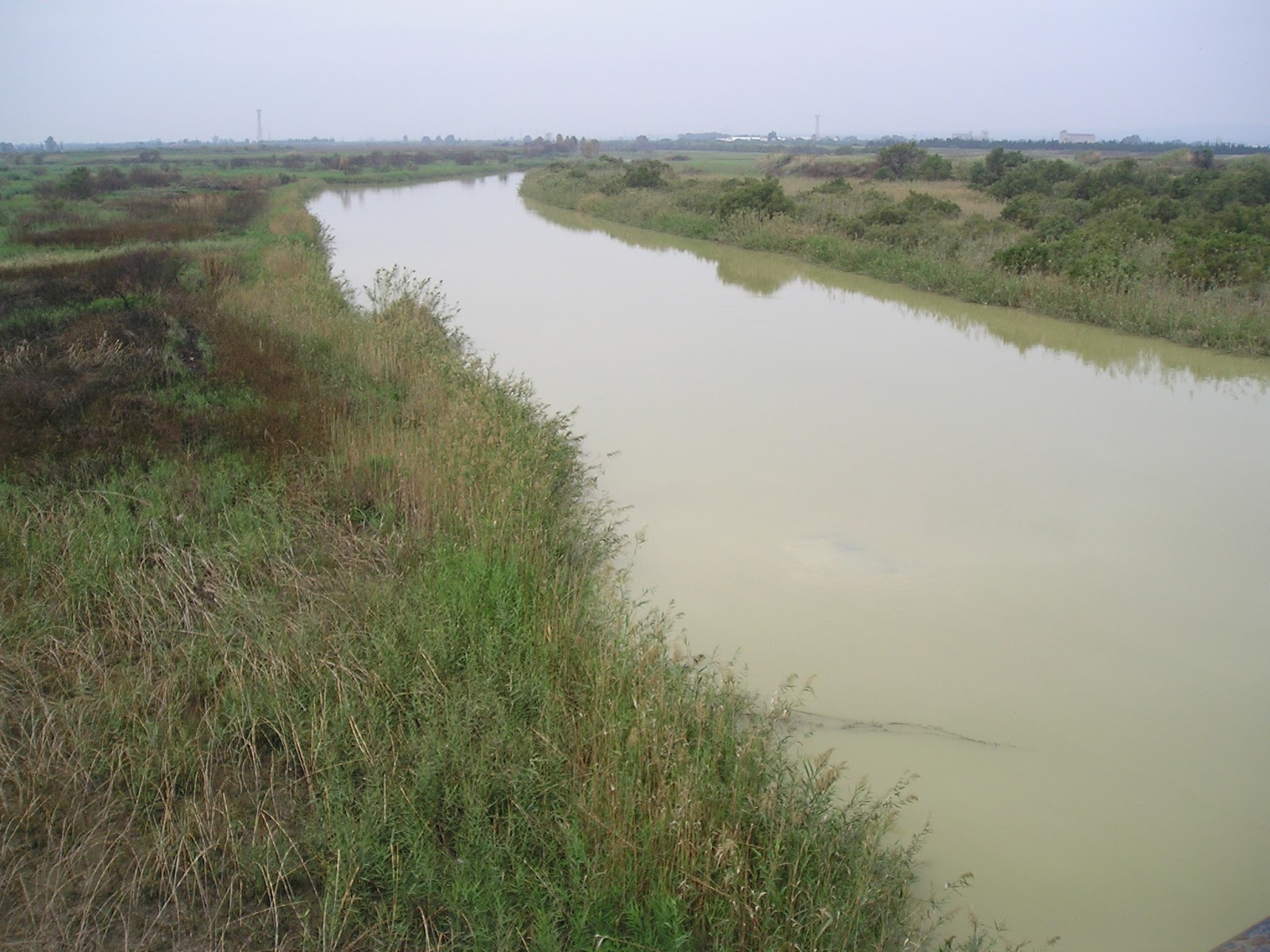
I have also visited the main battle sites on Sicily. One of the operations covered in this book was the airborne assault on Primosole Bridge across the Simeto River and the infantry relief operation. A smaller version of Operation Market Garden. I remember my wife looking bemused (not for the first time!) as I stopped the car on the rather grubby-looking river. The bridge in the pictures below is, of course, a modern one. Much to my wife's amusement, a group on the river bank turned out to be a Sandhurst field trip.


Thursday, 14 July 2022

The Ionian Islands

 I have been indulging in some background reading for my Adriatic project. The first book was Jim Potts' The Ionian Islands and Epirus. This is described as a cultural history, and while there is plenty of that, there is also plenty of general history to help me better understand the islands and their strategic position in the Napoleonic wars. I spent a week touring Epirus some years ago and visited the coastal ports traditionally linked to the islands, but I haven't been on the islands themselves.


The Venetians held onto most of the Ionian islands, and the mainland ports of Parga and Preveza, during the long Ottoman occupation of Greece. The French took Corfu and the other Ionian Islands in 1797 to be temporarily driven out in 1799, but they returned in 1807. The British then invaded the southern Ionian Islands (Zakynthos, Kefalonia, Ithaca and Kythira) in 1809 and held onto them until handing them over to Greece in 1864.

Napoleon wrote, "I think that henceforth the chief maxim of the French Republic should be never to give up Corfu, Zante, etc." He cited economic reasons but also highlighted the strategic value, "With Malta and Corfu we should soon be masters of the Mediterranean.... Corfu and Zante make us masters of the Adriatic, and these islands are of the greatest importance to us." He also saw the islands as an essential staging post to take advantage of any break-up of the Ottoman Empire.

British tourists came in large numbers to Corfu when it became a major tourist destination. And although it is probably not as popular these days, many thousands still descend on the islands. You can even still play cricket. British tourists have not always behaved, with the combination of sun and cheap booze being an early attraction. As the author points out, this is not new. Lt. Col. Napier, writing in 1825 about Kefalonia, blamed drunkenness as one of the main causes of disease and death amongst British soldiers, as well as exposure to the sun, bare-headed.

The Ottoman governor of Epirus, Ali Pasha, regularly features in the book. His is a fascinating story, rich with anecdotes to liven any tale. Quentin and Eugenia Russell are the latest to write a biography of the old rogue and very good it is. As the Reverend Hughes put it, "As long as he lives he will exert all his energies to gain a footing in the Ionian Islands, and upon his death-bed he will bequeath these sentiments to a successor." The islanders, particularly the Pargians, wisely did their best to keep him out. But, sadly, it was the British who sold them out in the end, and many ended up on Corfu. 

I was in the Scottish National Book Town of Wigton last week. It hasn't reached the levels of Hay on Wye, but it has a few very good second-hand book shops. I picked up two books related to my project. Celia Irving's The Adriatic Islands and Corfu is an old-style travelogue of the sort you don't see as often these days. When she wrote it in 1971, most readers would have bought it for the vicarious thrill, while today, they are all within reasonable travel range. While the travel details are pretty outdated, the history and anecdotes are still relevant. I have quite a few of these covering Balkan travels, and they are still worth a read.

The other book is Colonel Leake in the Mani, edited by Martin Jones. Leake was sent by William Pitt to survey the Peloponnese and northern Greece. He liaised with Ali Pasha and brought him artillery and other military stores. These included Congreave Rockets. I have yet to find a first-hand description of their use in action, but it must have been a sight to behold!

This is all interesting background reading that I suspect probably won't get many readers to dash out and buy them. However, if you are planning a holiday to any of the Ionian islands, then Jim Potts' book is worth a read on the plane and can be picked up cheaply on the Kindle.

Some of my Greeks of the period from the Old Man's Creations range.


Monday, 11 July 2022

Tanks at the Iron Curtain 1960-75

 This is a new look at NATO and Warsaw Pact tanks during the height of the Cold War, written by the premier tankie, Steven Zaloga. I started being a bit sceptical about this approach, as the tanks involved have been extensively covered in other Osprey Vanguard books. However, this book highlights the development of tanks during the period and how they compared, and I certainly learned something new from it.

At the start of the period, both sides were debating the future armament of their tanks. Should they be armed with anti-tank missiles, or should they attempt to outgun their opponents? For the Soviets, with the 100mm T55 as the standard MBT, the army wanted a bigger gun when they evaluated the new American M60. The Americans experimented with the missile option in the M60 and in their new light tank, the Sheridan. The Russians developed the Obiekt 150, which was championed by Khrushchev, who exclaimed, 'The tank has no future against this weapon!' In the end, both sides decided that the versatility of gun tanks was best, and ATGMs could be fired from lighter, faster and cheaper AFVs. Ammunition storage was another factor against the missile tank.

I was interested in the tank production data. The Soviets (excluding the Warsaw Pact) continued to produce the T55 long after the T62 was in full production and even after the T64 and T72. For example, in 1973, they still churned out 385 T55s as well as 1,620 T62s, 500 T64s and the first 30 T72s. Most exports came from the Warsaw Pact producers, so that is not the only explanation. 

In design terms, Soviet tanks were lighter but similarly armoured to NATO tanks, at the cost of ammunition storage. The cost was always a factor with all armies of the period. A T-62 tank took 5,855 man-hours to build, but the T-64 required 22,564 man-hours, four times as much. The price for a T-62 in 1973 was 62,000 rubles compared to 143,000 for the T-64A, more than double the price. The rationale for accepting the T-72 into production simultaneously with the T-64 (and the T55 and T62) was that it was less costly since it used less elaborate fire controls. As a result, it could serve as a wartime “mobilization tank” that could be quickly built in larger numbers. Also, it could be manufactured by the other Warsaw Pact countries.

On the NATO side, attempts to agree on a standard design failed for all the usual political and economic reasons. Hence the array of new tanks, including the Leopard, Chieftain, AMX30 as well as the M60 in many variants. The Leopard 1 became the standard NATO tank of its generation, with about half of total production going to eight other NATO armies. Exports also allowed the cost to be kept down, and in the British case, more Chieftains were exported than served in the UK armed forces. The M48 was also updated in several NATO armies. The British 105mm gun was used in several designs. During the Hungarian Revolt of 1956, insurgents in Budapest drove a captured Soviet T-54A tank to the British embassy, where it was inspected by the military attaché’s office. The thickness of the frontal armour proved very worrying and led to the development of the 105mm gun.

Thankfully, as the Cold War never got hot in Western Europe, it is difficult to evaluate the effectiveness of different designs. Lessons from outside Europe were limited. The Americans only needed the older M48s in Vietnam because there was no armoured opposition. Similarly, the Soviet invasion of Czechslovakia was unopposed by armour. The Indo-Pakistan Wars were fought with tanks that were mostly obsolete in western armies. And the Arab-Israeli conflict outcomes were determined by the superior training and tactics of the Israel Defense Forces (IDF) rather than technological issues. The missile threat was evaluated. However, the early studies exaggerated the effect of the Egyptian use of Soviet ATGMs. Of 7,000 missiles fired, about 250 tanks were damaged or destroyed. This suggested a success ratio of 1:28 or a 3.5 per cent probability of hit.

The book concludes with a technical analysis of the different elements of tank design, including firepower, fire control, armour, and mobility. This chapter concludes with an interesting classified Soviet comparative analysis. They rated most NATO tanks as better than the main Soviet designs, although the high rating of the T10 is a bit of a mystery.

As usual with this series, you get plenty and data, photos and some very nice colour plates. The tankies might want more, but for the wargamer, in particular, this is a useful addition to the bookshelves. 


Saturday, 9 July 2022

Dumfries Aviation Museum

 Dumfries Aviation Museum is located on the site of the former RAF Dumfries, on the outskirts of Dumfries. It's a small museum run by a dedicated team of volunteers. They have an eclectic collection of aircraft, most of which need some renovation, with displays about the airfield, airborne forces, engines and equipment. 

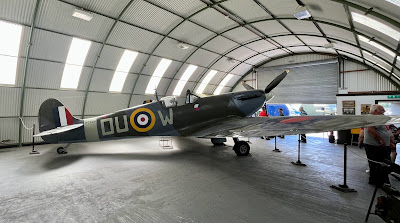
The star attraction is the Loch Doon Spitfire. This is a Mark II Spitfire that fought in the Battle of Britain. It was then sent to Scotland as a training aircraft for a Czech squadron, and it crashed in Loch Doon on a training flight. Volunteer divers found the aircraft, which had been restored at the museum.


 Outside they have an interesting collection of Cold War aircraft. Starting in the car park with the English Electric Lighting. Perhaps not the most elegant jet fighter, but I had the Airfix kit hanging from my bedroom ceiling as a kid.


Also in the RAF inventory is the Hawker Hunter.


A couple of USAF fighters, the Sabre and Super Sabre, one of my favourites.


A French Mystere.


And a Saab Draken, which is the second one I have seen this month after my trip to Sweden.

The Fleet Air Arm Gannet has to be one of the most appropriately named British aircraft.


And finally, a Westland Wessex, another favourite kit of mine.


Well worth a visit if you are in the area.

Wednesday, 6 July 2022

Wargaming Campaigns

 Henry Hyde's long-awaited tome on wargame campaigns has, at last, crashed through the letterbox. Well, actually, it was too big for the letterbox, and my wife suspected this was another addition to my lead pile! At 526 pages, you can see below, it dwarfs the classic (75 pages) 1973 'Setting up a Wargames Campaign' by Tony Bath. 


Henry has many virtues, but as listeners to his podcast will know, brevity is not one of them! And I even pay him through Patreon for the privilege. In fairness, much has changed in the hobby since 1973, and this tome covers far more than was even available to Tony in those early days of the hobby. Looking at my copy of Tony's book, I can see my pencil amendments to his costings, which reminded me of all those campaigns I organised using his book, with lovingly drawn maps on hex paper. Today, with tools like Inkarnate, we can have stunning fantasy maps at the click of a mouse. And it is developments like this that are reflected in this new book, hopefully encouraging a new generation, and some old grognards, to extend their tabletop battles to campaigns.

I did worry that this book might veer too far towards nostalgia. There is a fine chapter, 'Standing on the Shoulders of Giants', which had me reaching for my bookshelf. However, in the main, this is bang up to date with chapters on mapmaking and digital campaigns that drip with valuable ideas and resources. I use Inkarnate, but Worldographer looks good, and the Cartographers Guild website is a great resource. There are many good ideas about using spreadsheets and other technology to take a lot of the effort out of the paperwork that used to grind many of my early campaigns to a halt. I think I still have some of the many desk diaries I used to pick up cheaply at the end of every year. Henry is also supporting the book with online resources.

So what do you get for your money? After an introduction to campaigns, there is a chapter on generalship and strategy, followed by how to write your own campaign rules. Most chapters give you the theory, followed by practical examples and his suggested rules to get you started. The book is well illustrated throughout, not just with eye candy but with screen grabs and other practical pictures. Solo campaigns are not ignored, reflecting the impact of the pandemic on most of us. 

The following chapters get into the detail, covering issues like characterisation, roleplaying, weather, as well as campaigns at sea and in the air. The naval chapter will come in very handy for my Adriatic project. Most of us ignore weather in our games, which is surprising given how much we talk about it generally! Henry has created a deck of 52 cards to download that will go with his suggested rules. An excellent example of how this is much more than just a book.

I suspect most wargamers will use this book as a reference resource rather than reading it from cover to cover. Nonetheless, I loved this book, which I will keep within easy reach. It is a mixture of inspiration and technical manual, not an easy mix, but one Henry has done very well.


Monday, 4 July 2022

Fighting Napoleon - John Hildebrand of the 35th Foot

 This book covers the memoirs of Lieutenant John Hildebrand 35th Foot in the Mediterranean and Waterloo Campaigns, edited by Gareth Glover. The 1st Battalion of the 35th Foot was the main British regiment serving in the Adriatic during the Napoleonic Wars. John Hildebrand was present during most of the island and coastal hopping campaigns between 1811 and 1814. Glover has done an excellent job editing these memoirs, which were written sometime after the action. He corrects obvious errors and gives some important context.


He was born in Berwick-upon-Tweed, a long way from the regiment's recruitment area in Sussex. Although his father served in the Sussex Fencibles when based near Glasgow, which may explain some influence in his getting the Ensign position without purchase. The 35th Foot was often divided into detachments for individual actions, which meant that even junior officers had independent commands. Young army officers serving in the Adriatic, being granted more freedom and often working without close supervision, caught the same bug as the 'gung-ho' naval officers. The latter were always looking for an adventure, whether at sea or on land. 

The battalion first arrived in the Adriatic in September 1809 as part of General Oswald's expedition to capture the Ionian Islands from the French, together with foreign regiments including the Royal Corsican Rangers and the Greek Light Infantry. Hildebrand was with another force in Sicily. They captured Zante, Cephalonia and Santa Maura, and he joined the garrison on Zante in May 1811. He wasn't much impressed with the Greek Light Infantry, saying, "1st Battalion of the Greek Light Infantry Corps was raised, a fine-looking body of men but, as it turned out, utterly useless as soldiers and worse; so troublesome and unruly in discipline that, however hard the duties of the different garrisons of Zante, Santa Maura, Cephalonia, &c, no commanding officer could ever be persuaded to have that corps, if he could possibly avoid it."

He was part of a detachment that occupied Lissa (Vis) in May 1812. From there, under the command of Colonel Robertson, they attacked other French-held islands, including Lagosta (Lestovo) and Curzola (Korcula). Hildebrand was given command of the garrison at Lagosta, unusual for such a junior officer of the period. On his own initiative, he joined the siege of Ragusa (Dubrovnik) during 1813-14, being prosecuted by local irregular forces. The siege is covered in detail before the Austrians arrived and took the French surrender. He was given retrospective approval by Robertson, which was just as well given the sensitive politics of the siege.

He was offered a promotion in a new regiment being raised in Italy, but Napoleon's defeat in 1814 cut short that prospect, and he ended up back in the garrison at Corfu. The main enemy there appears to have been the fleas! He was sent home due to ill health but rejoined the regiment before Waterloo. The regiment was on the periphery of that battle.

Napoleonic memoirs can be a bit turgid and often full of detail the reader can do without. However, this is excellent, not least because of Glover's editing. An excellent primary source for my Adriatic project. The actions described are perfect for small battle rules like Sharp Practice or Rebels and Patriots.

I picked up this 1879 map of the Austrian Empire in a second-hand bookshop while on holiday in the Lake District. Very useful for these campaigns.